Update on the Hot Water

I have started to modify a Domestic water heater, as it is made of copper & in good condition it will be an easy modification. The unit has had 250mm cut out of its height & I will be adding 1 extra inlet & outlet ( 1 set for the Diesel water heater ) prior to Silver soldering the unit back together.

Once the mods are completed I can refit the outer case & re-insulate with 2 pack foam. The current 3600W element can then be replaced with a 1800W unit & the Hot water unit will be ready to fit.

The Diesel water heater has now been mounted inside the R/H rear wheel arch over the Air Bag system, the plumbing has been completed & is ready for connection to the Hot Water system. The exhaust pipe for the unit has been made to exit the Vehicle in front of the rear wheel just below the body work.

The Electrical controls have been fitted to the Kitchen side of the Pantry wall just below the ceiling, from this point the circulation pump & the Diesel heater can be started, stopped or set to Auto.
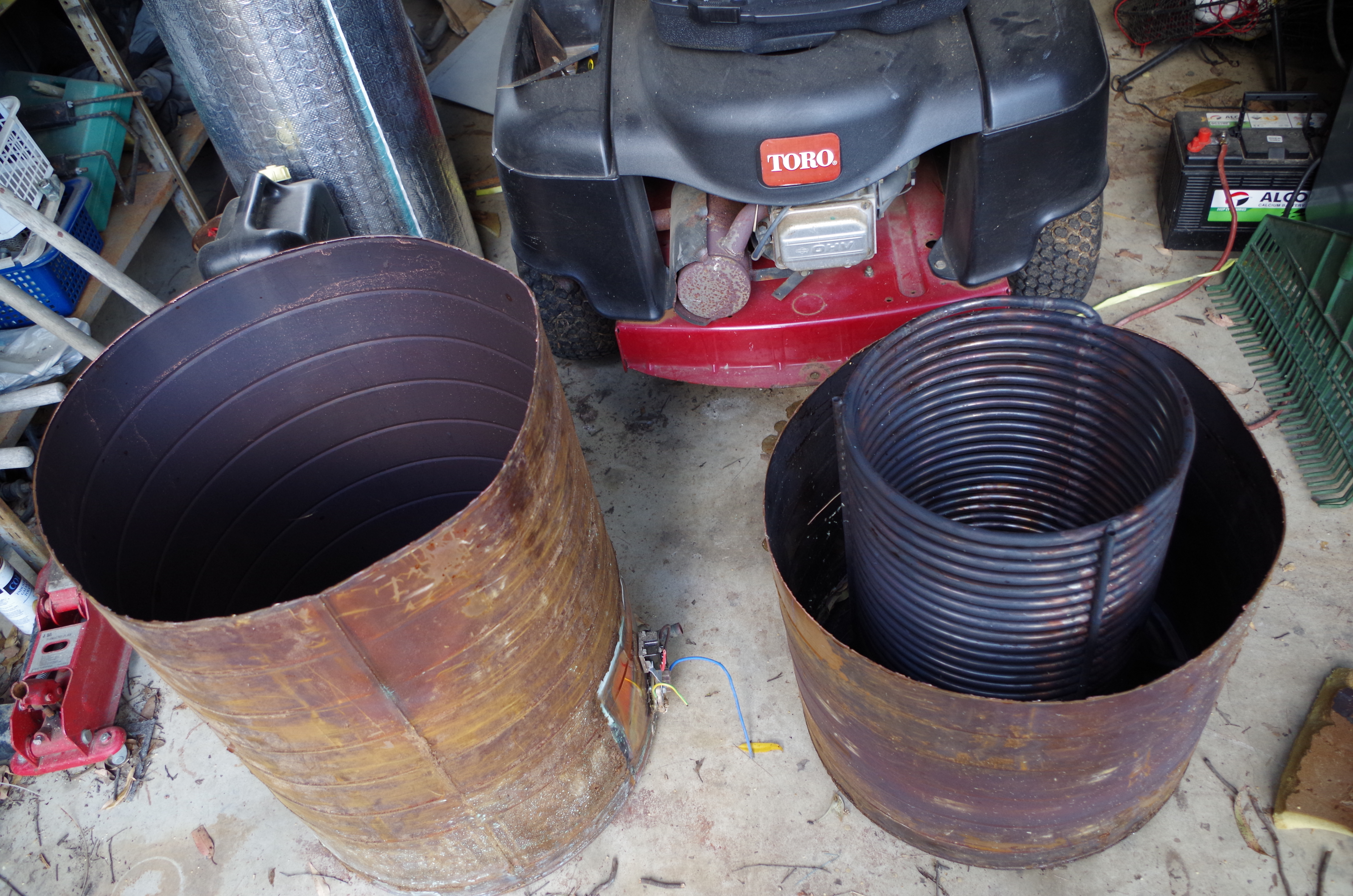
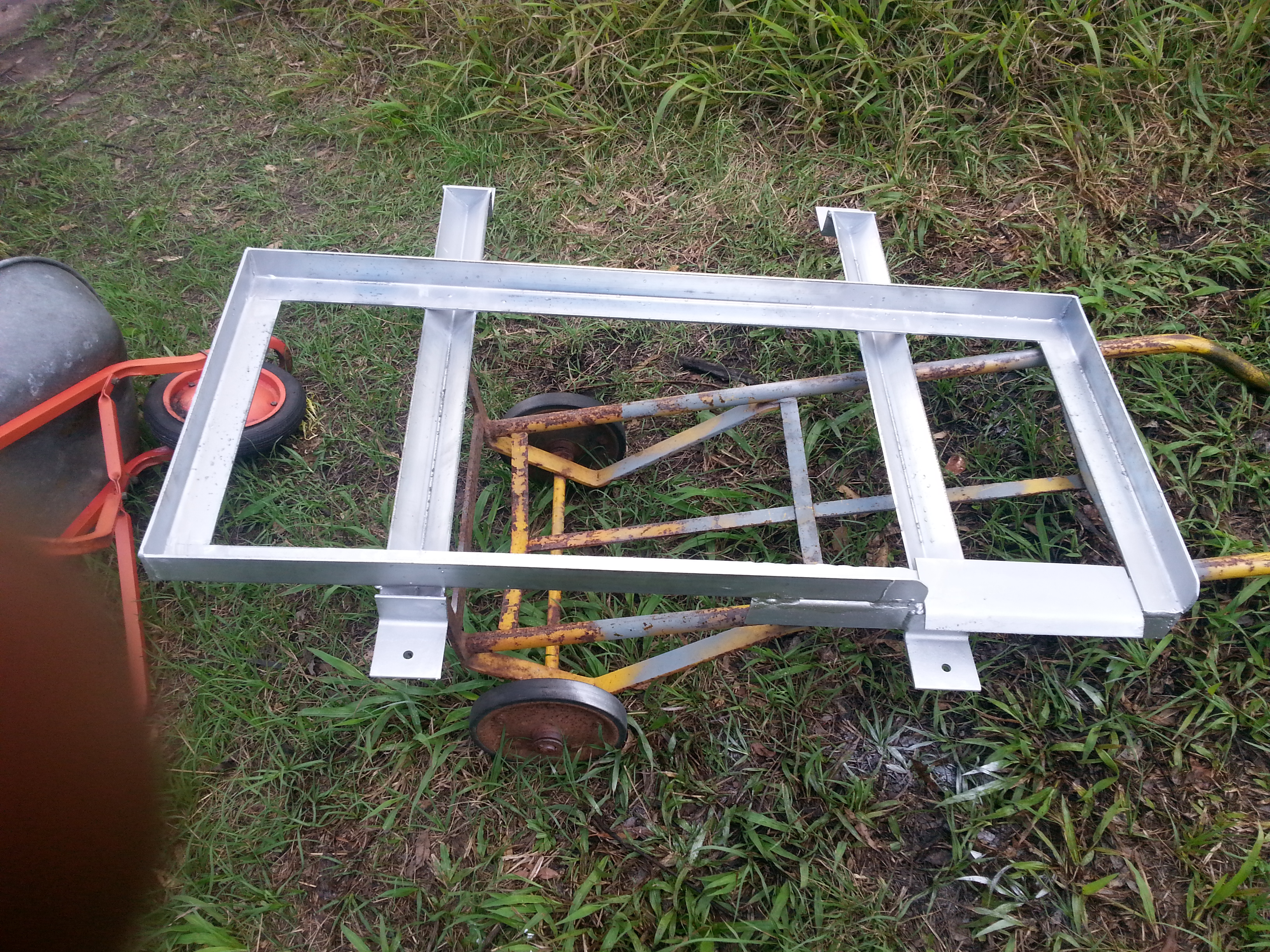
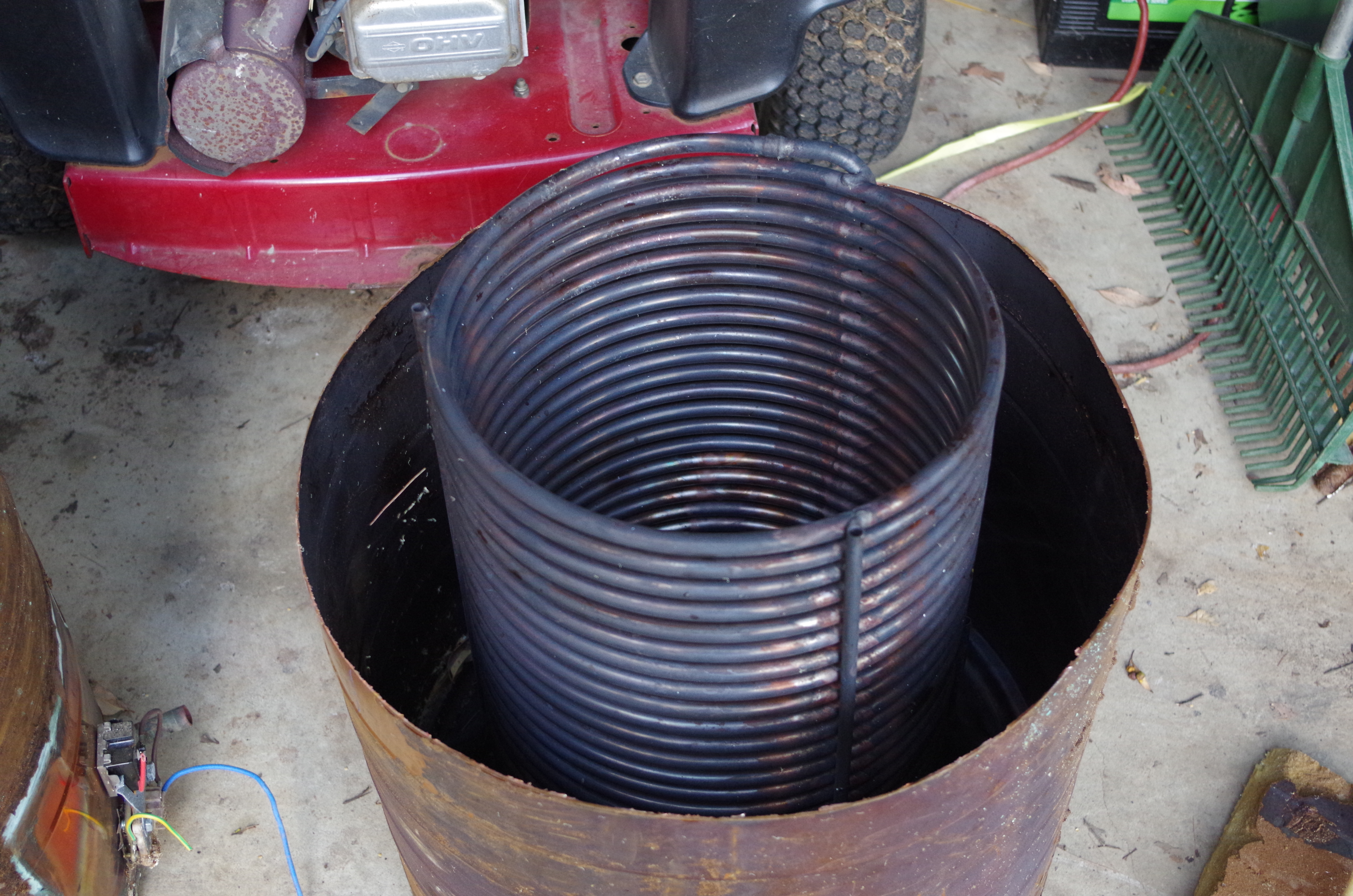
The 2 halves of Hot water tank, Unit on the left is to have 250mm removed to reduce the capacity.
The 2 halves of Hot water tank, Unit on the left is to have 250mm removed to reduce the capacity.

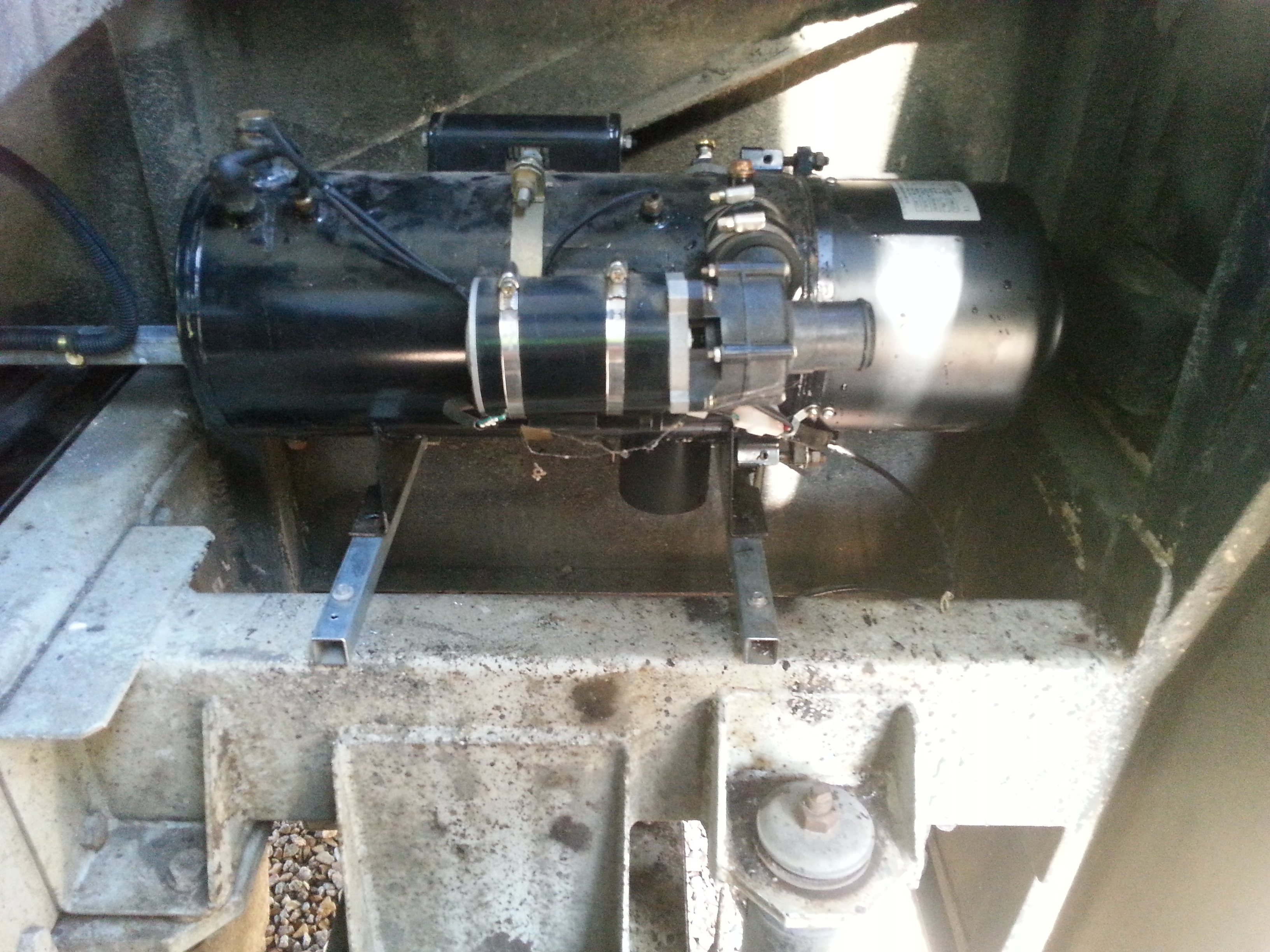
Diesel unit on mounts over the R/H front Air Bag of rear suspension.
Diesel unit on mounts over the R/H front Air Bag of rear suspension.

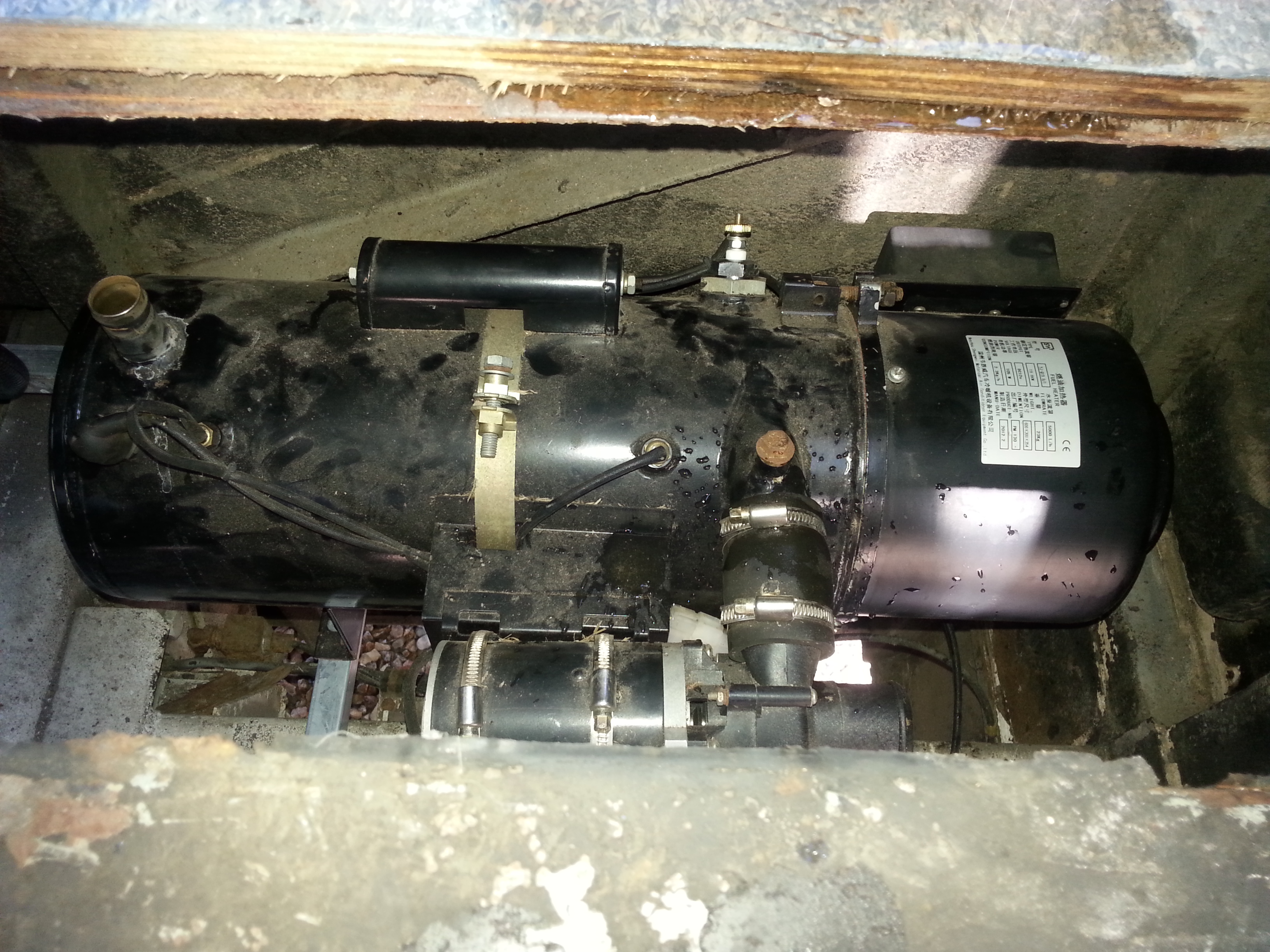
View of the Diesel Hot water unit from over the Driver side rear wheel.
View of the Diesel Hot water unit from over the Driver side rear wheel.

The 315L hot water unit opened up ready for modifications.
The 315L hot water unit opened up ready for modifications.

20140402_154838

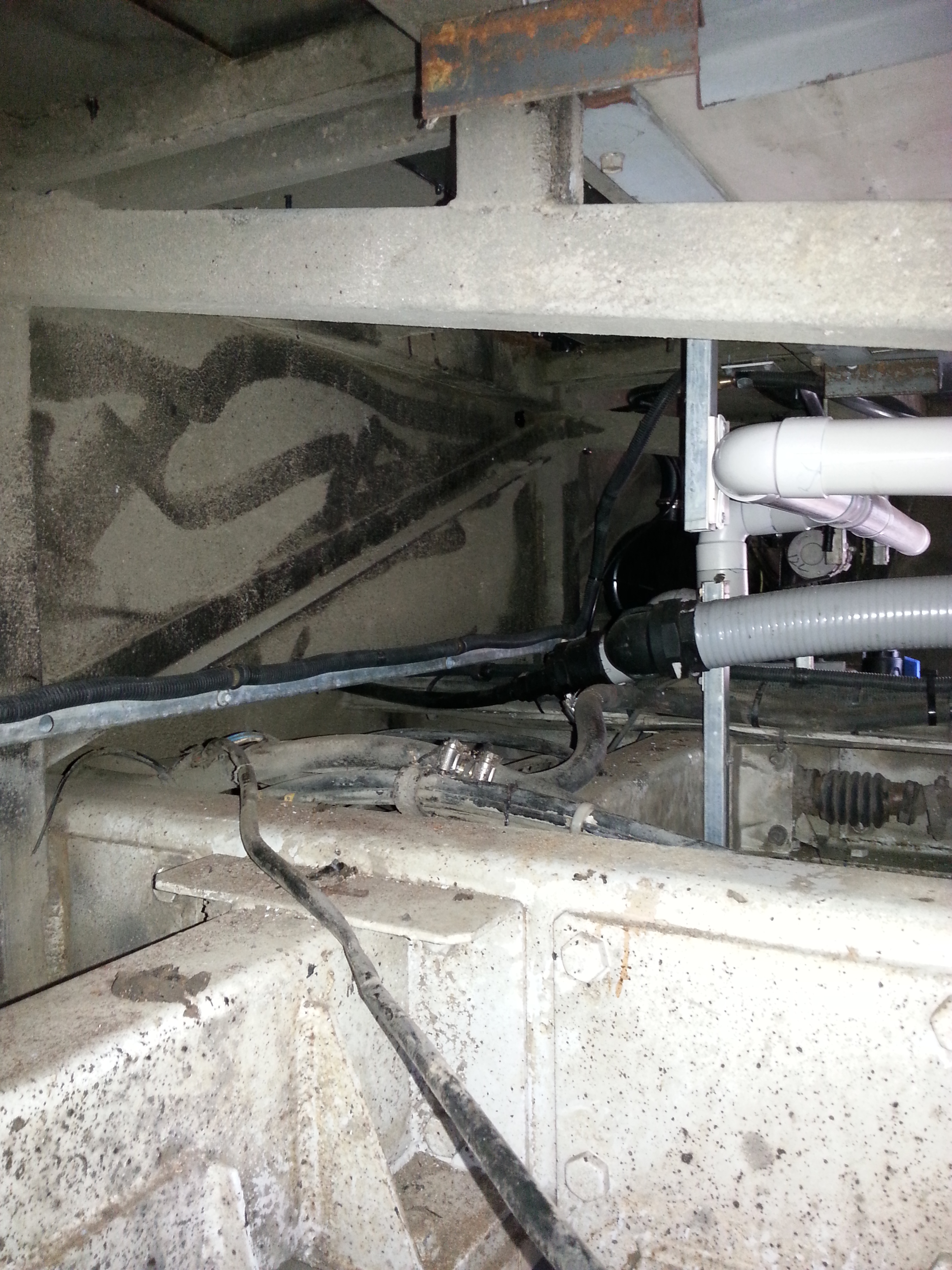
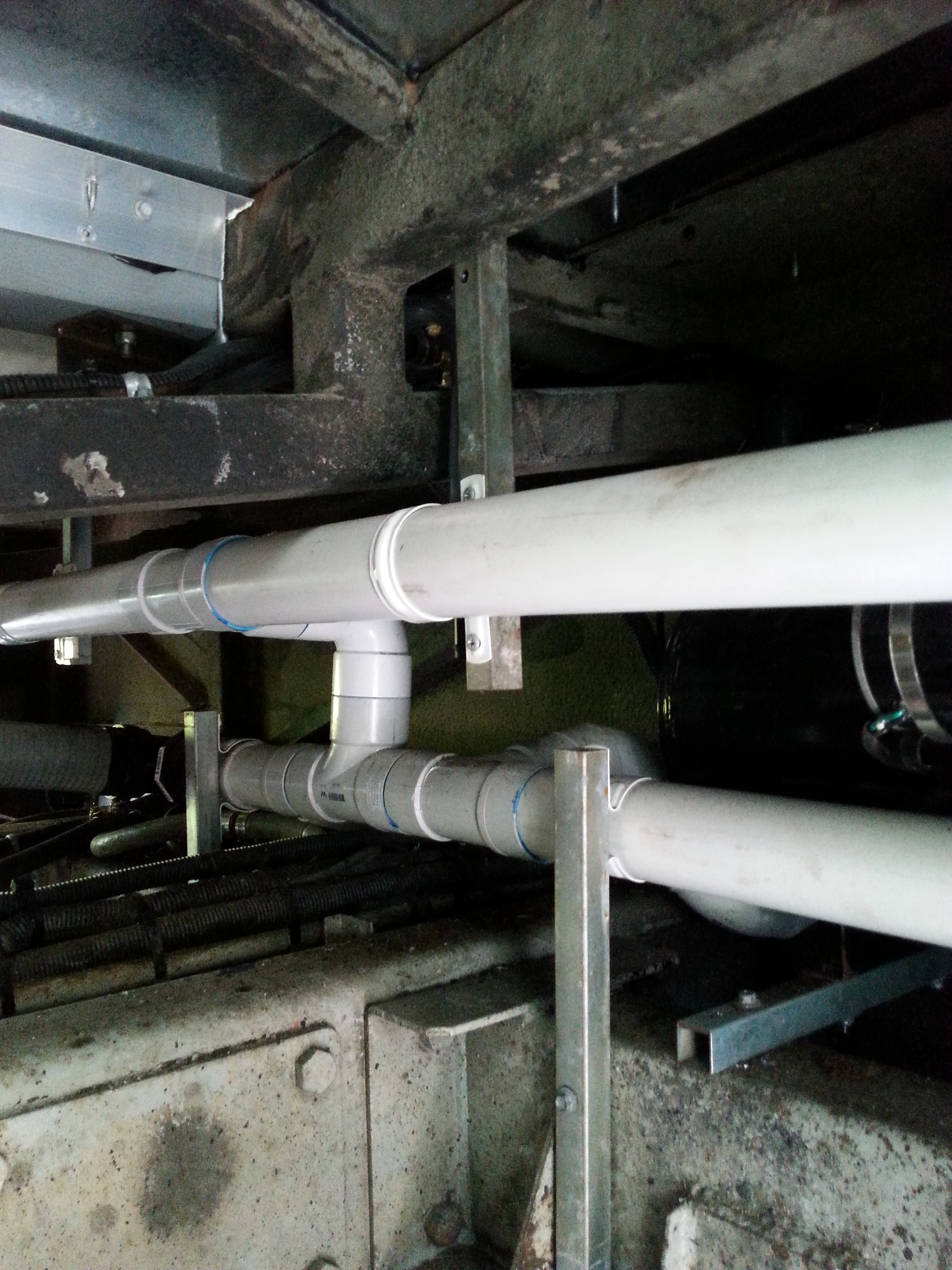
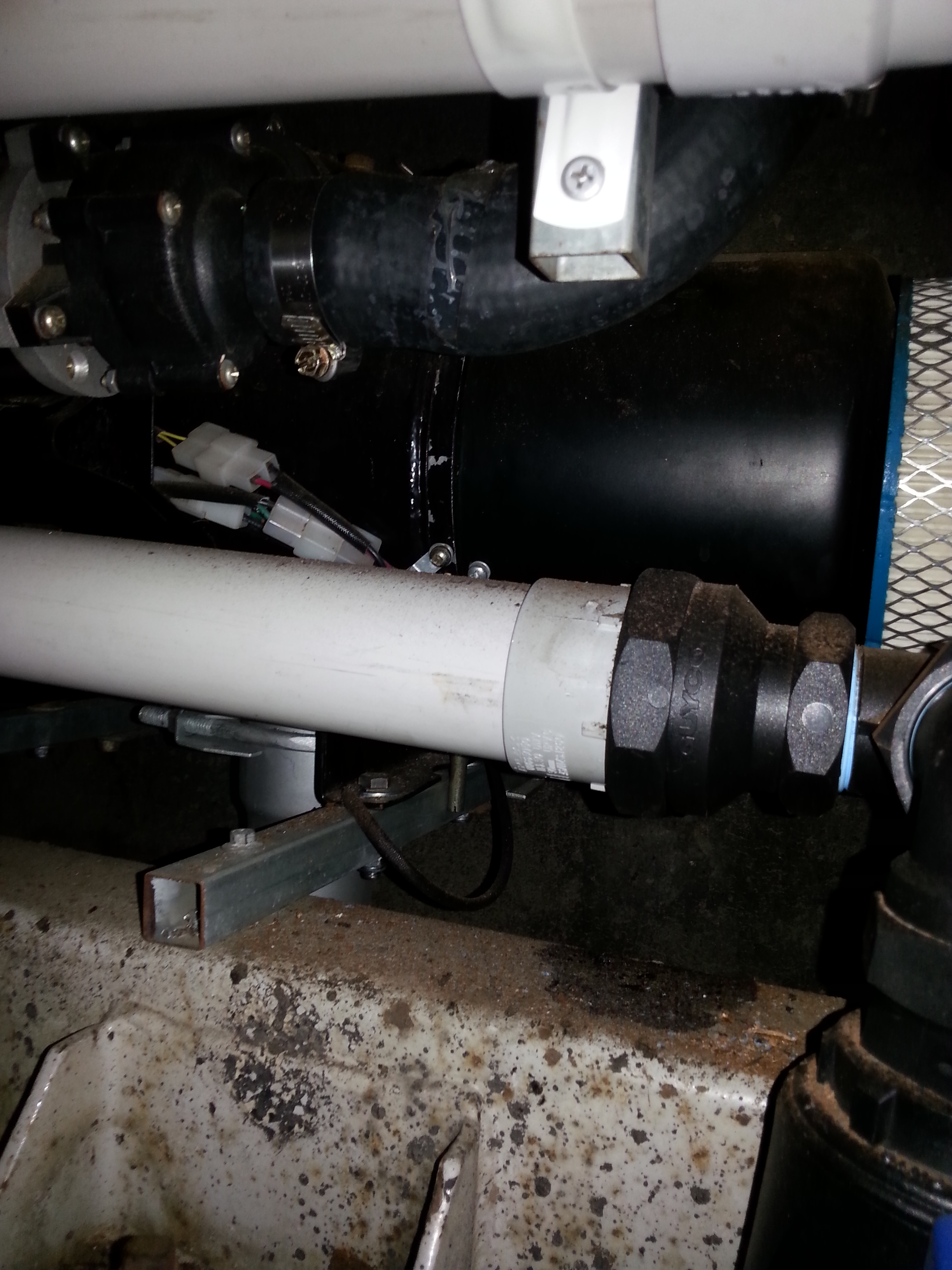
Diesel hot water unit visible behind the plumbing, due to the position of this unit I have added an Air Cleaner to the intake. The Air Cleaner can be acessed through a hatch in the side of the RV.


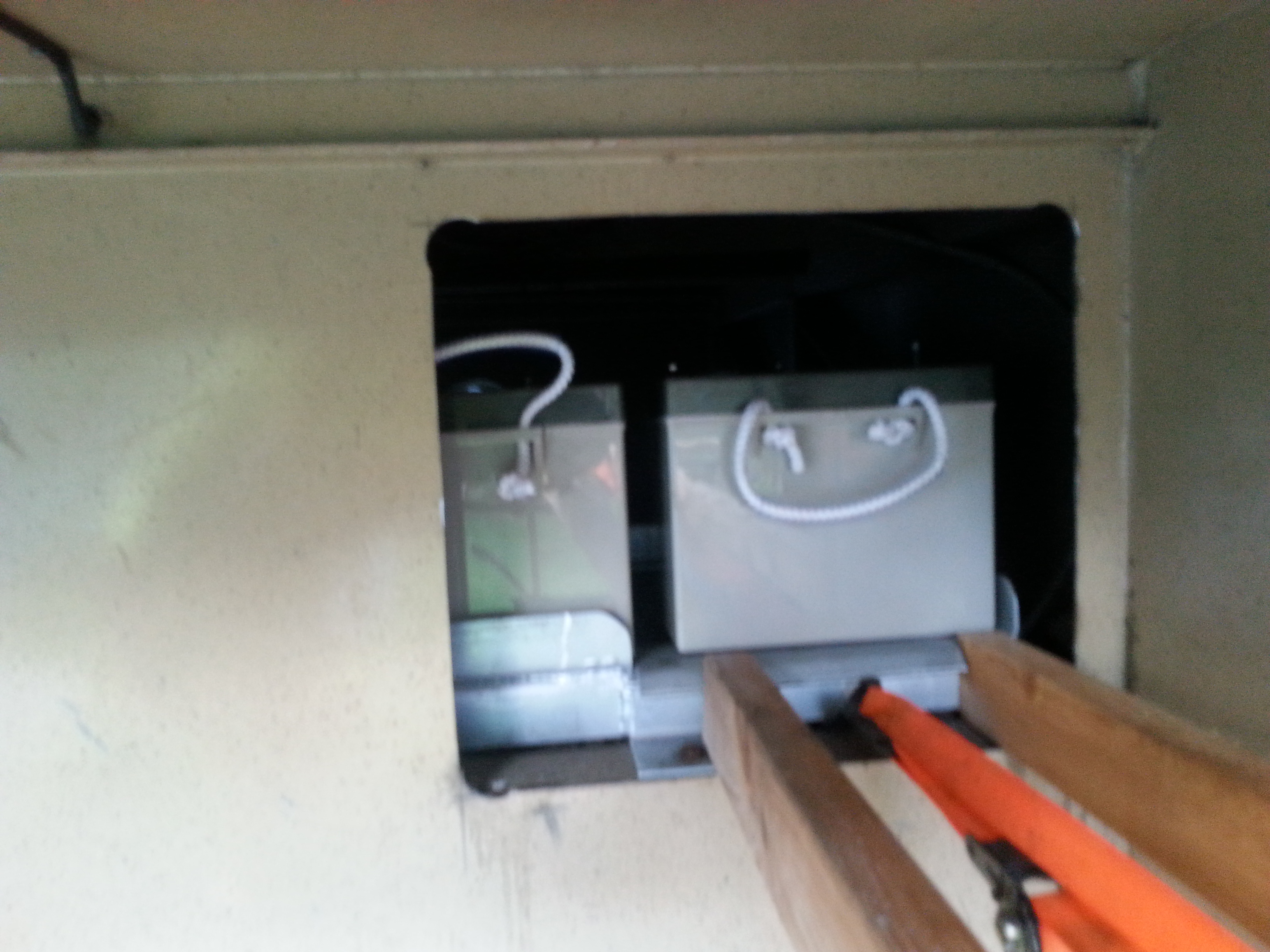
Lower Left Hatch is for Access to Diesel heater filter.

Lower Left Hatch is for Access to Diesel heater filter.
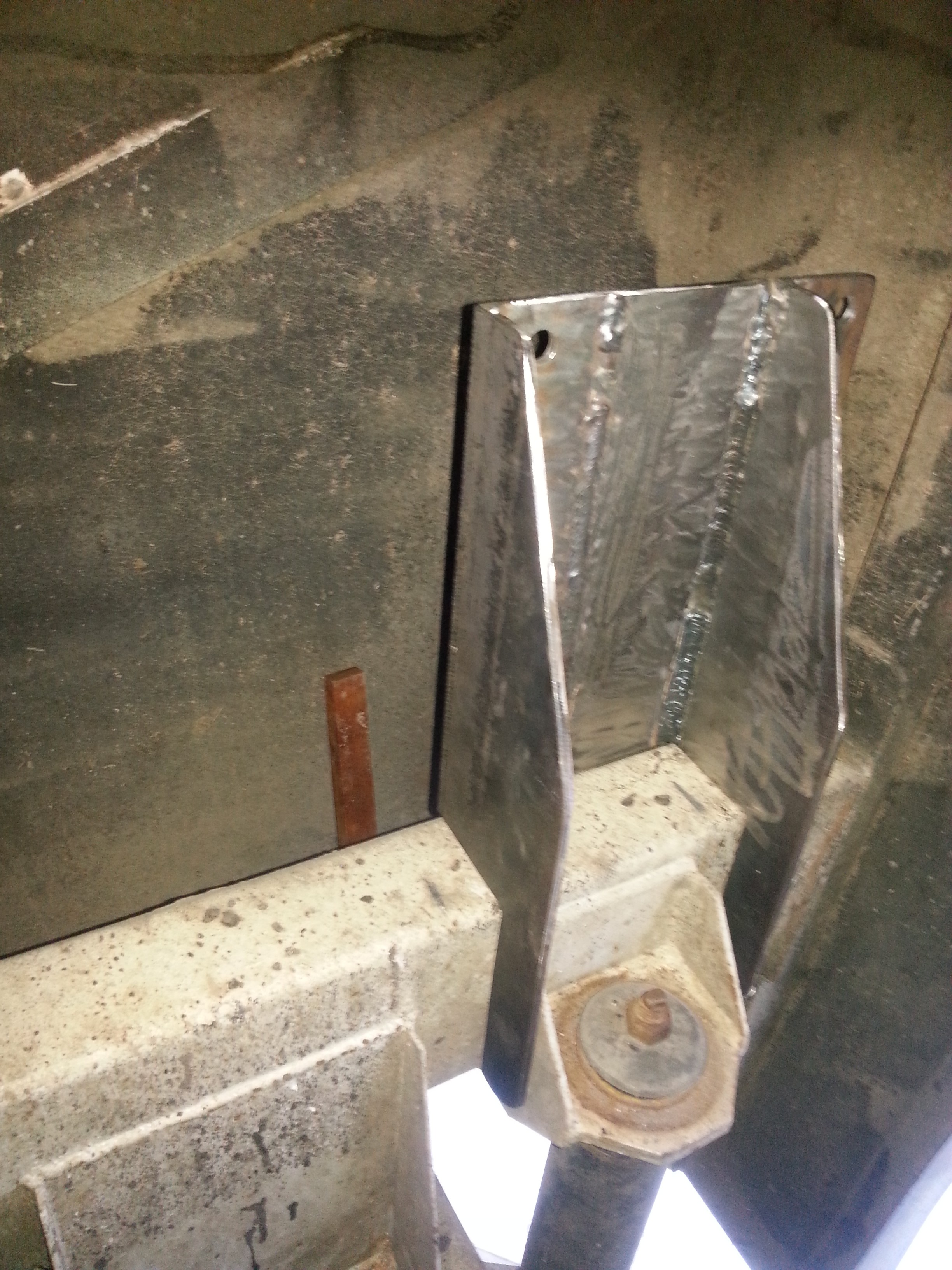
Stabilizer system mountings & installation.

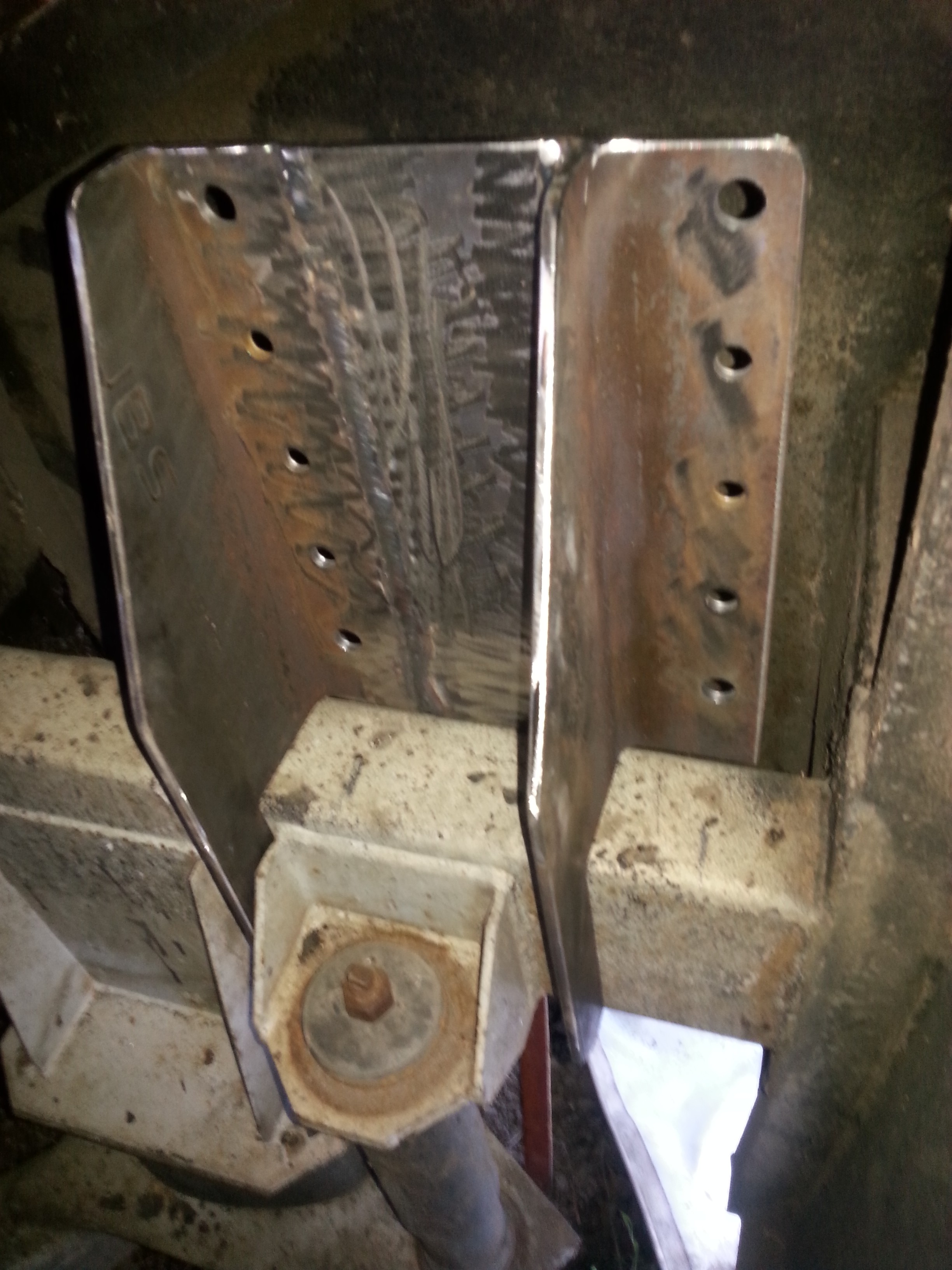
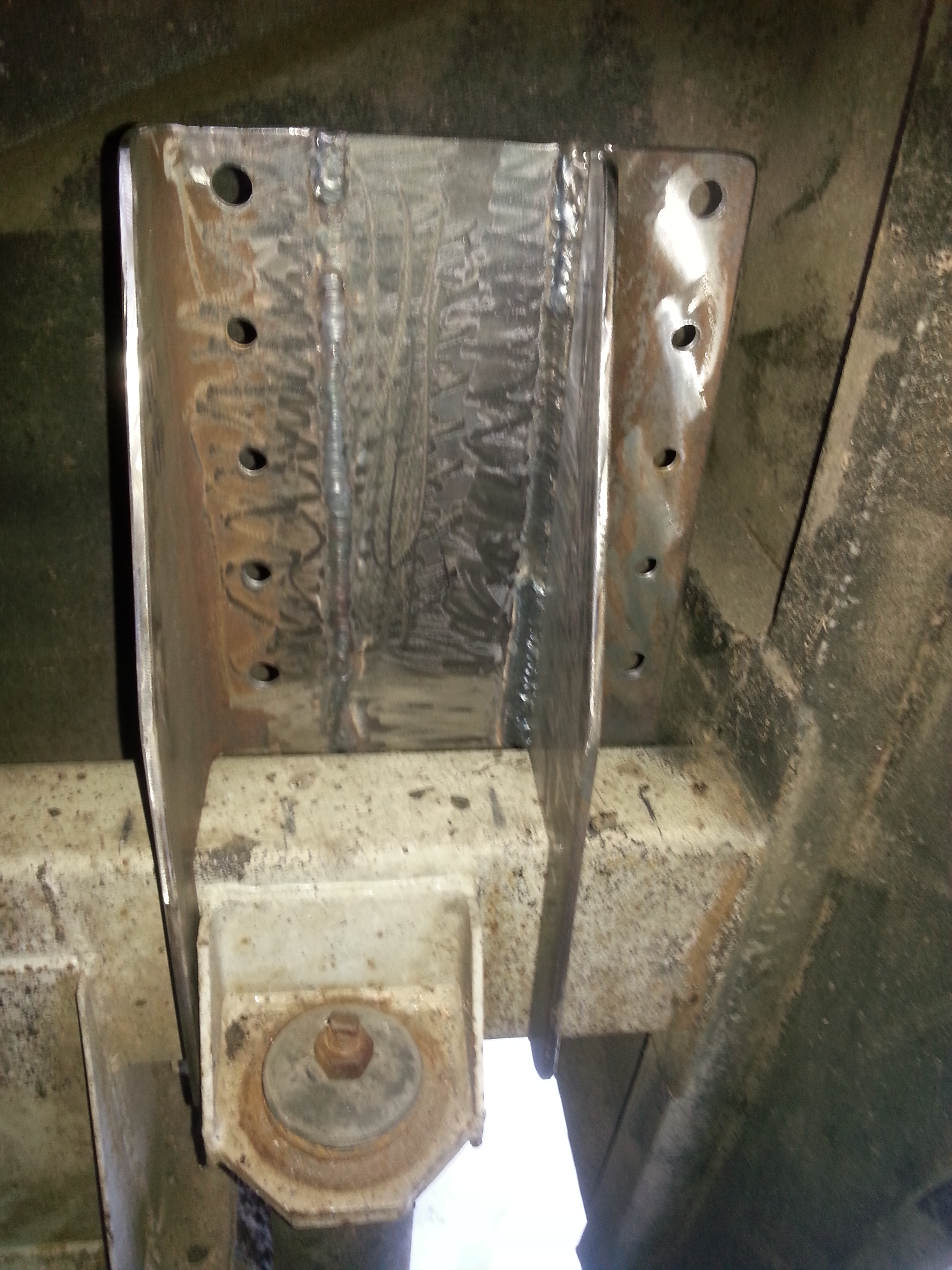
Now that the Electrical drive system is completed for the Rear stabilizers work can proceed to the Leg mountings, these will be constructed from 8mm plate & 100 x 150 x 8mm steel angle. the completed mounts will be welded to the outer ends of the rear suspension Air Bag cross members.

The legs will be bolted behind the cross members in an area which is unimpeded by other equipment. As I am not confident in my vertical welding abilities I will have these mounts welded by a qualified welder, a friend of mine has been very kind in accepting this challenge as the position of the job makes it very hard to access. (Thank you Ken Schoulderman)

The cost of the rear stabilizer system  not counting my time has been very reasonable, Total Cost for Equipment has been just under $1400.00 + (2 cartons of Beer).

Leg bracket to be welded to the rear most suspension beam.

Leg bracket to be welded to the rear most suspension beam.

Passenger side Leg bracket photo 2

Space between the mount bracket & rear wall of wheel well is very tight, does not look so in photo but there is just enough room for Leg to be bolted behind.

Ready to be welded to beam.

Ready to be welded to beam.

L/H leg mounting bracket

This is the Passenger side unit, it will be welded in place a little closer to the side wall of the RV.

L/H side Leg & Bracket ready for welding to Frame.

Final mounting position for welding, the small hat section on the left of mount is for mounting the Electrical control unit for the drive motor.

R/H leg mounted on Bracket ready to be Welded to Frame

Drivers side mount with leg attached ready to be welded in place.

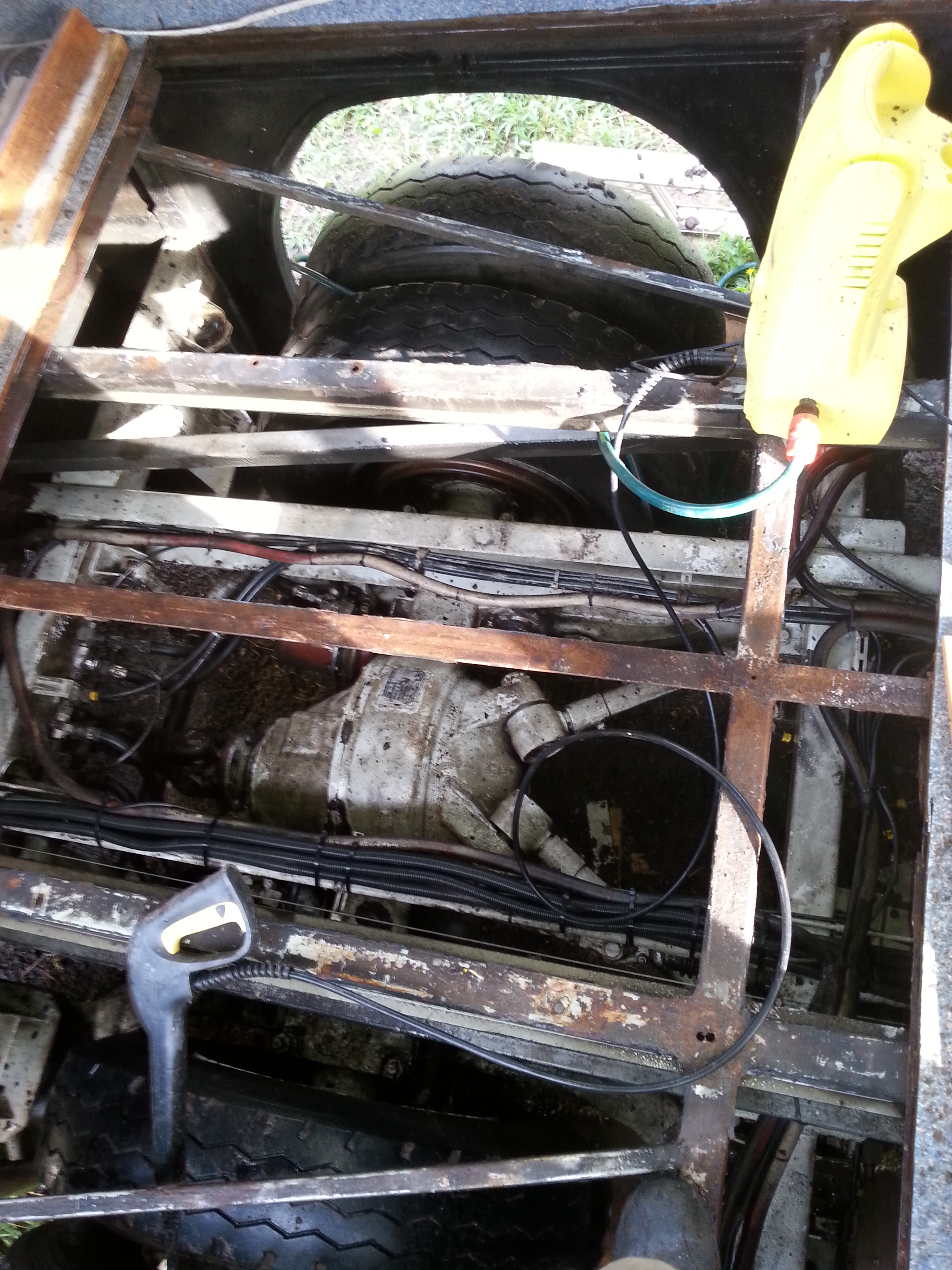
Floor section removed for work on Shower & Plumbing

The work on the rear Legs was done while the rear floor had been removed for working on the Shower, Plumbing & Grey water tank.

Rear Stabilizer system overview & drive system.

The Leveling / Stabilizers for the RV ( I am told I can not call it a Bus any longer ) had posed quite a problem for some time as the commercially available units were some what more expensive than I was prepared to pay, I have looked into using individual Hydraulic components & modifying the RV’s Air bag system But both created problems of their own.

I have settled on a Mechanical system utilizing Semi Trailer landing legs, these units have a greater weight lifting capacity & are substantially less expensive once completed.

The ” Jost” Legs selected have a 490mm lift & 25 ton maximum weight. I am driving these units with 12v electric motors which are belt driven on the rear of the RV but chain driven on the front unit.

The drive motors were sourced from 3000lb winch units bought from Ebay, these units cost $86.00 each & come with both Wired & Wireless remote controls.

Pine Rivers bearings were very helpful when sourcing the Pulley & Belt / Chain & sprockets systems.

I will be using 2 stabilizers on the rear of the RV & 1 central unit on the front thus creating a tripod system, this will ensure no torsional stress will be applied to the Chassis when the lift system is used for long periods.

The Electrical system for the drive motors will consist of a Master solenoid to isolate the system, this is controlled from a switch box mounted behind the drivers seat. This houses a master fuse for all power to the lifting legs which are then controlled by separate wireless remotes, there is a facility to use wired controllers if necessary.

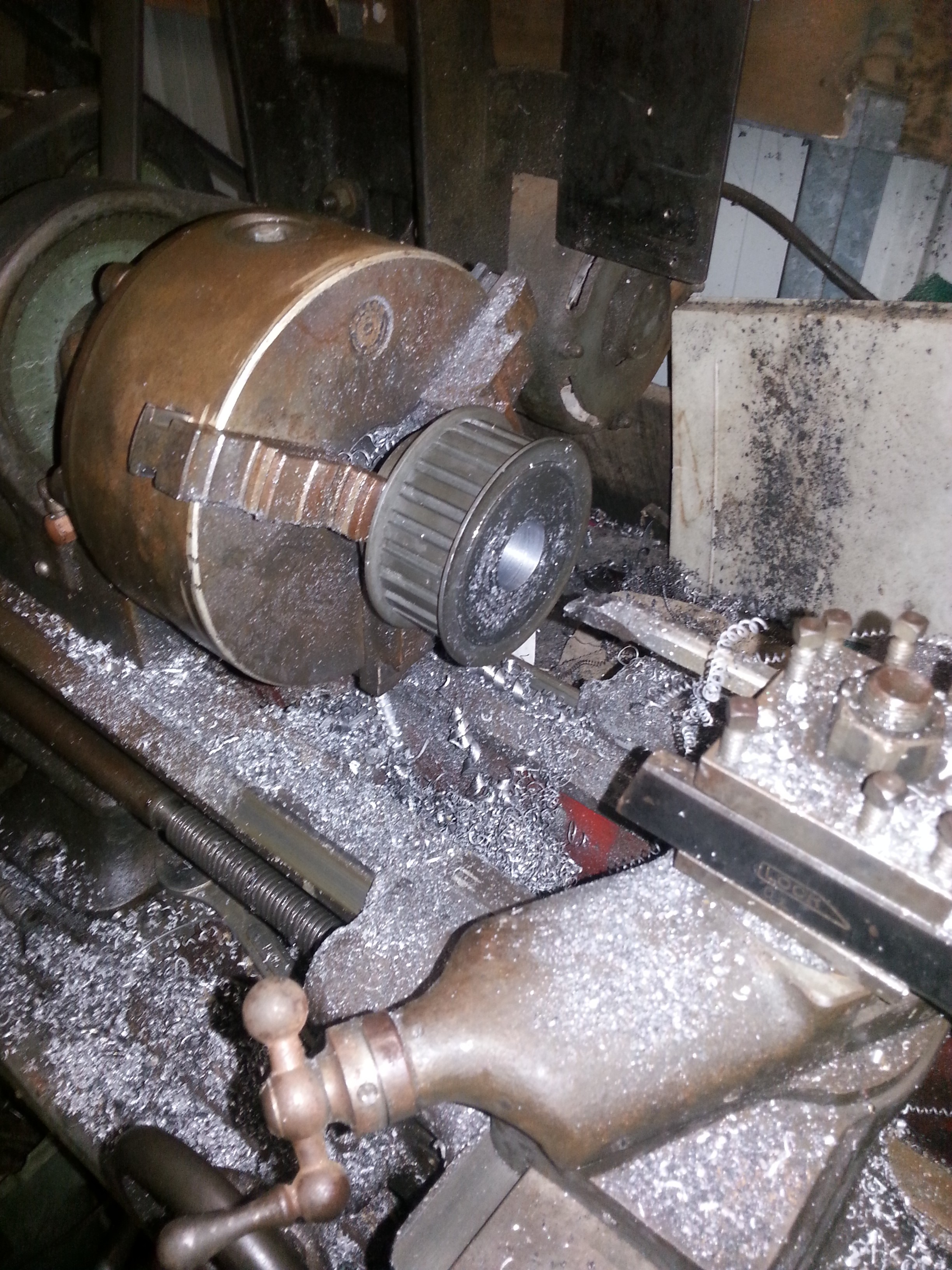
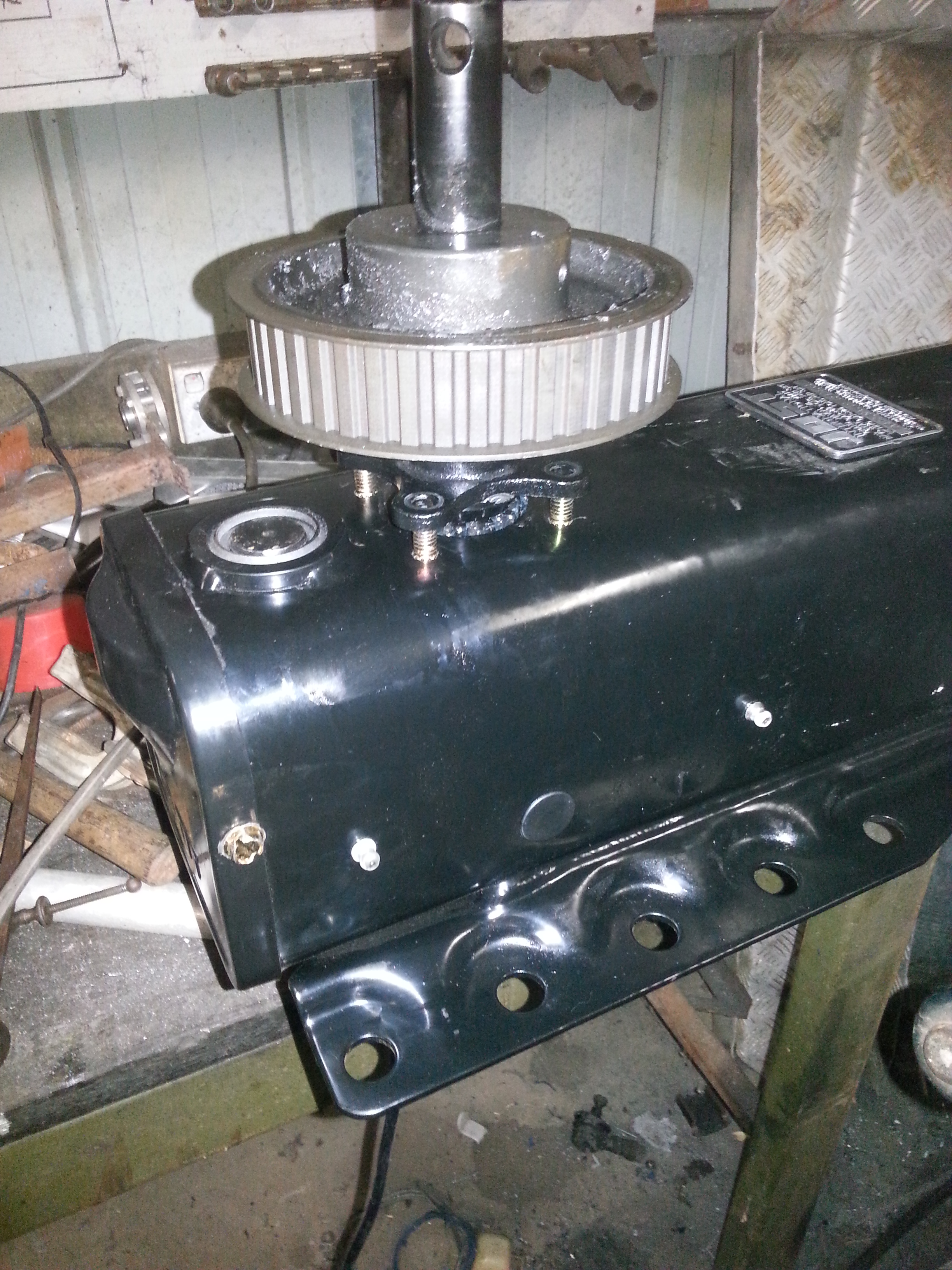
Machining the drive pulley to fit the Winch motor arbor.

Machining the drive pulley to fit the Winch motor arbor. Lathe is a 1921 Hercus still going strong.

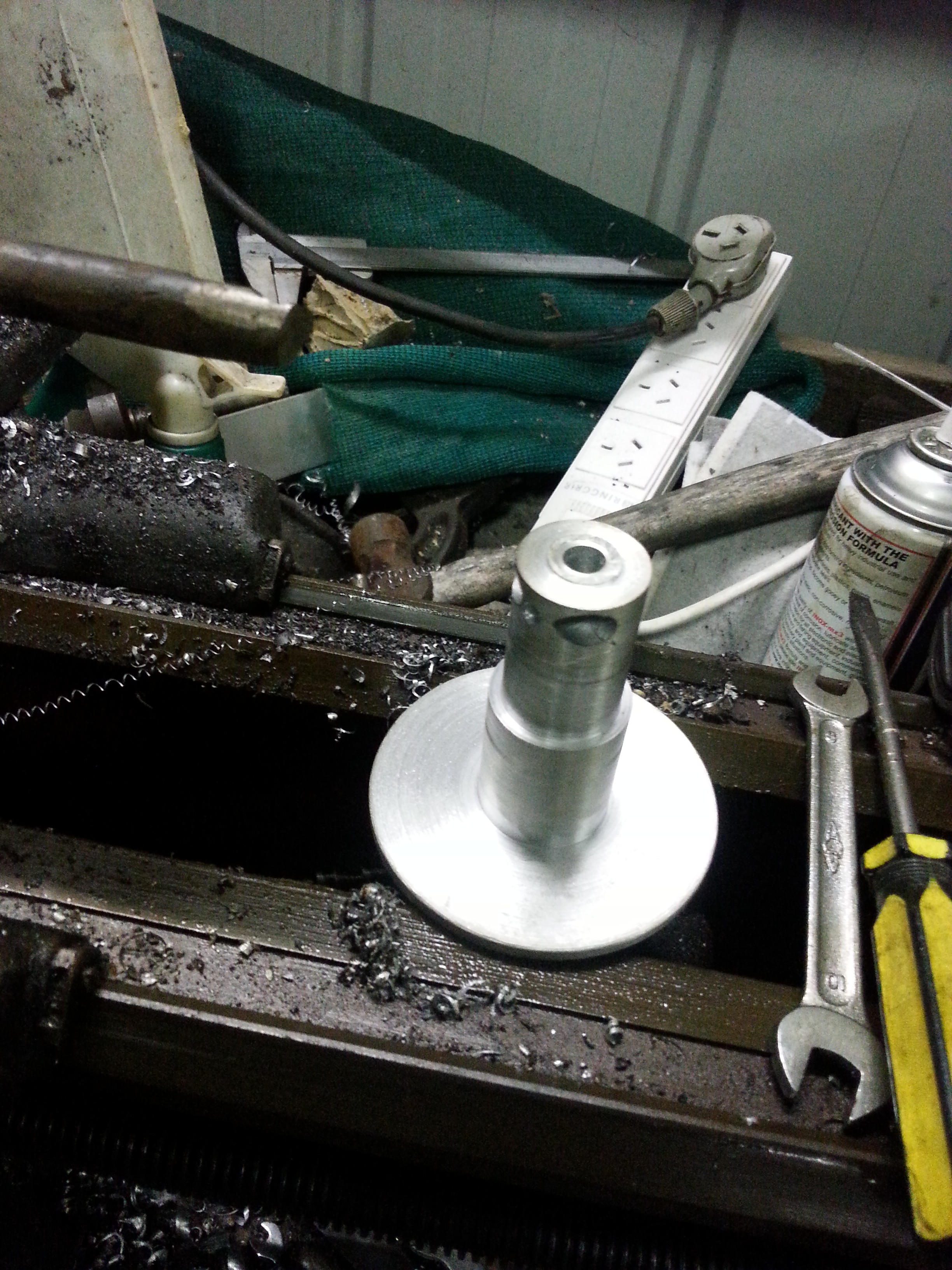
The winch arbor has been machined to take the driven pulley.

The winch arbor has been machined to take the driven pulley.

Setting the support bearing position prior to fitting the Drive pulley.

Setting the support bearing position prior to fitting the Drive pulley.

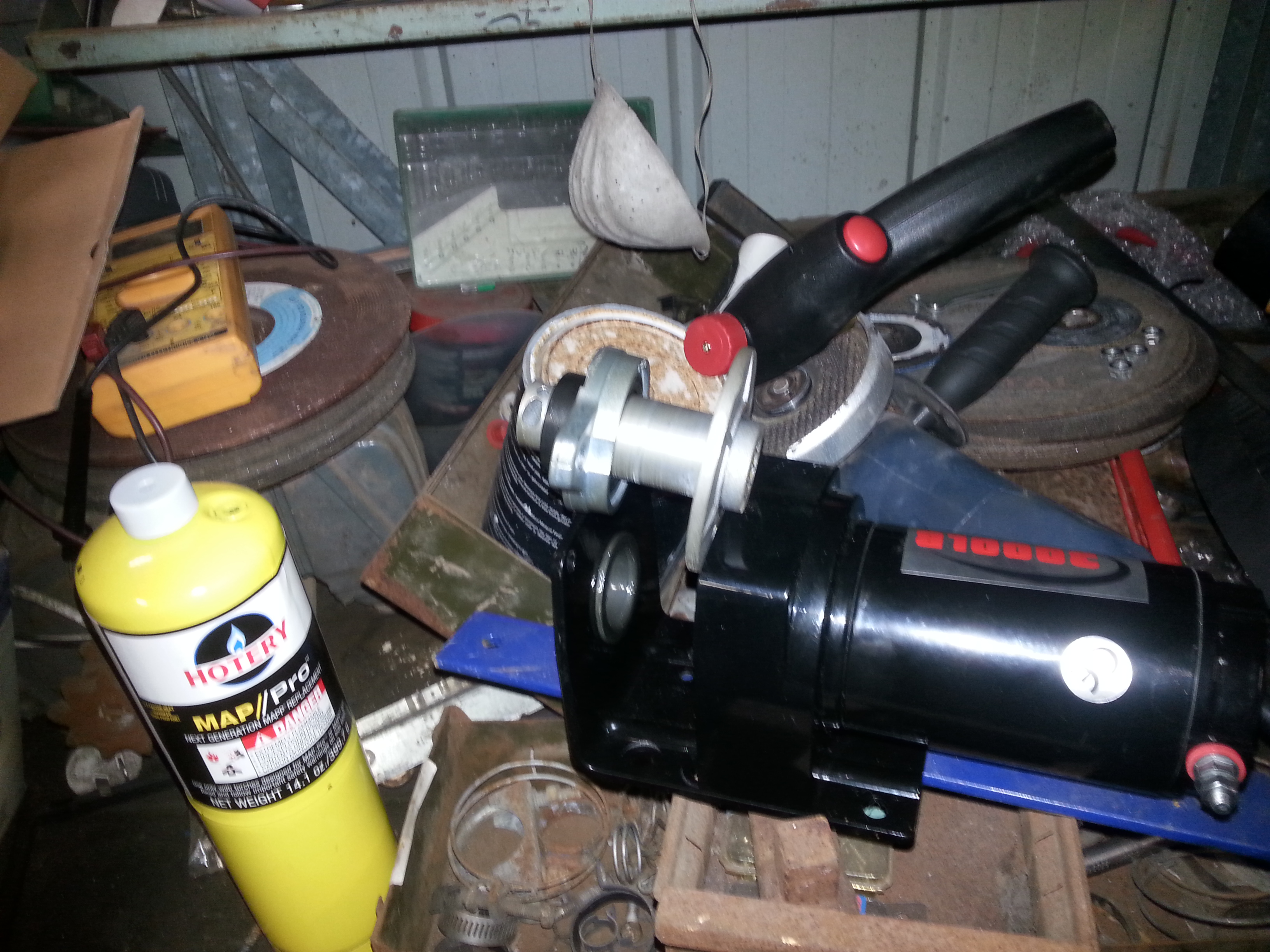
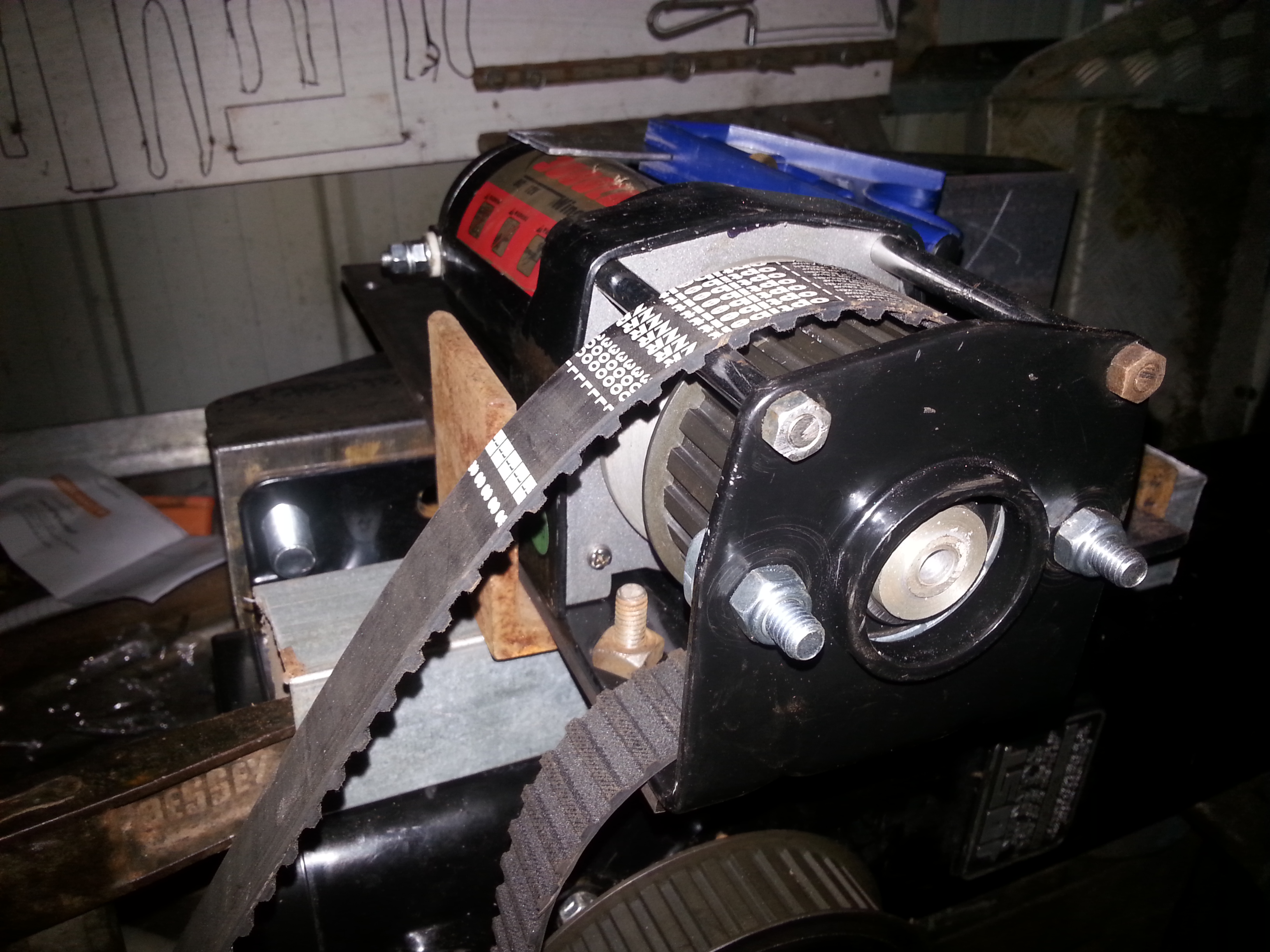
Machining completed & Pulley fitted, unit is being set up to make adjusting system for belt tensioning.

Machining completed & Pulley fitted, unit is being set up to make adjusting system for belt tensioning.

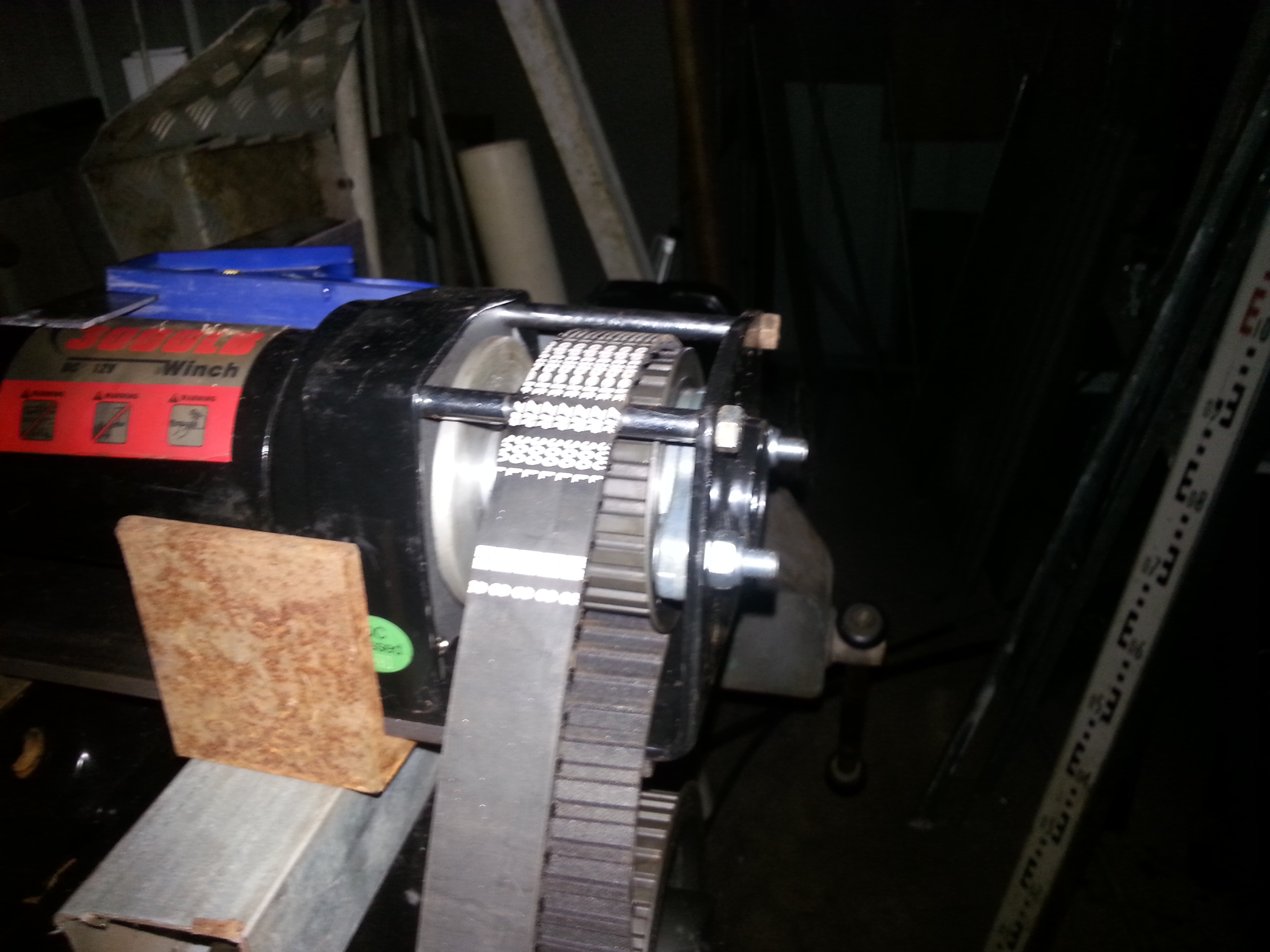
The unit is in correct position for mounting, to be rotated 90 deg. Anti-Clockwise & hinged by the lower edge where the belt is feeding out over the lower plate.

The unit is in correct position for mounting, to be rotated 90 deg. Anti-Clockwise & hinged by the lower edge where the belt is feeding out over the lower plate.

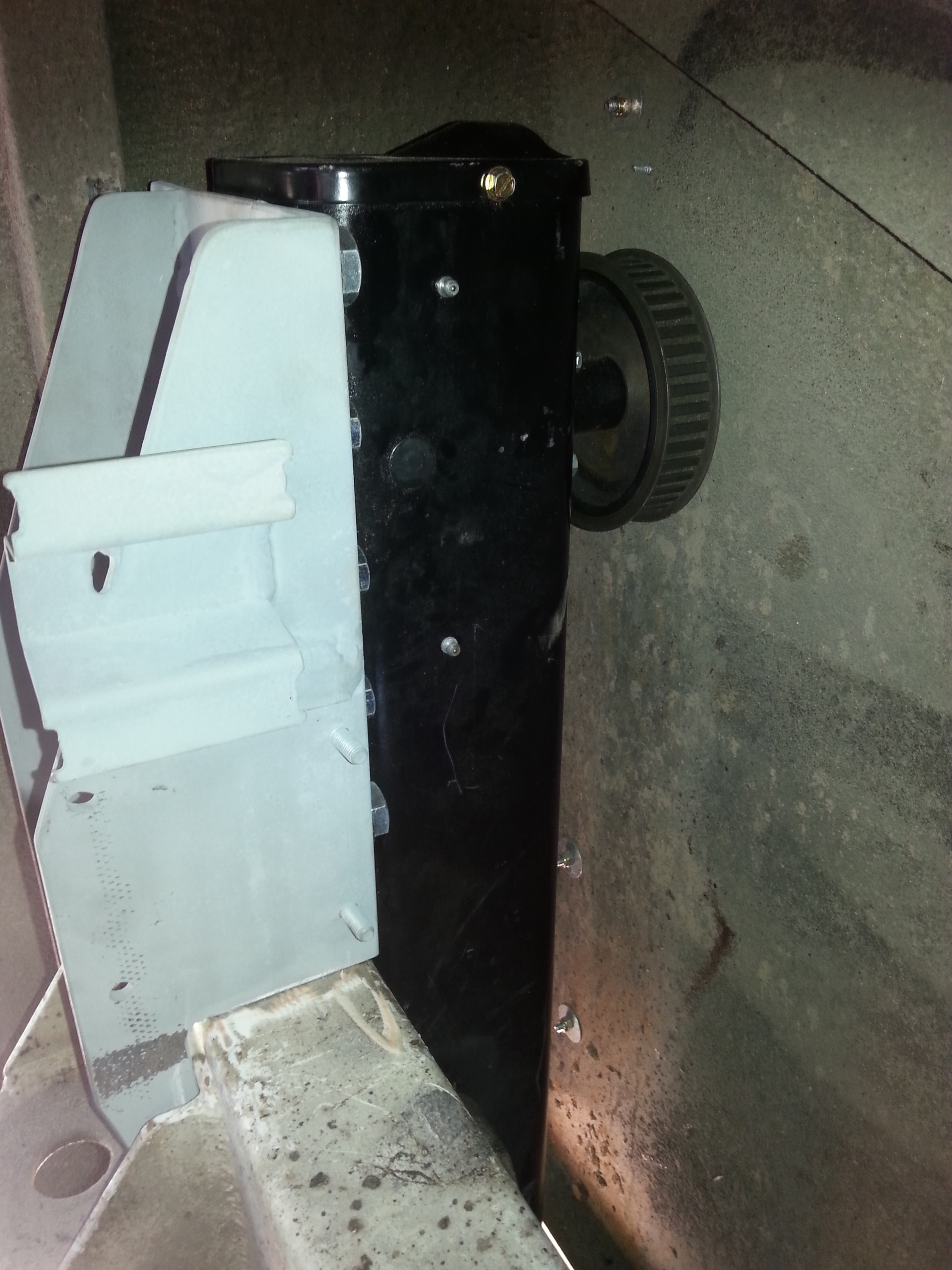
The mounting bracket in construction, this part will be bolted to the Leg mounting bracket once welded to the Suspension beam.

The mounting bracket in construction, this part will be bolted to the Leg mounting bracket once welded to the Suspension beam.

Drive sprocket on Leg with shaft ready to be trimmed.

Landing Leg with the Driven pulley mounted, shaft has yet to be shortened.

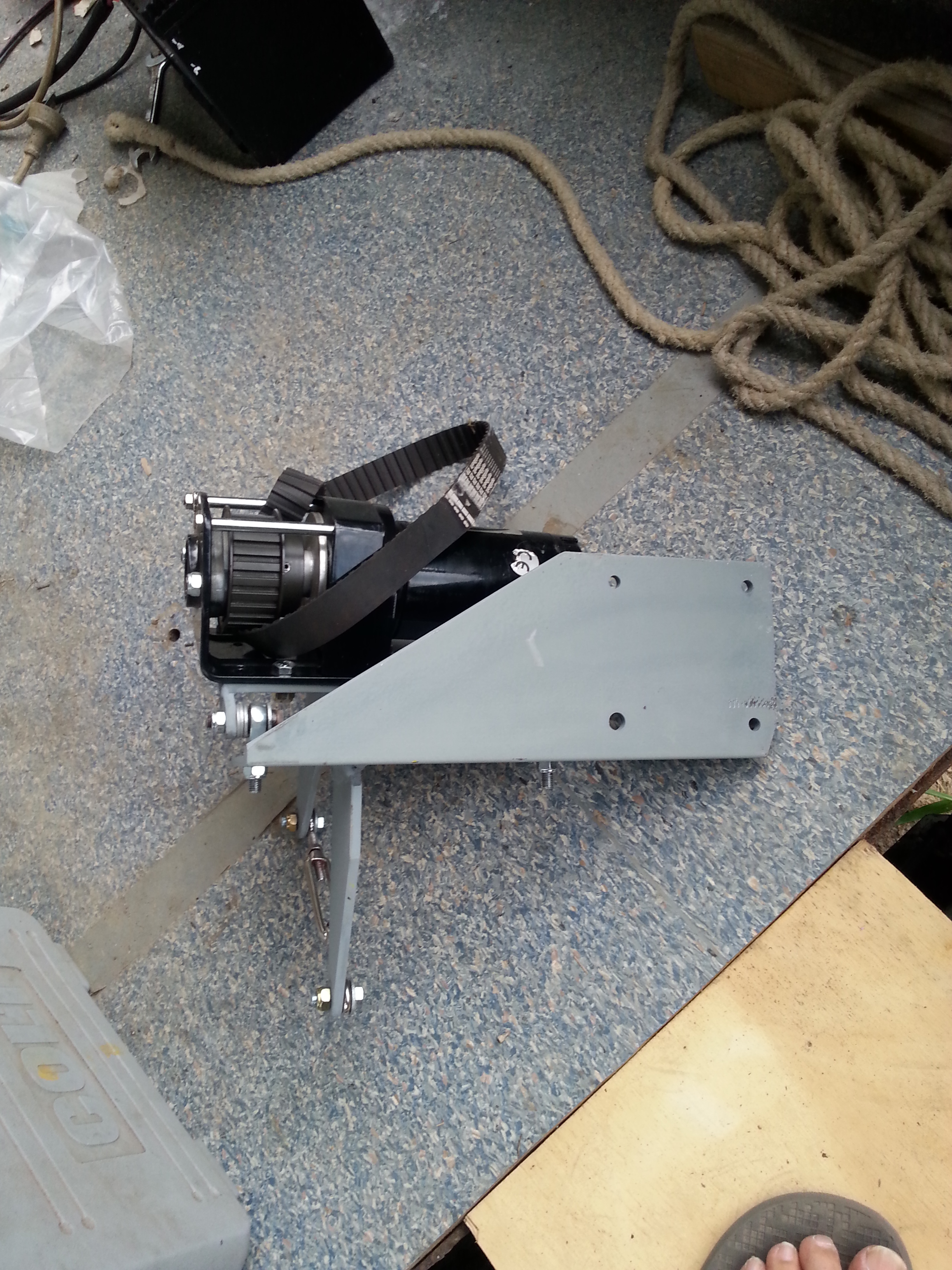
1 of the 2 drive motors ready to be bolted to the completed leg brackets # 1

Completed drive motor & bracket with adjustment facility.

1 of the 2 drive motors ready to be bolted to the completed leg brackets # 2

Drive unit ready to be fitted to the Leg mount.

Electrical Control cabinet update 23/08/14

Electrical Control cabinet is almost completed the side panels have been built, covered & fitted. The door is in the process of being made & will soon be installed.

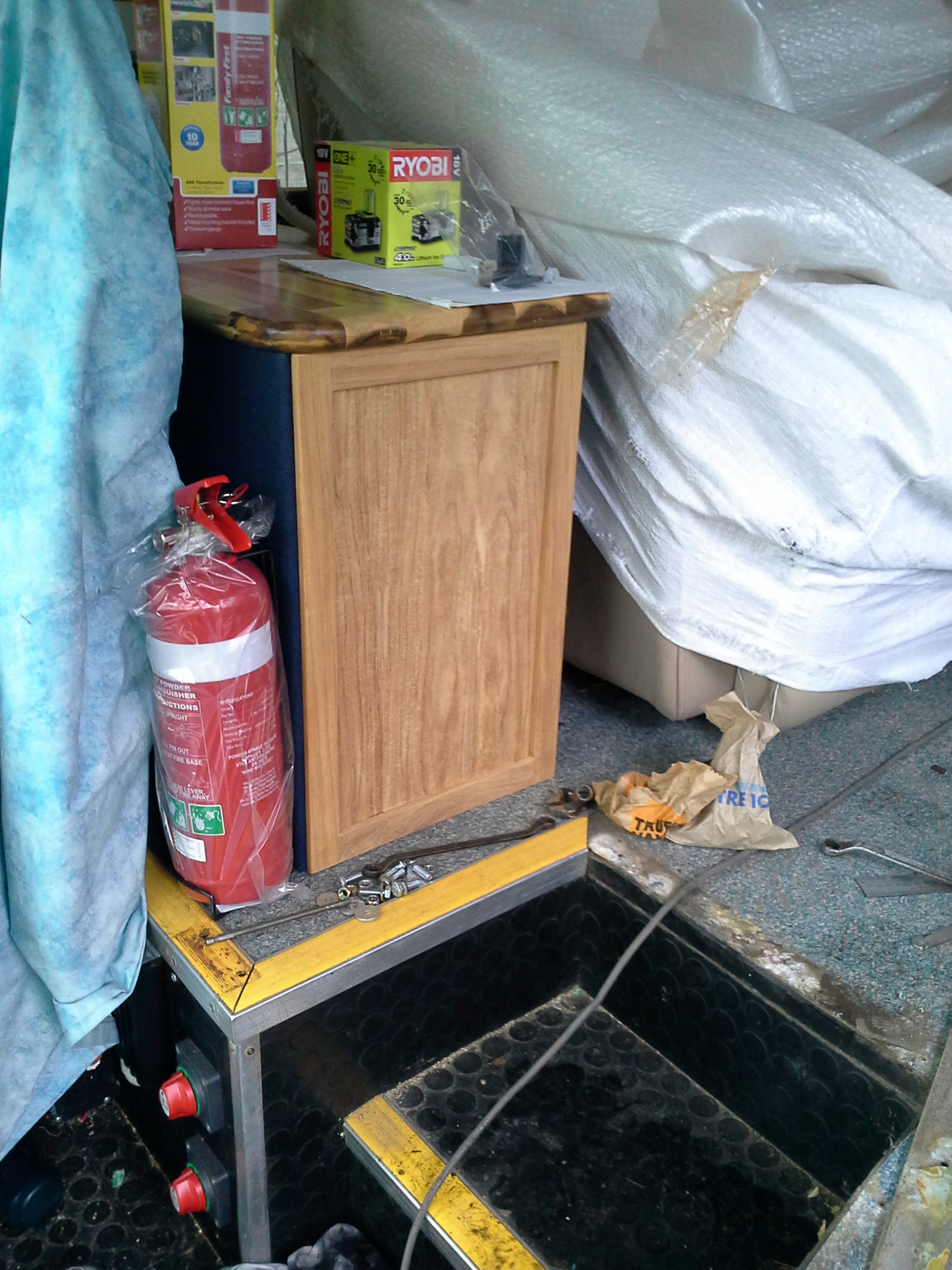
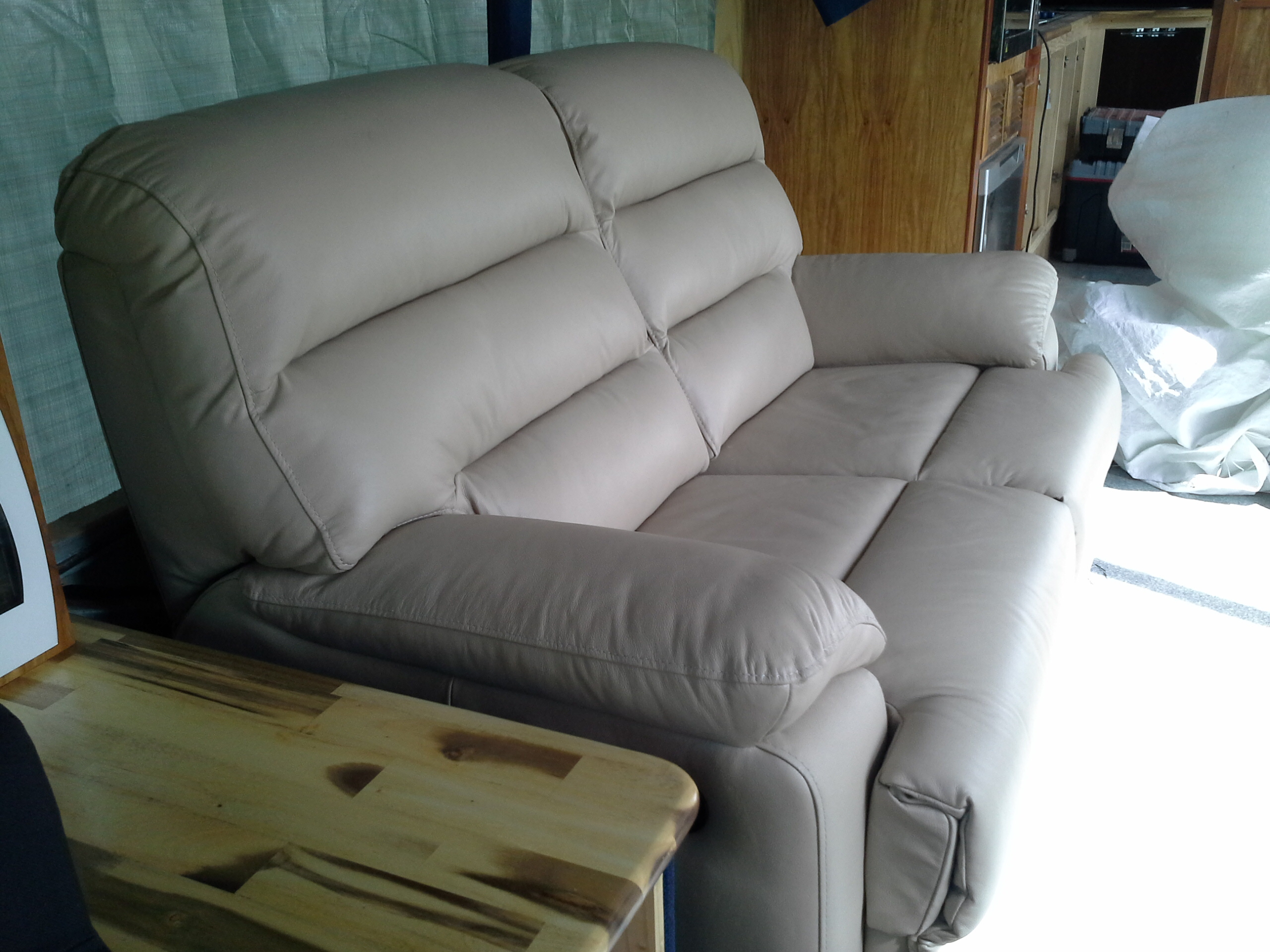
The Fire extinguisher is now in position & the Lounge has been temporarily moved into place prior to making the cabinet for the Chest fridge at the other end of the Lounge.

The only work to be completed on the Electrical cabinet now is the wiring of the Solar system once the Solar panels have been installed.

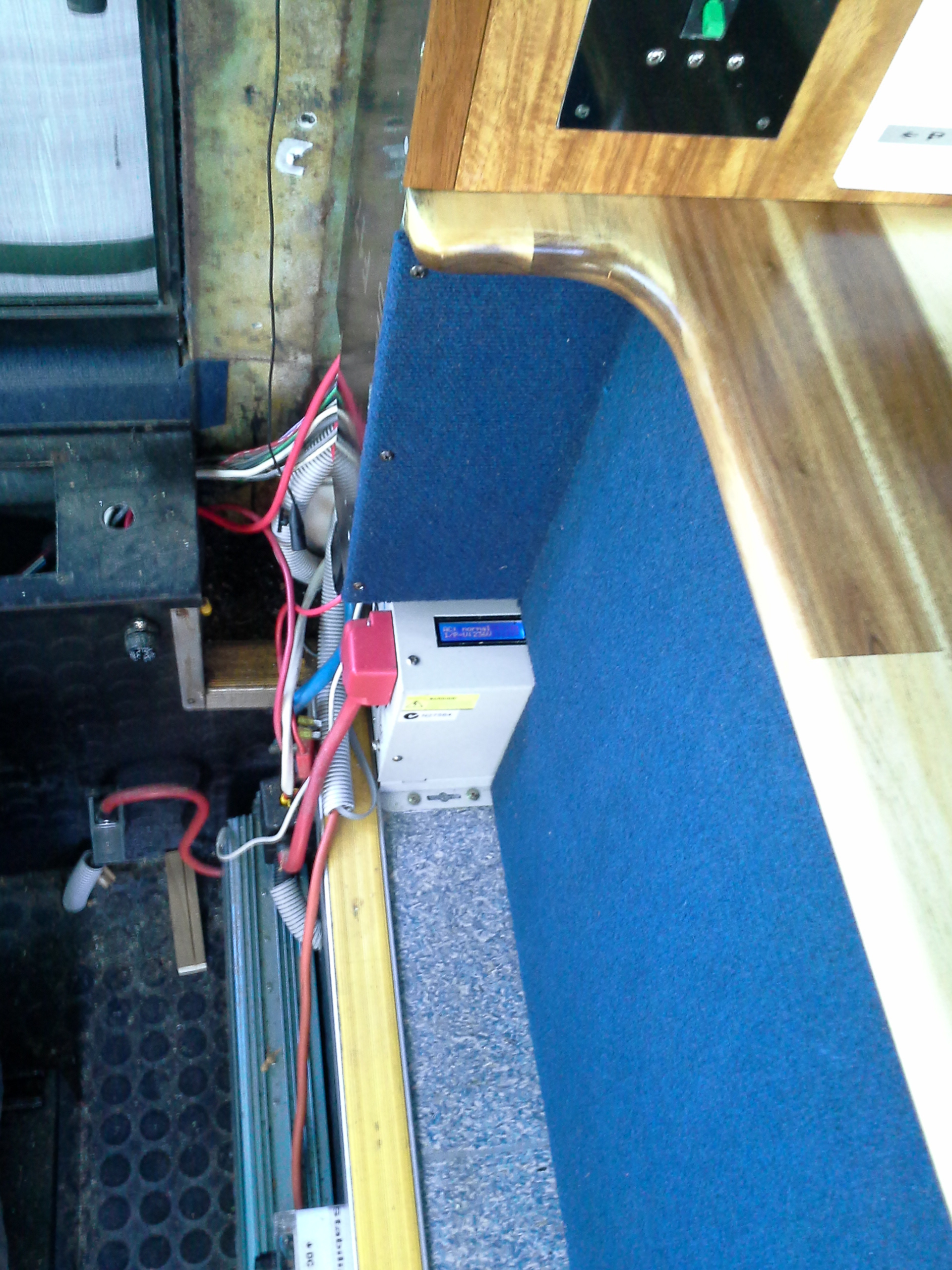
The electrical cabinet is finished but for the door to access the 1st aid kit, the display for the inverter state can be seen at the bottom rear of the blue panel.

The electrical cabinet is finished but for the door to access the 1st aid kit, the display for the inverter state can be seen at the bottom rear of the blue panel.

Just waiting for the cabinet door to be completed.  One of the cabin fire extinguishers is to be mounted to the cabinet beside the 1st aid door & behind the drivers seat.

Just waiting for the cabinet door to be completed.
One of the cabin fire extinguishers is to be mounted to the cabinet beside the 1st aid door & behind the drivers seat.

Door to the 1st Aid cabinet installed & Fire extinguisher in place.

Door to the 1st Aid cabinet installed & Fire extinguisher in place.


With the lounge in position there is ample room to access the recline latch on the drivers end & still fit the Chest fridge on the opposite end.

With the lounge in position there is ample room to access the recline latch on the drivers end & still fit the Chest fridge on the opposite end.

Lounge in place beside the Electrical Panel.

Lounge in place beside the Electrical Panel.

Electrical cabinet progress 19th aug 2014

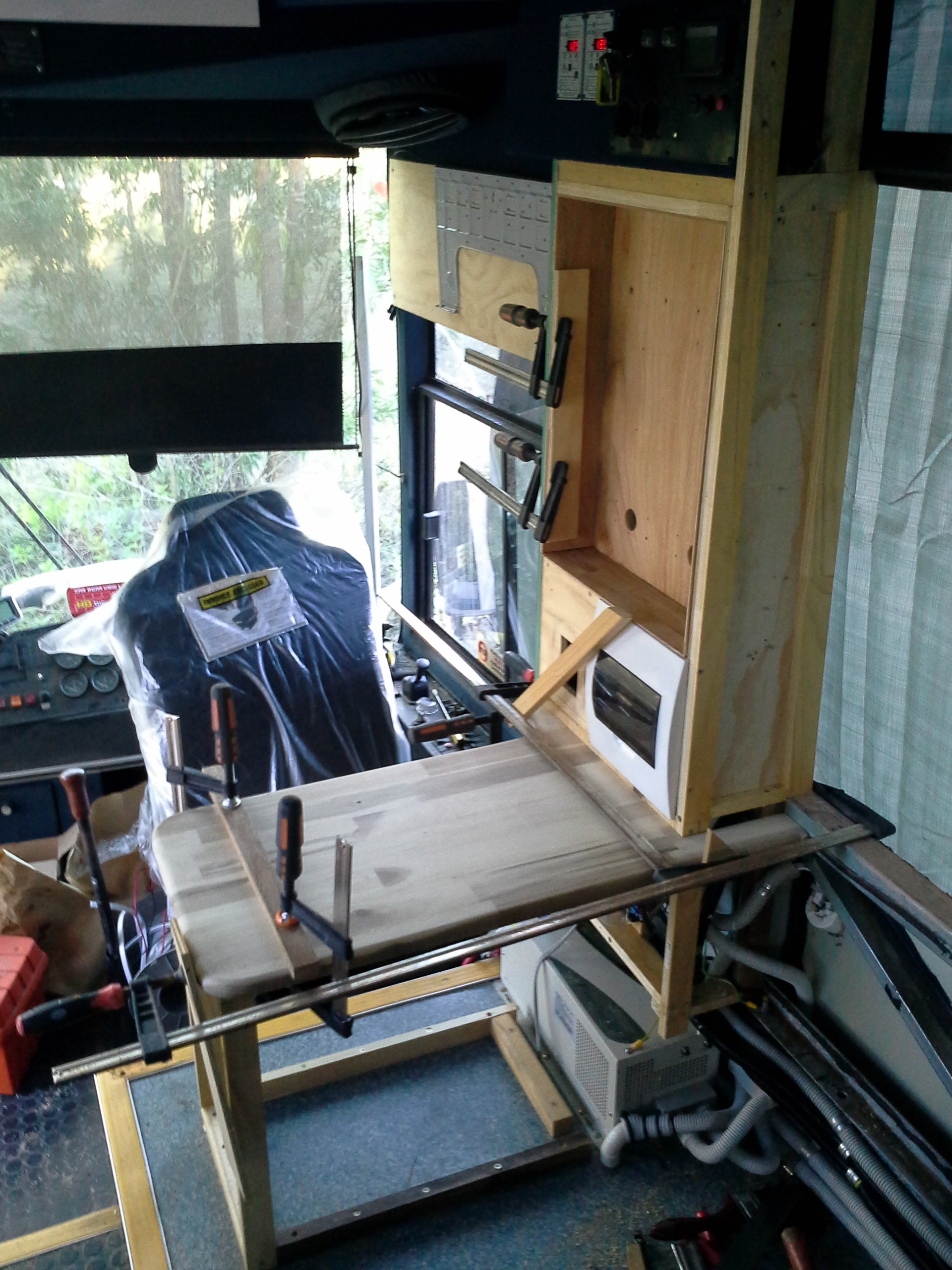
Cabinet frame has been completed & sheeting has been applied.

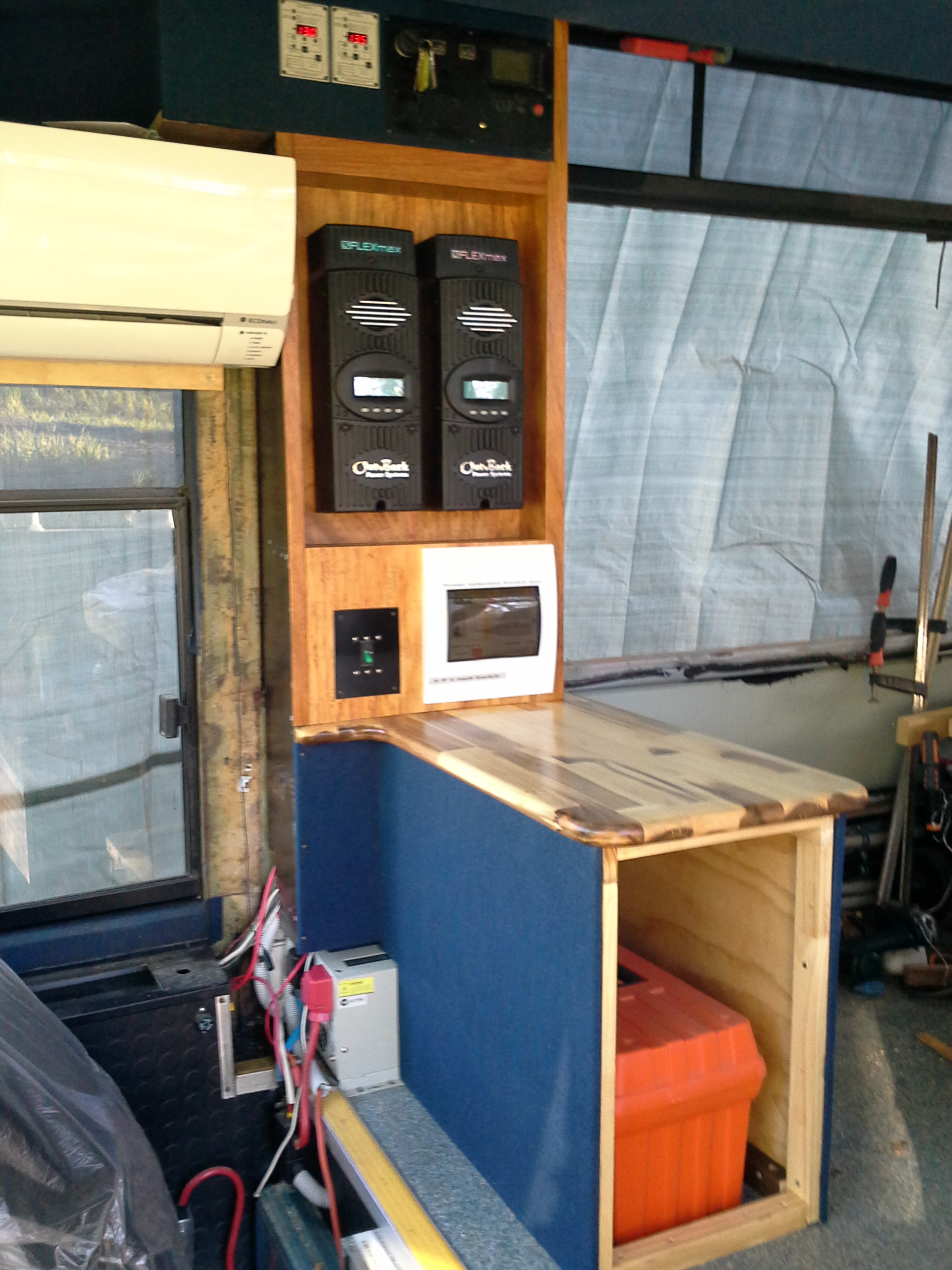
The Solar Controllers have been fitted but yet to be wired, the storage area for the first aid kit & the HID torch is under the bench but this is yet to be sheeted & the door made.

The bench forms a coffee table for the front end of the lounge & the wall of the cupboard behind the drivers seat will be used to mount one of the 2 fire extinguishers for the inside of the RV.

Start of the cabinet construction.

Start of the cabinet construction.

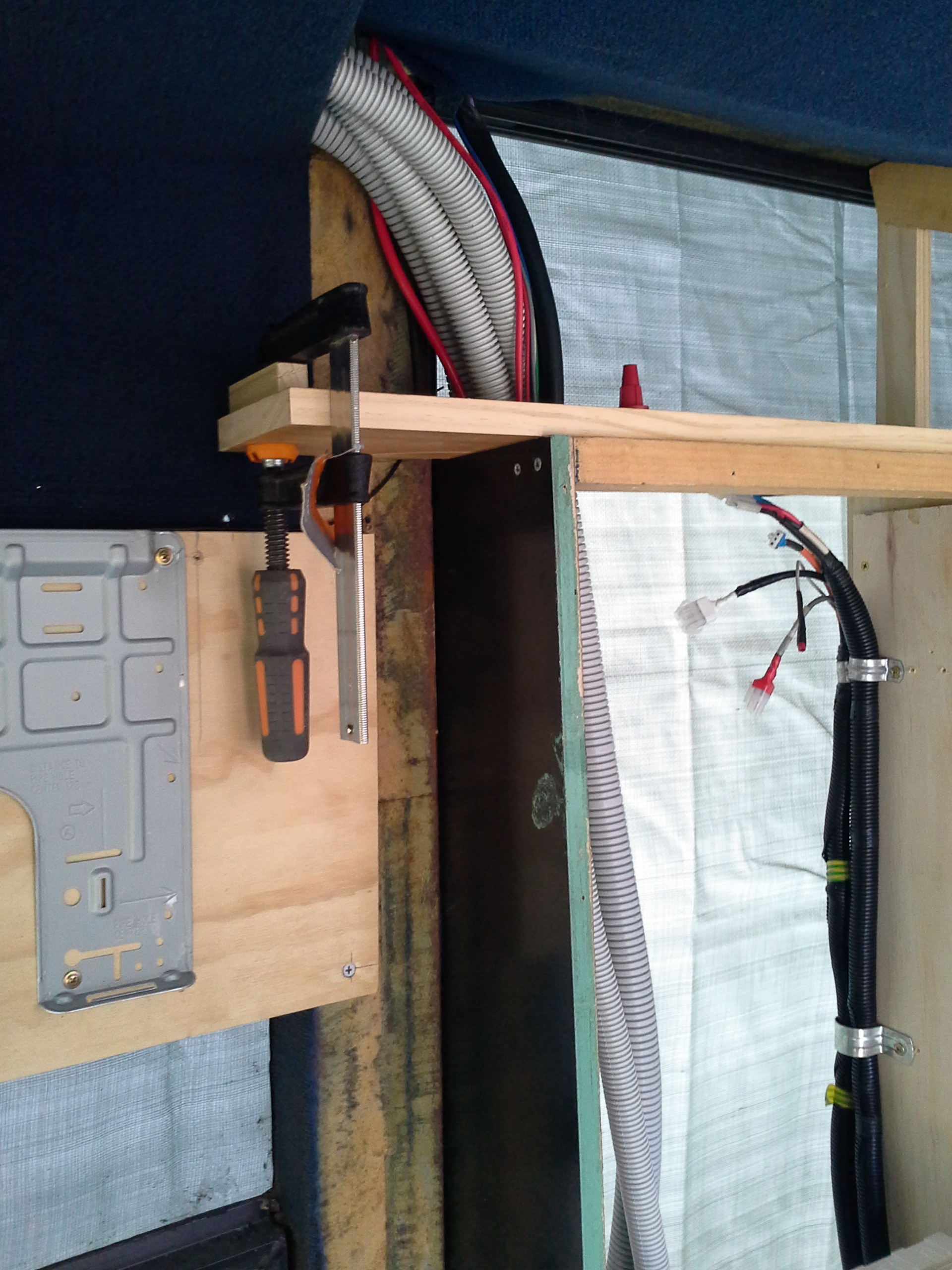
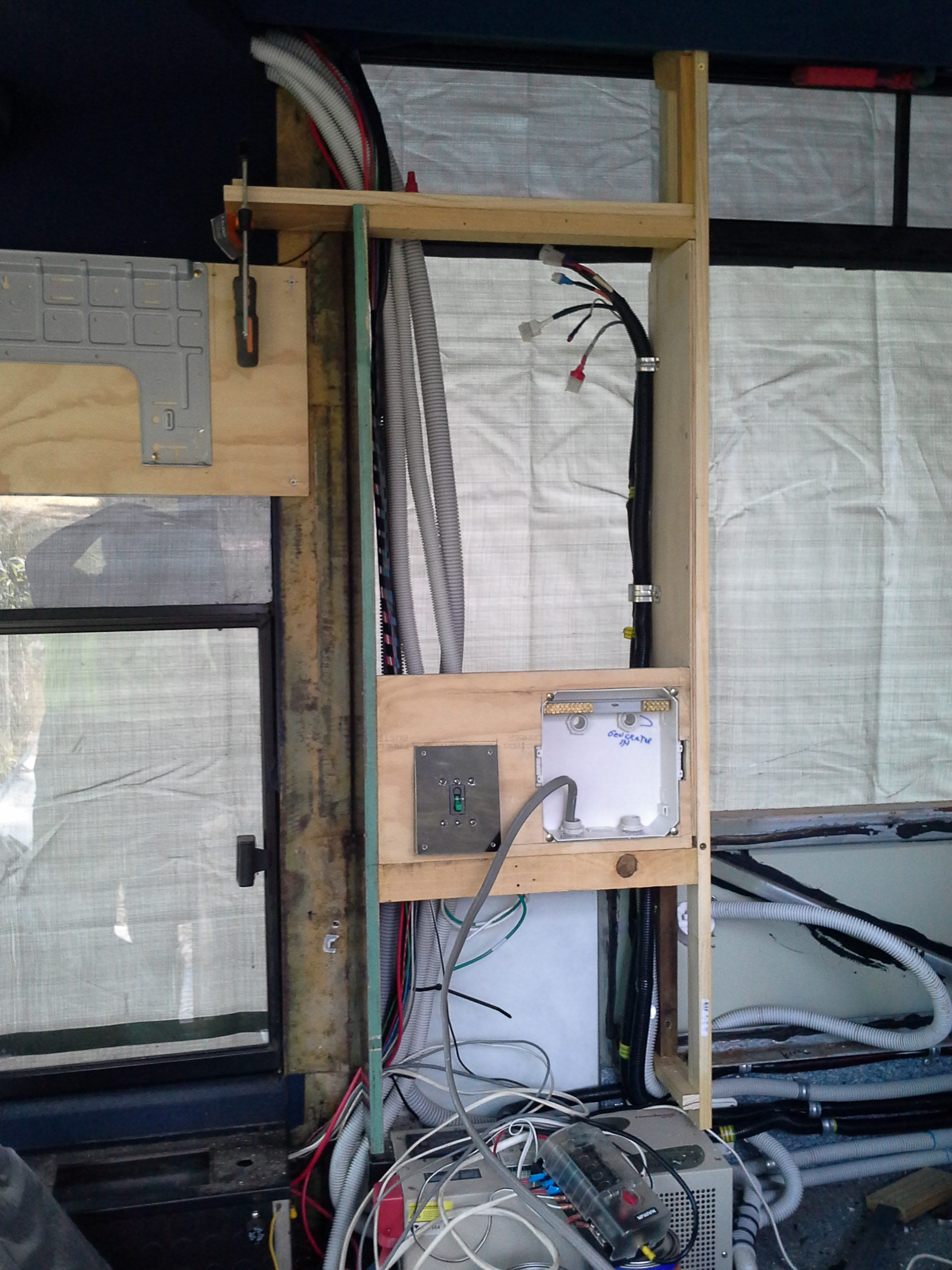
All of the grey conduit running through the back of the Electrical control cabinet are either 240v AC power into or returning from the Mains Safety box mounted over the Driver.

All of the grey conduit running through the back of the Electrical control cabinet are either 240v AC power into or returning from the Mains Safety box mounted over the Driver.

The Black conduits running up the R/H side are the remote control cabling for the Generator mounted in the Forward most R/Hand storage Bin.

The Black conduits running up the R/H side are the remote control cabling for the Generator mounted in the Forward most R/Hand storage Bin.

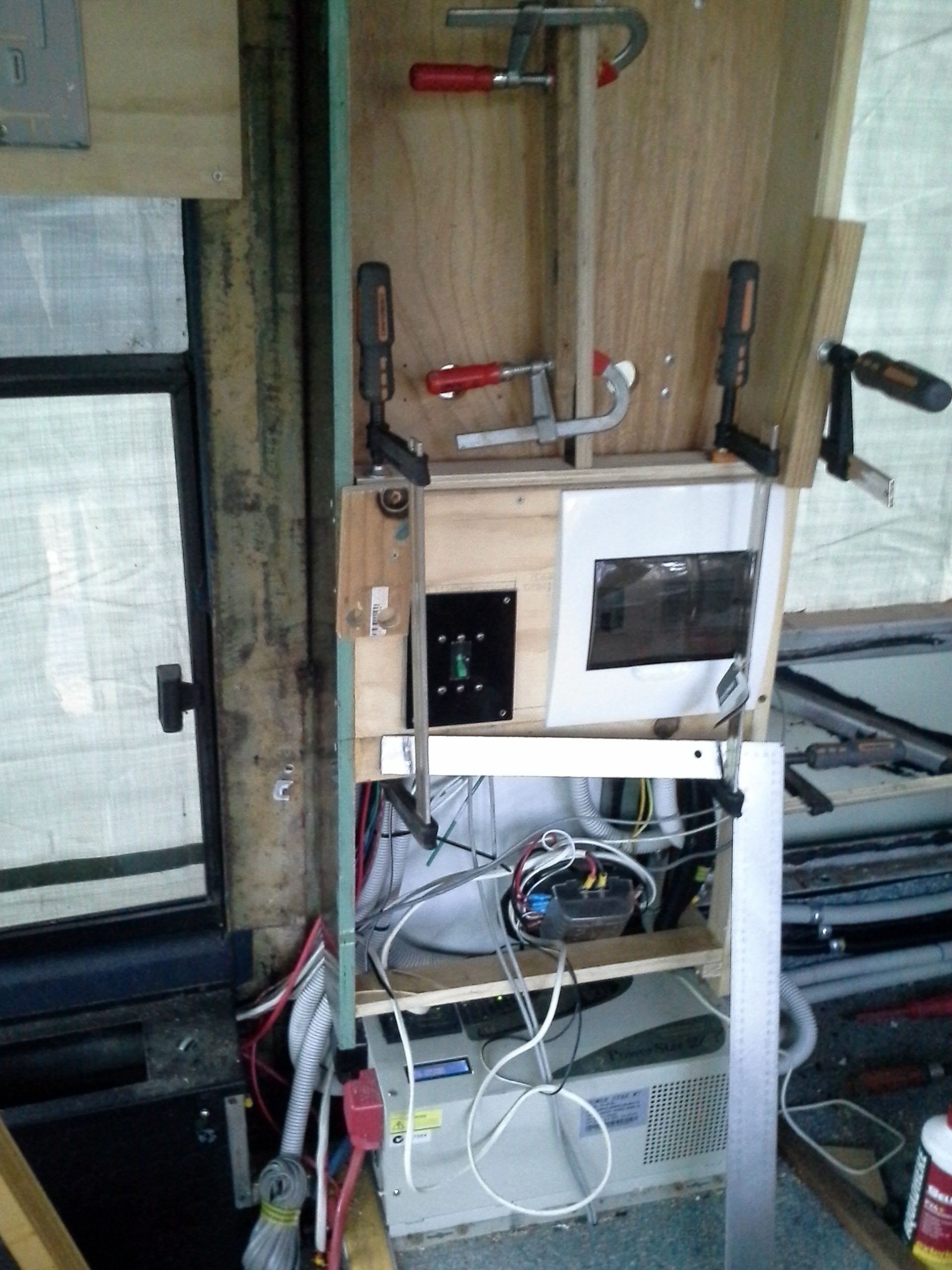
The Power box on the right will house the Selector switch to allow the power source to be chosen from the Mains or on-board generator, It also will contain a safety switch for the 15amp circuit for welding directly from the Generator.

The Power box on the right will house the Selector switch to allow the power source to be chosen from the Mains or on-board generator, It also will contain a safety switch for the 15amp circuit for welding directly from the Generator.

The large white unit below the Cabinet is the 7000w Inverter / Charger.

The large white unit below the Cabinet is the 7000w Inverter / Charger.

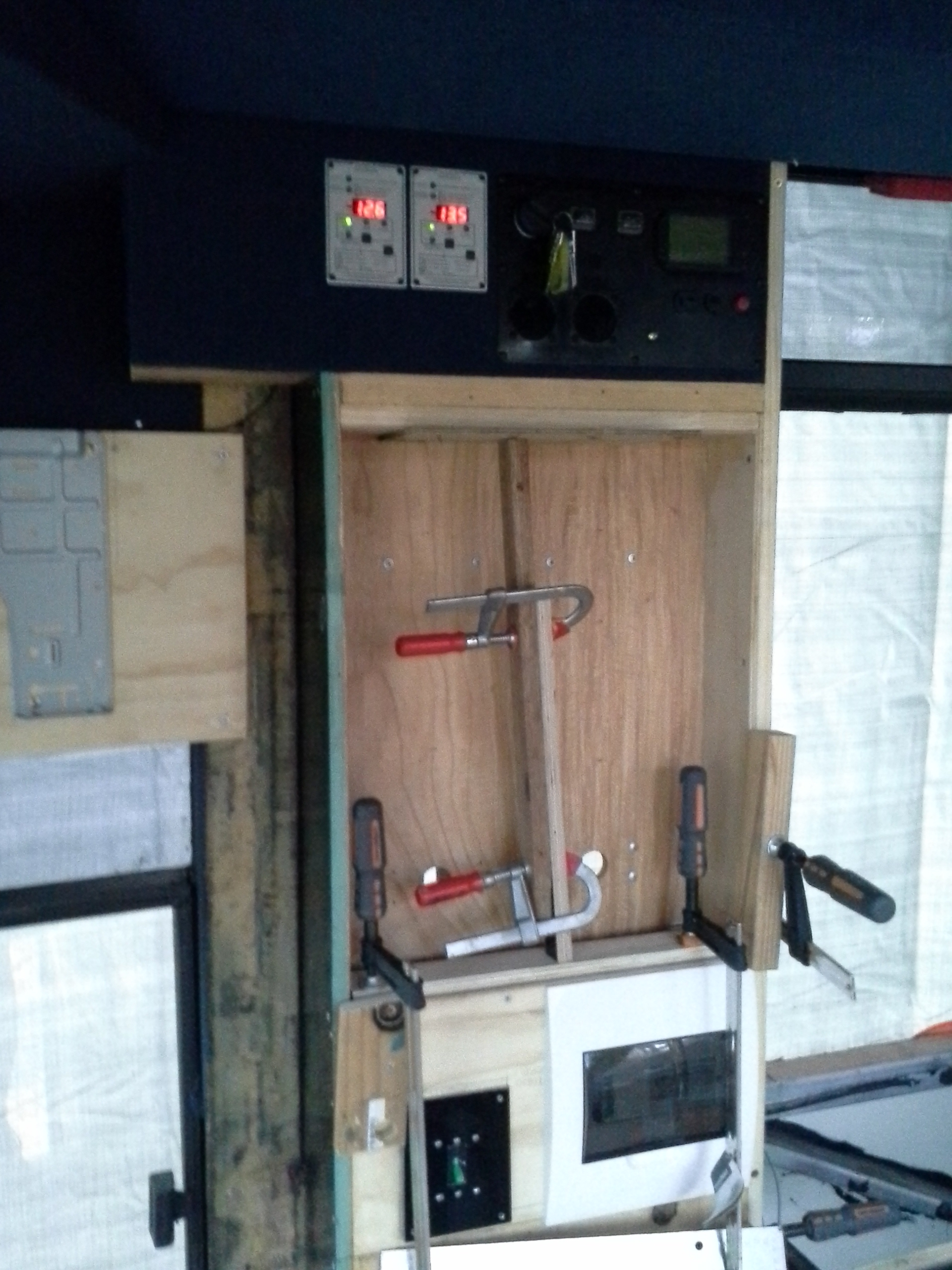
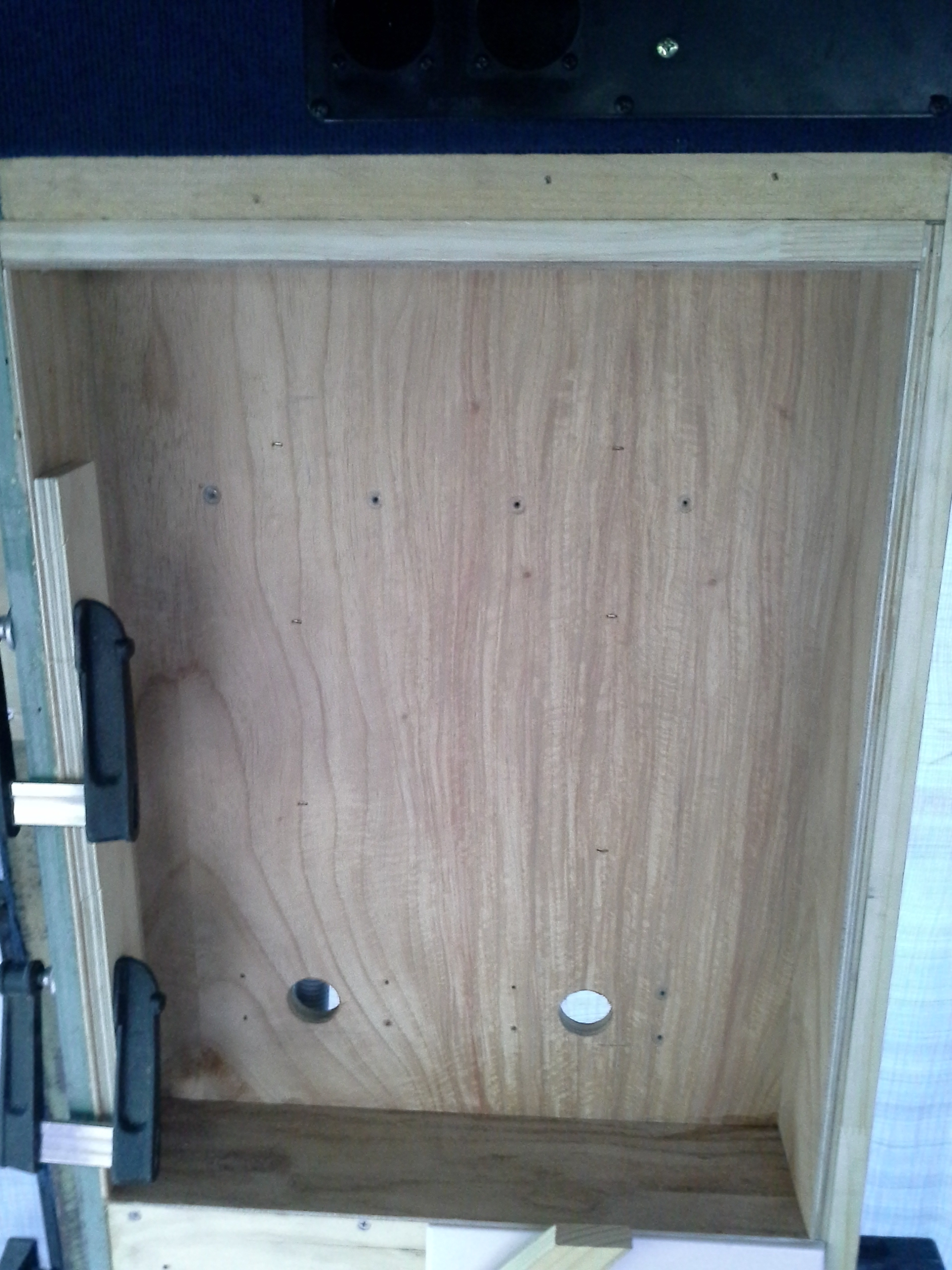
The recessed center compartment is to house the 2 Solar controllers, the NG rosewood ply is in the process of being applied.

The recessed center compartment is to house the 2 Solar controllers, the NG rosewood ply is in the process of being applied.

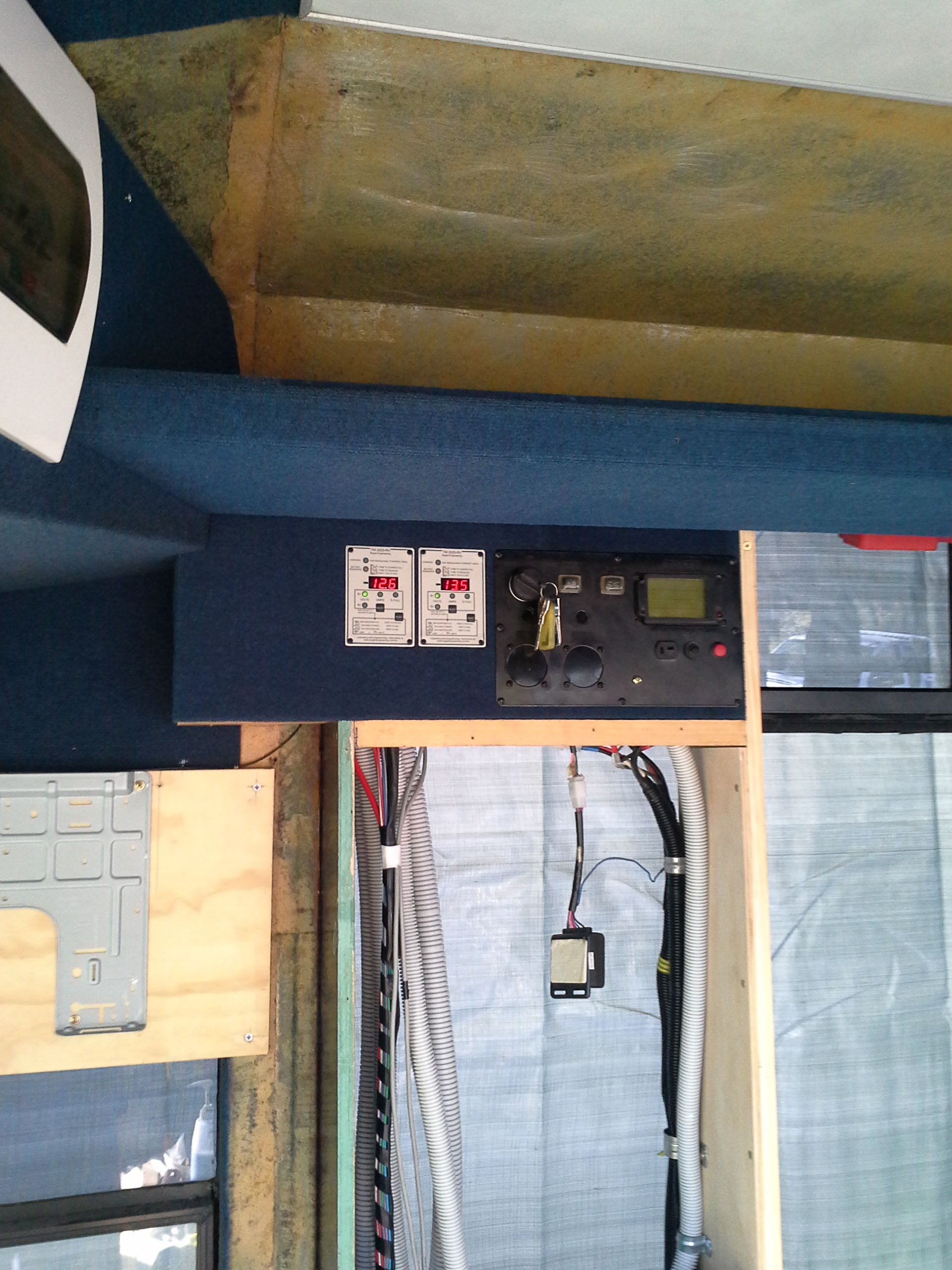
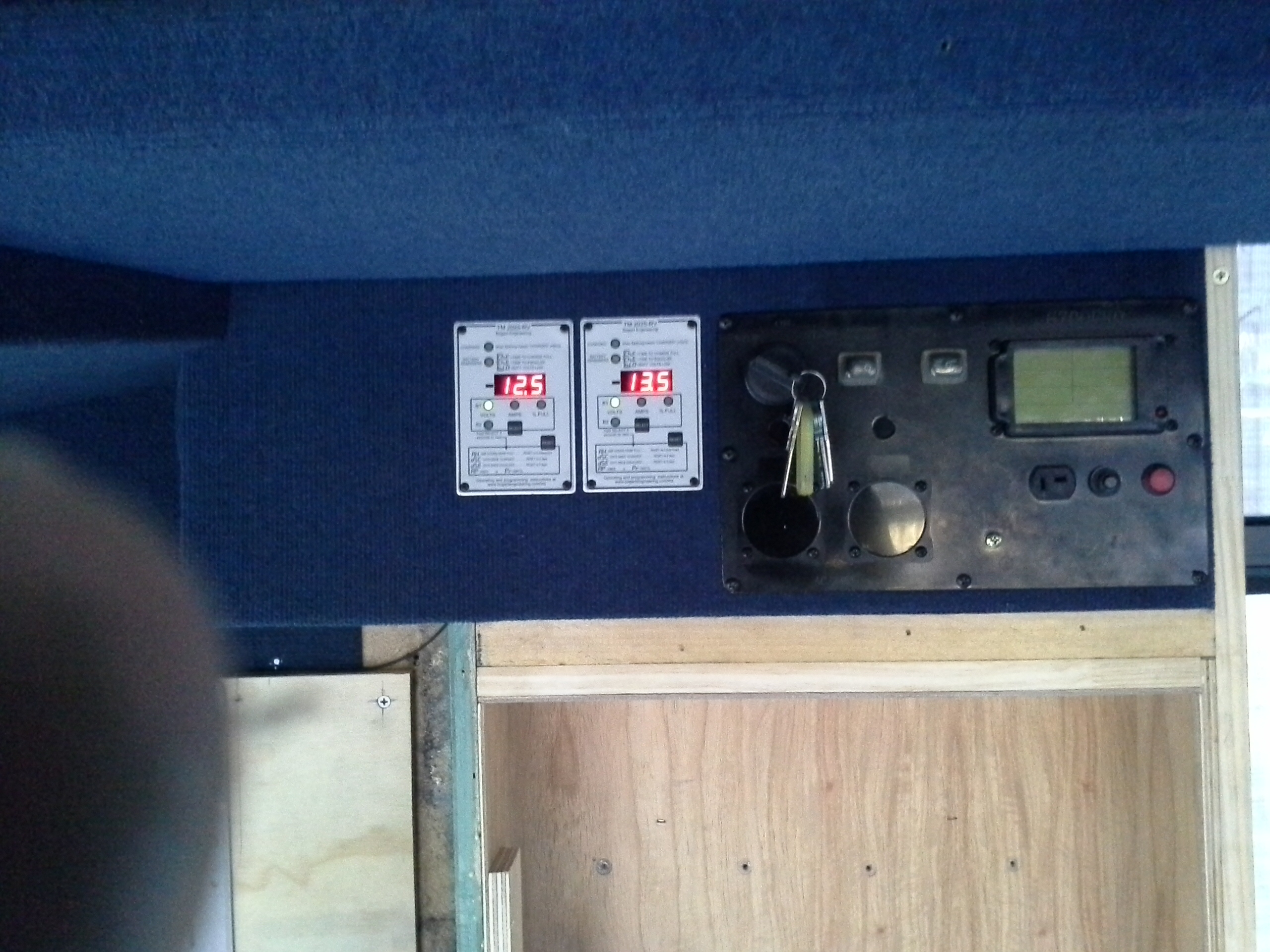
Generator Controls & the Battery monitors in the same panel of the Cabinet, the box hanging from behind the generator controls is for the wireless control of the generator.

Generator Controls & the Battery monitors in the same panel of the Cabinet, the box hanging from behind the generator controls is for the wireless control of the generator.

Start of the facings & trims, bench top being fixed to frame.

Start of the facings & trims, bench top being fixed to frame.

Solar controller enclosure ready for trimming & painting.

Solar controller enclosure ready for trimming & painting.

Generator controls & Battery monitors are now operational,  the front monitor has an issue with the accuracy of the reading. Will try again to adjust it but may need to replace it.

Generator controls & Battery monitors are now operational, the front monitor has an issue with the accuracy of the reading. Will try again to adjust it but may need to replace it.

Both Circuit breaker safety switches are in the same panel on the Cabinet.

Both Circuit breaker safety switches are in the same panel on the Cabinet.

The Black switch panel to the left of the white switch box is a fault safety switch for the twin 80amp Solar controllers, A requirement when linking 2 Solar controllers to 1 charging circuit?

The Black switch panel to the left of the white switch box is a fault safety switch for the twin 80amp Solar controllers, A requirement when linking 2 Solar controllers to 1 charging circuit?

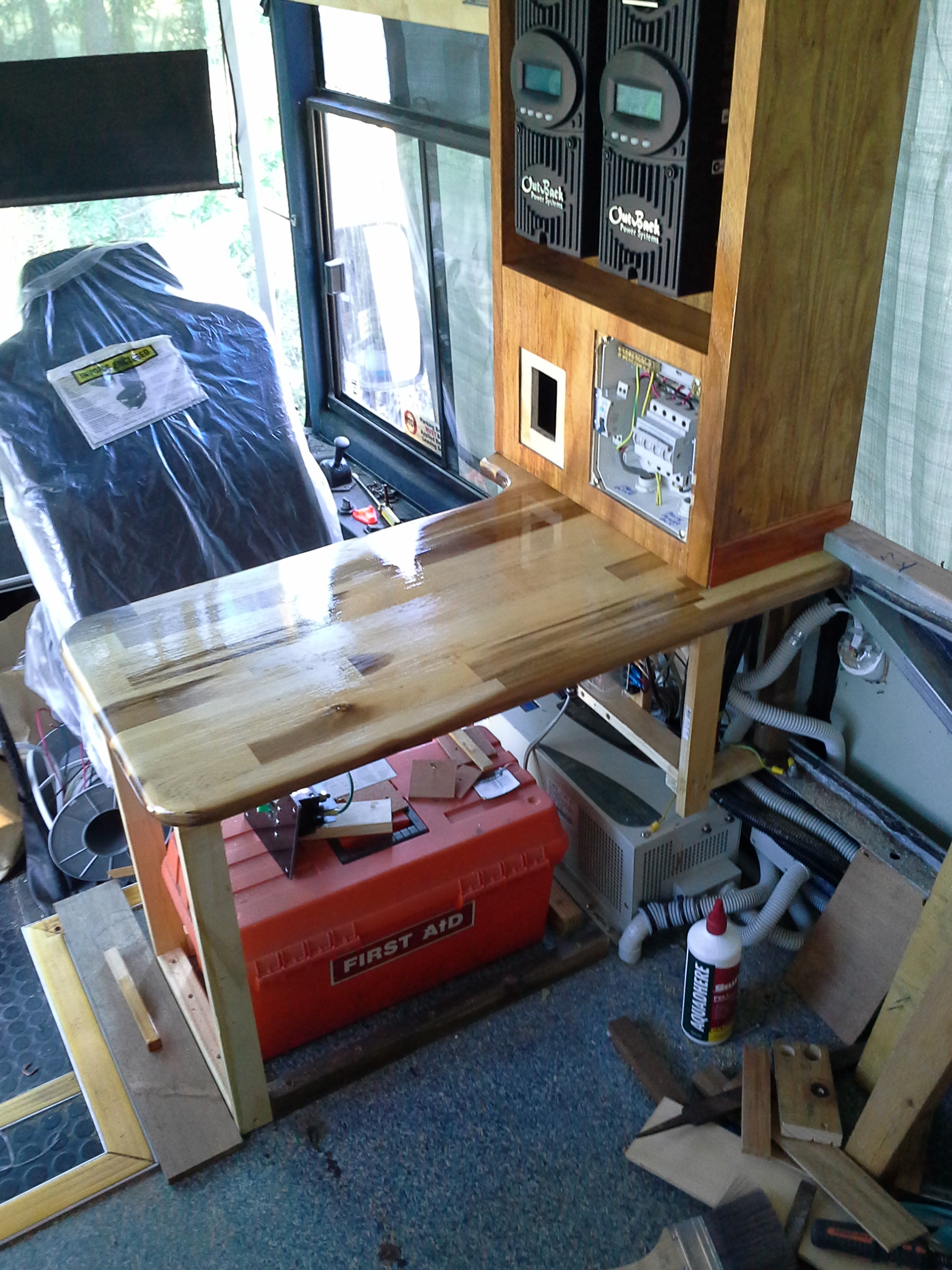
Upper cabinet finished just waiting for the Solar fault breaker & the AC source switch box to have the facia fitted.

Upper cabinet finished just waiting for the Solar fault breaker & the AC source switch box to have the facia fitted.

A coat of paint make all things look good.

A coat of paint make all things look good.

The sides for the 1st aid enclosure will be covered in the same blue front runner/carpet as the ceiling of the bus.

The sides for the 1st aid enclosure will be covered in the same blue front runner/carpet as the ceiling of the bus.

Electrical control cabinet is under construction.

The Electrical control cabinet is now in construction, this cabinet houses both of the Solar Controllers, Generator control panel, Battery Meters & switching systems for the RV’s power requirements. (This unit does not however contain the Safety circuits for the 240v AC power supply, This is in a separate control box mounted above the Driving position.)

The Electrical control cabinet is being constructed immediately behind the driver against the Drivers side wall & over the Main power inverter, This is the point at which the Mains power can be connected to the RV.

The only 240v AC power systems in the Cabinet are the Selection / Isolator switch which allows the power supply to be switched from the Mains to Generator power or back again, which ever is not in use is isolated from the Power. The other 240v AC circuit in this unit is a 16 amp Residual current/Circuit breaker device which supplies a single Power point & can only be run  from the Generator  for using an ARC Welder if needed. Both the Circuit breaker & Selector switch are housed in a small mains circuit box in the lower front of the cabinet.

By placing this cabinet in this area of the RV  it allows all of the electrical controls & metering of both the AC & DC  systems to be monitored & adjusted easily as they can be observed from the Entrance of the RV &  the dual purpose Passenger/Lounge & computer desk seat. The Battery selector switches are within easy reach of this cabinet allowing the Battery charging & usage to be controlled from the same point in the RV.

Start of the cabinet construction.

Start of the cabinet construction.

The Black conduits running up the R/H side are the remote control cabling for the Generator mounted in the Forward most R/Hand storage Bin.

The Black conduits running up the R/H side are the remote control cabling for the Generator mounted in the Forward most R/Hand storage Bin.

The Power box on the right will house the Selector switch to allow the power source to be chosen from the Mains or on-board generator, It also will contain a safety switch for the 15amp circuit for welding directly from the Generator.

The Power box on the right will house the Selector switch to allow the power source to be chosen from the Mains or on-board generator, It also will contain a safety switch for the 15amp circuit for welding directly from the Generator.

The large white unit below the Cabinet is the 7000w Inverter / Charger.

The large white unit below the Cabinet is the 7000w Inverter / Charger.

The Black switch panel to the left of the white switch box is a fault safety switch for the twin 80amp Solar controllers, A requirement when linking 2 Solar controllers to 1 charging circuit?

The Black switch panel to the left of the white switch box is a fault safety switch for the twin 80amp Solar controllers, A requirement when linking 2 Solar controllers to 1 charging circuit?

Both Circuit breaker safety switches are in the same panel on the Cabinet.

Both Circuit breaker safety switches are in the same panel on the Cabinet.

Generator Controls & the Battery monitors in the same panel of the Cabinet, the box hanging from behind the generator controls is for the wireless control of the generator.

Generator Controls & the Battery monitors in the same panel of the Cabinet, the box hanging from behind the generator controls is for the wireless control of the generator.

The recessed center compartment is to house the 2 Solar controllers, the NG rosewood ply is in the process of being applied.

The recessed center compartment is to house the 2 Solar controllers, the NG rosewood ply is in the process of being applied.


Low voltage power system.

The low voltage house power system consists of 4 x 280 Ah Glass mat batteries, these are set up to supply 12v via 2 banks allowing 1 bank to supply power for all the items in use whilst the 2nd bank is being charged from the Solar array. this allows complete charging of the separate banks to ensure a long battery life.

By using 3 separate battery switches this allows greater flexibility of charging & use of the batteries, When the Inverter has AC power whether from the mains or Generator the battery bank currently in supply mode is charged from the Inverter at up to 70amps. When traveling the Vehicle power system will charge this bank at up to 40amps via the Redarc unit.

The battery bank not in use would normally be charged via the 2Kw solar array, when there is plenty of solar power both banks can be coupled for charging & supply power to the inverter for running of the Air Conditioners.

Due to the high power capacity of the Inverter system all main battery leads have been up rated to carry a constant 600amps if needed, this also reduces any voltage drop through the supply system due to the distance the 12v system is required to supply from. Both banks have 500amp shunts on the earth side & battery monitors to allow control over the depth of discharge to ensure good life expectancy.

All lighting, the 3 Fridges, Toilet, Diesel hot water control, Water pumps, Radio, TVs & Vast Satellite system are run from the 12v system. When the Solar system is not available due to weather I can use the Diesel generator to power the Inverter for recharging the system.

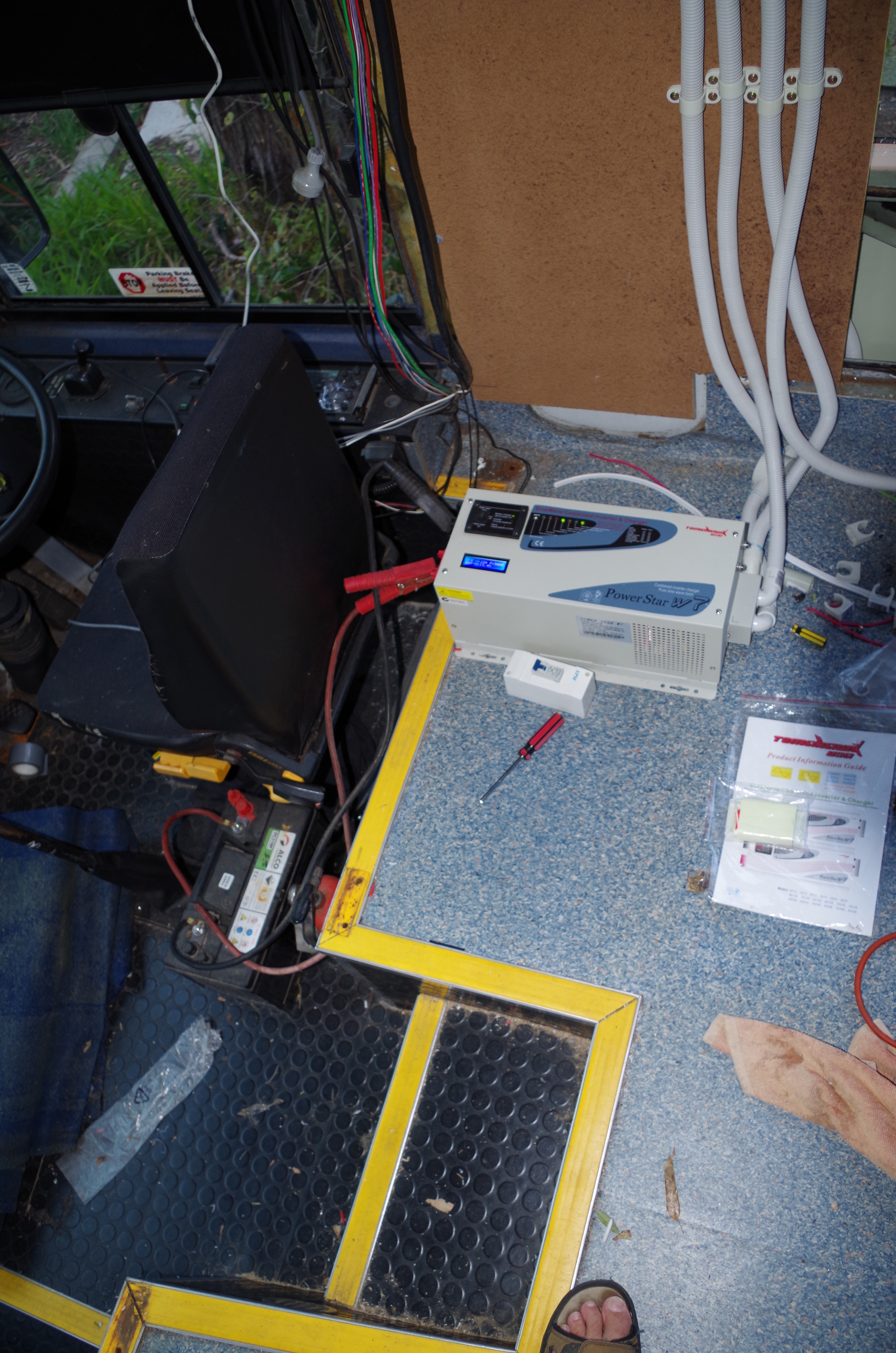
The Inverter in its temporary  position prior to the low voltage system installation, the battery switches are mounted immediately behind the driving position on the low wall to the left on the approach to the steps.

The Inverter in its temporary position prior to the low voltage system installation, the battery switches are mounted immediately behind the driving position on the low wall to the left on the approach to the steps.

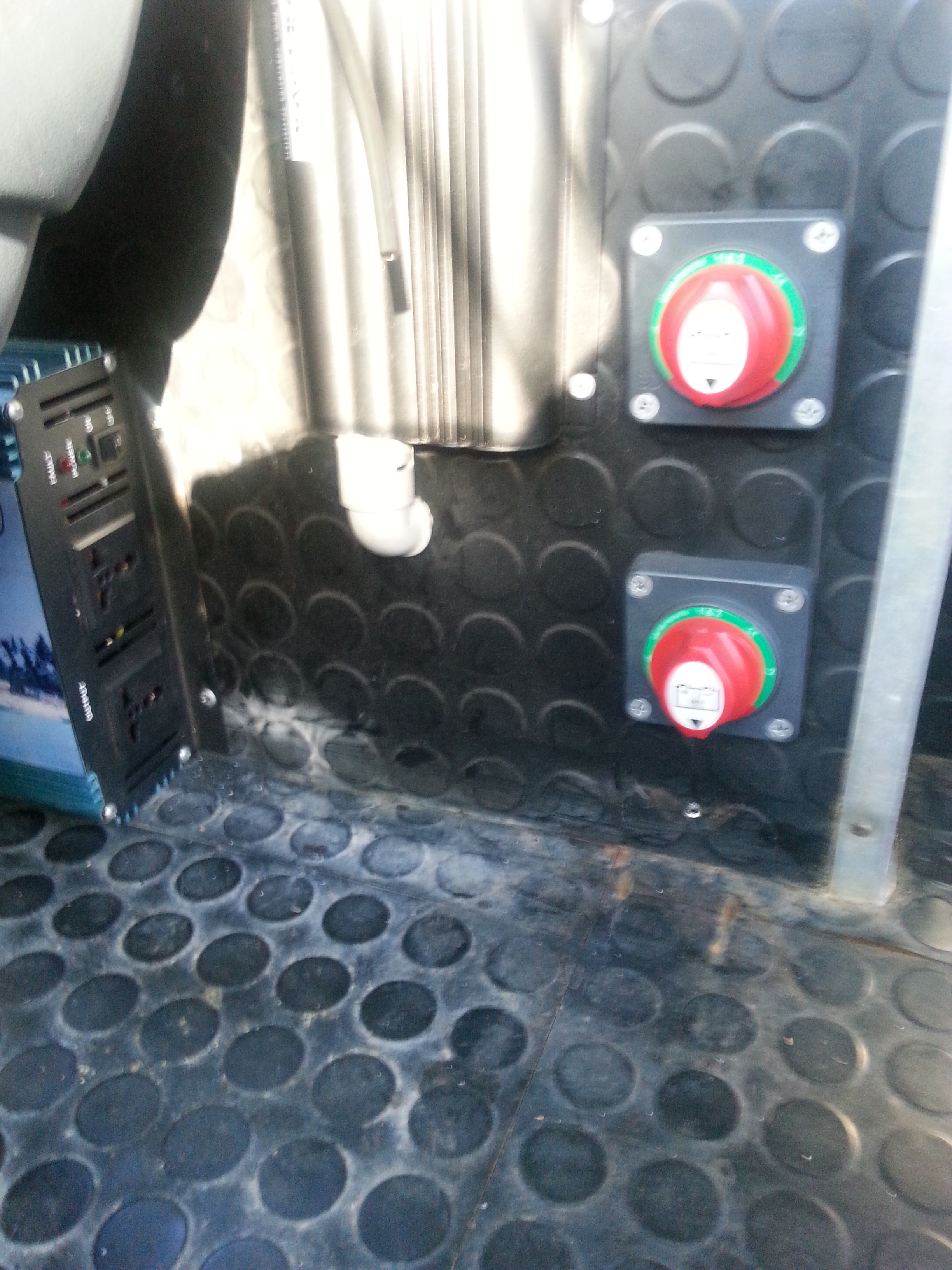
The selection switches for the Battery banks, (front & rear) these switches allow for selection of battery banks to individually supply power, receive charge from the Solar array or be coupled together as 1 bank. the item to the left of the upper switch is a Redarc 1240dc-dc charge controller which will supply charge to the bank currently in use when the Vehicle engine is running.

The selection switches for the Battery banks, (front & rear) these switches allow for selection of battery banks to individually supply power, receive charge from the Solar array or be coupled together as 1 bank. the item to the left of the upper switch is a Redarc 1240dc-dc charge controller which will supply charge to the bank currently in use when the Vehicle engine is running.

The Inverter/Charger unit, this unit has a peak power output of 7000w & 70 amp charging mode.

The Inverter/Charger unit, this unit has a peak power output of 7000w & 70 amp charging mode.


Installation of the House Batteries.

The low voltage side of the power system has been started, the position for the battery storage has been selected & a rack mount over the 2 Chassis rails behind the forward most storage Bin on the passenger side has been constructed. Although this area is assessable from the drivers side at present the main Air Conditioner units will occupy the vacant space on the drivers side of the chassis rails after the Air condition installations.

I therefore decided to make access to the Battery system for installation & removal of the batteries through a removable panel behind the Washing Machine in this Forward left hand side Bin. the racks have been constructed out of  50mm x 3mm angle iron.

The House battery banks consist of 4 x 280Ah Glass mat batteries, these are wired as 2 separate banks of 560Ah which can be selected individually or coupled together as 1 unit of 1120Ah.

The Battery rack constructed to carry the 4 Deep cycle house batteries, this unit was mounted over the Chassis rails immediately behind the front axle.

The Battery rack constructed to carry the 4 Deep cycle house batteries, this unit was mounted over the Chassis rails immediately behind the front axle.

The position over the Chassis where the Rack is mounted for the Batteries. This photo is taken from the Hatch side.

The position over the Chassis where the Rack is mounted for the Batteries. This photo is taken from the Hatch side.

the access hatch hes been cut in the rear of the forward most Bin on the passenger side behind where the Washing machine is normally mounted.

the access hatch hes been cut in the rear of the forward most Bin on the passenger side behind where the Washing machine is normally mounted.

Washing machine on the ground during the installation of the Battery system, once completed the hatch cover can be re-installed & the washing machine refitted.

Washing machine on the ground during the installation of the Battery system, once completed the hatch cover can be re-installed & the washing machine refitted.

The last battery is in place & loading ramps ready for removal.

The last battery is in place & loading ramps ready for removal.

Photo of the Batteries in place after loading via temporary ramp system.

Photo of the Batteries in place after loading via temporary ramp system.

View of the batteries in place after loading through the access hatch, the clamps are yet to be fitted & Electrical cables & shunts for meters waiting for connection. This shot is from the drivers side before installation of the Air Conditioner units.

View of the batteries in place after loading through the access hatch, the clamps are yet to be fitted & Electrical cables & shunts for meters waiting for connection. This shot is from the drivers side before installation of the Air Conditioner units.


The Plumbing has been started.

The plumbing is well into the fitting stage with only the Hot Water storage system to be completed, The Grey water Tank & plumbing is finished & in use, the tank is a bladder type unit of 270 litres which sits on the Chassis over the rear axle system, there is a dump point inside the right rear mud guard.

The water supply system consists of 1 bladder of 380 litres for non-potable water & 1 poly tank of 420 litres for Potable water, these systems can be bypassed if town supply is in use to supply all taps without mixing or filling either tanks. A 2nd hose fitting is available to allow filling of either of these tanks individually when needed, there is also a filling point for the Non-potable tank to allow filling from a can.

The system runs 2 separate pumps, the hot water is supplied from the Non-potable tank only. All of the Main outlets are supplied by the Non-potable system the only exception being the Main Kitchen Flick mixer which has a selection tap for the Cold side which allows the use of  Potable or Non-potable water from this unit.

There is also a Filtered water system which is supplied from the potable water tank, this system has 1 outlet at the Kitchen sink & 1 at the Vanity unit in the bathroom. All hot water for the Vanity unit & the shower runs through a Temperature control unit mounted on the Vanity unit.

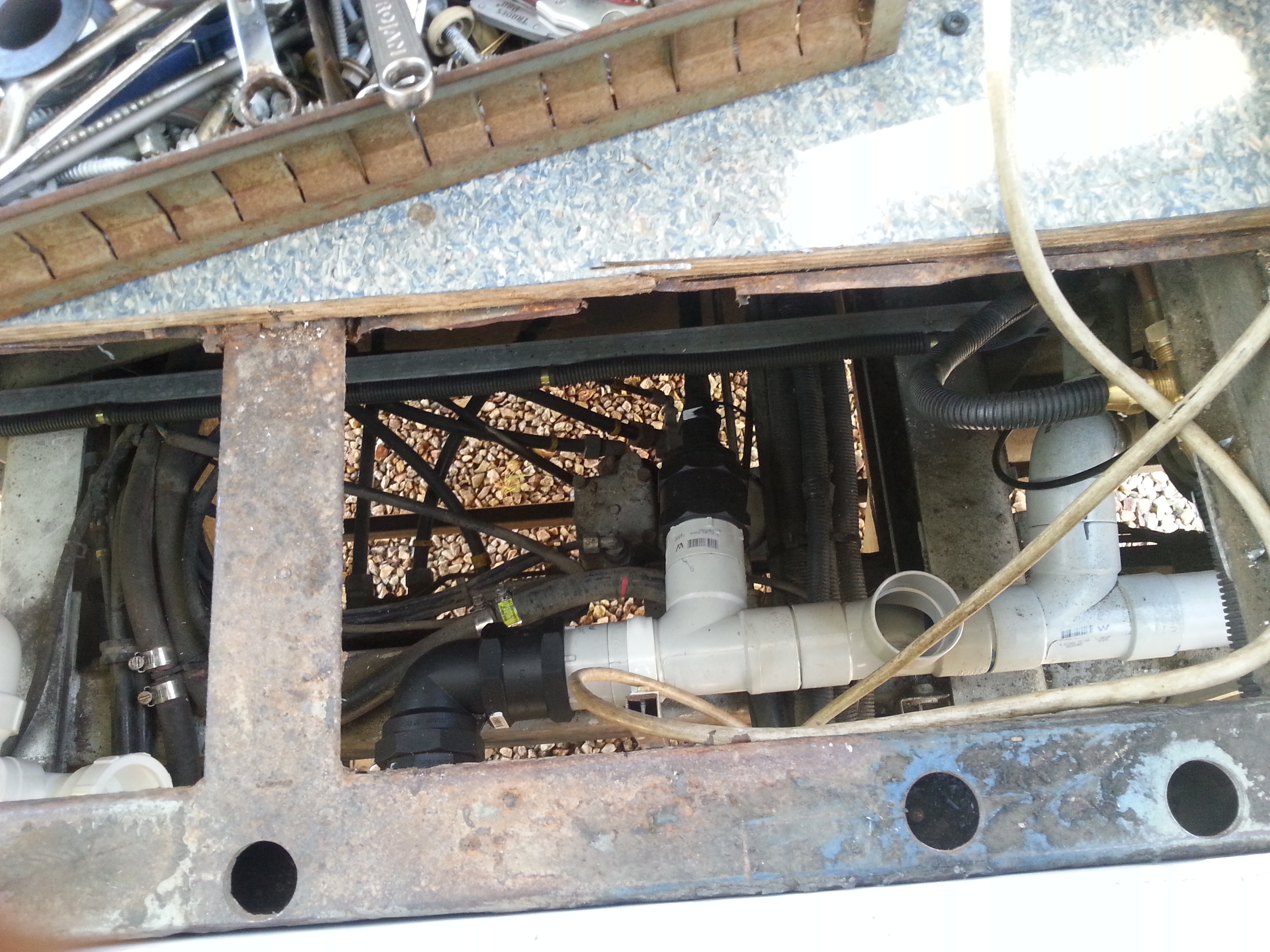
View from left hand wheel arch at Plumbing for Gray water.
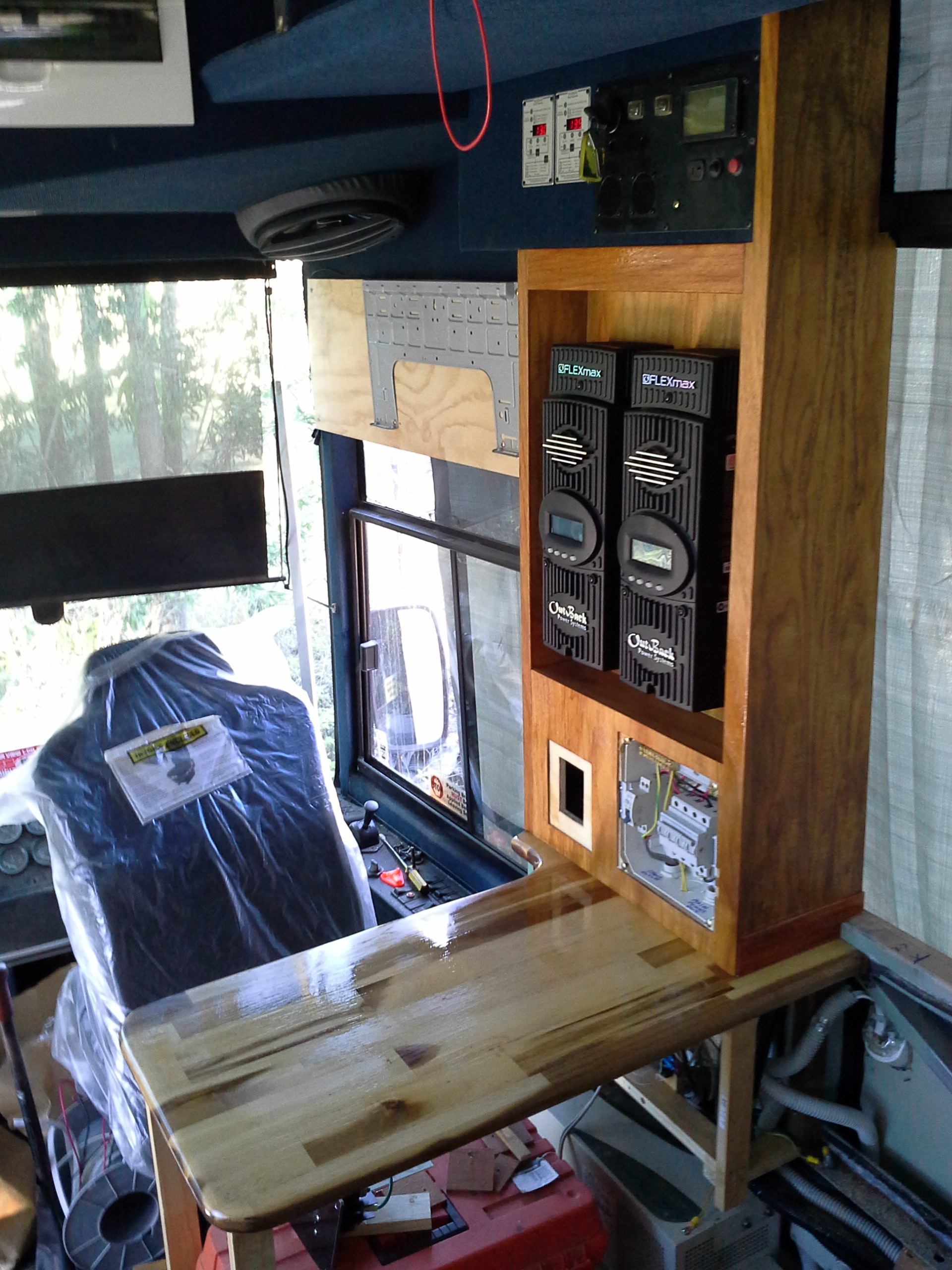
View from left hand wheel arch at Plumbing for Gray water.
Don't want to have to do anymore work under here, needed to be an octopus after the floor went back in!

Don’t want to have to do anymore work under here, needed to be an octopus after the floor went back in!

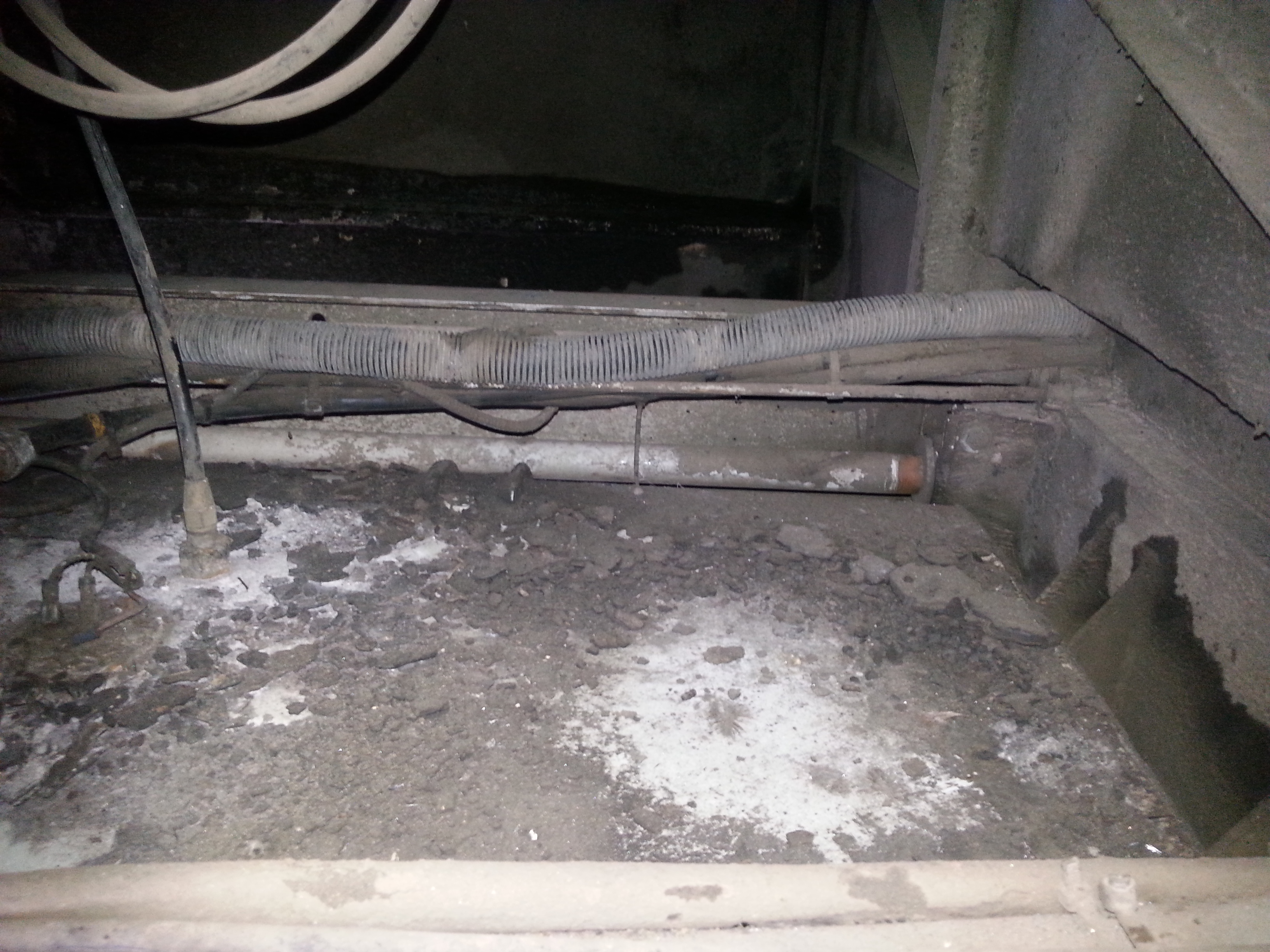
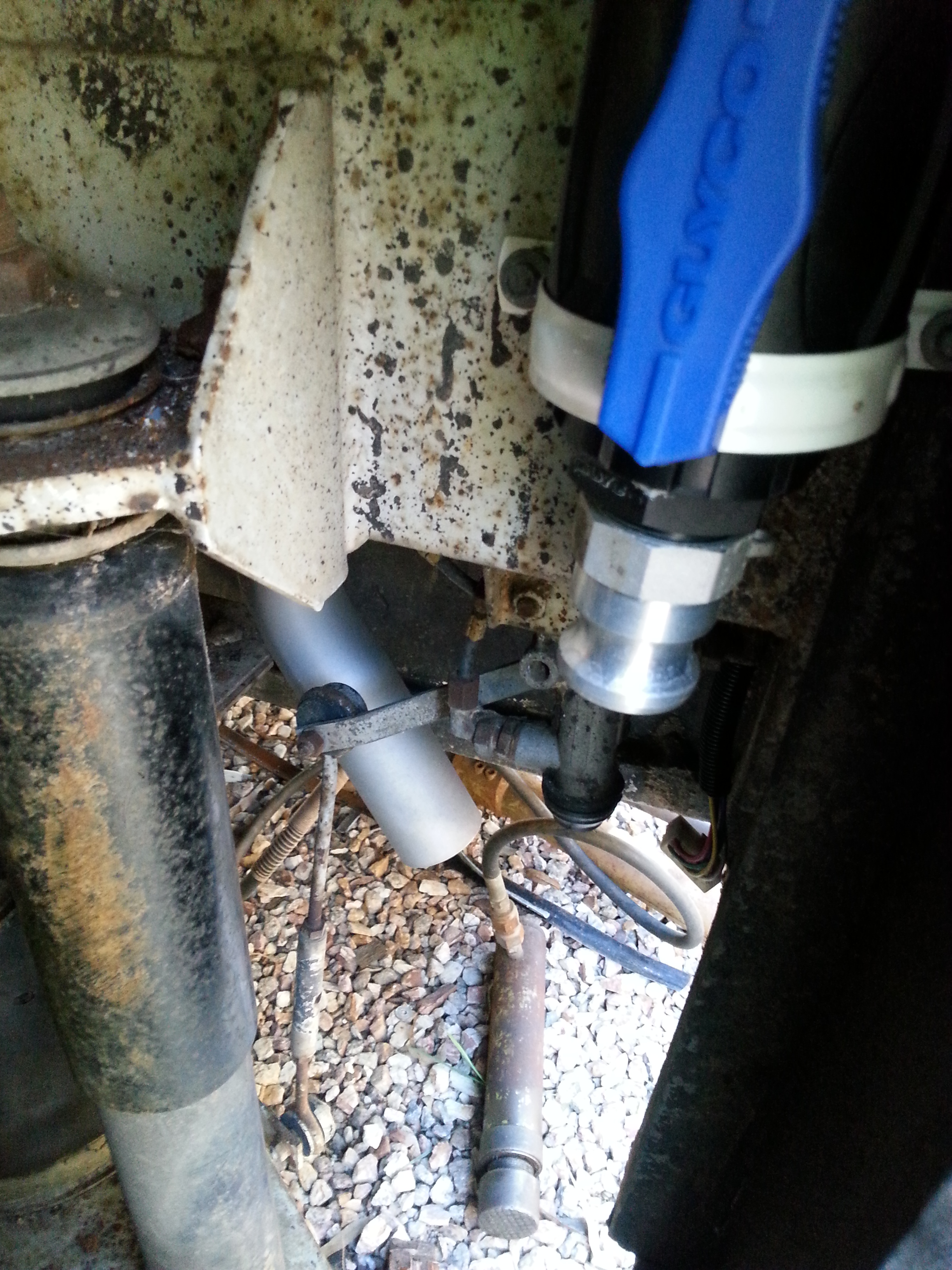
Drain point for the Gray water system, the silver pipe behind is the exhaust pipe for the diesel hot water system.

Drain point for the Gray water system, the silver pipe behind is the exhaust pipe for the diesel hot water system.

View of Gray water system prior to installation of Shower base & new floor over rear suspension.

View of Gray water system prior to installation of Shower base & new floor over rear suspension.

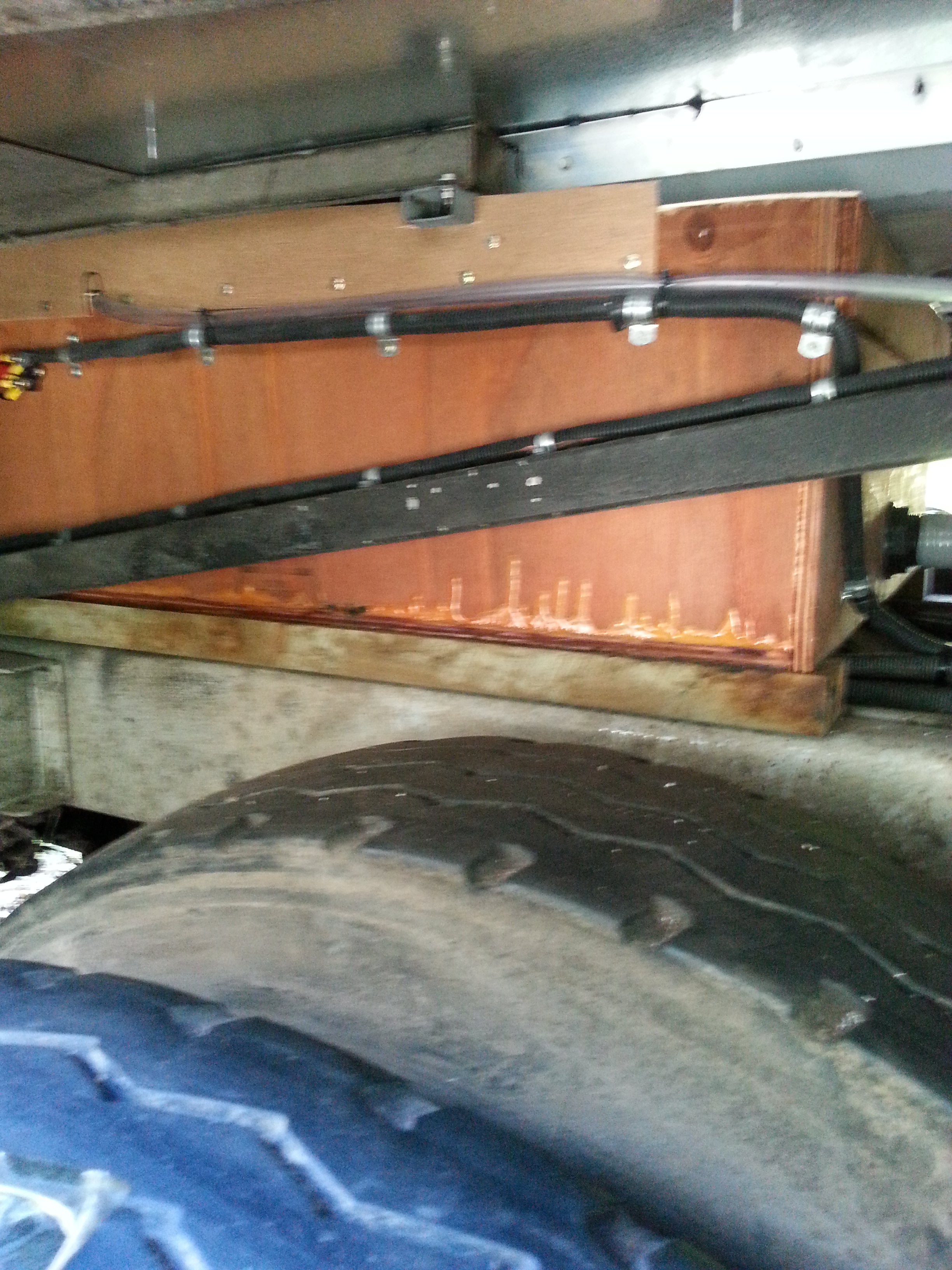
Marine ply container for the Gray water bladder, this unit was all treated with Funga-shield & sealed.

Marine ply container for the Gray water bladder, this unit was all treated with Funga-shield & sealed.

The flexible hose from 270 litre Bladder to main plumbing pipe.

The flexible hose from 270 litre Bladder to main plumbing pipe.

Drainage plumbing prior to installation of the Vanity unit.

Drainage plumbing prior to installation of the Vanity unit.

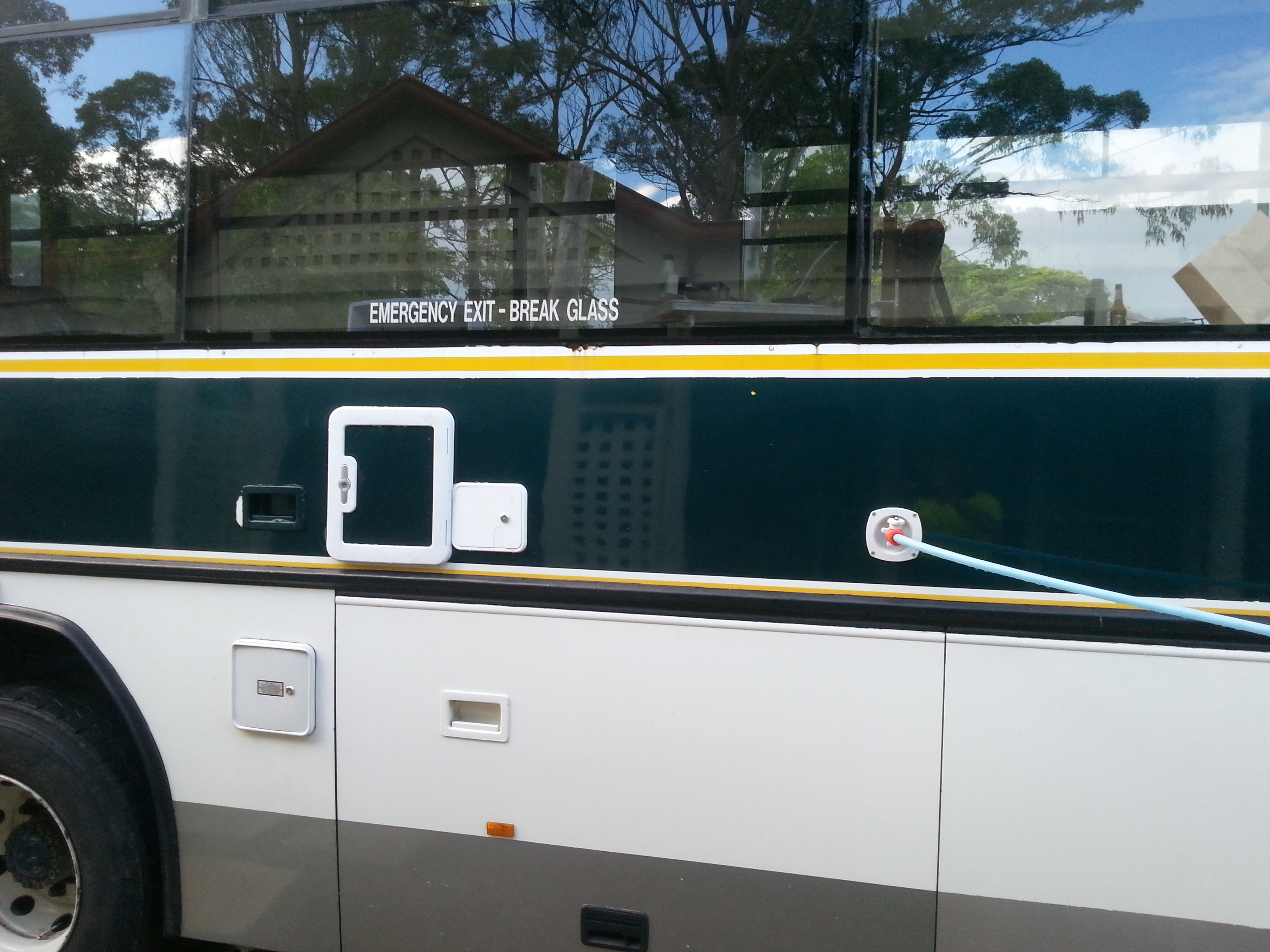
The 2 water inlets, the town water is currently connected the small white door on the left has the Hose & Can filler access. The larger hatch is for access to the Toilet Cassette, the large white door lower in the mud guard is for servicing the Air Filter on the Diesel Hot water unit.

The 2 water inlets, the town water is currently connected the small white door on the left has the Hose & Can filler access. The larger hatch is for access to the Toilet Cassette, the large white door lower in the mud guard is for servicing the Air Filter on the Diesel Hot water unit.

Water supply system, the filtration system directly above the 2 pumps & the timber containment walls for the Non-potable water bladder above & left. The rear end of the Poly tank for the potable water is visible to the right, both of these tanks sit over the chassis rails between the RH & LH Bins.

Water supply system, the filtration system directly above the 2 pumps & the timber containment walls for the Non-potable water bladder above & left. The rear end of the Poly tank for the potable water is visible to the right, both of these tanks sit over the chassis rails between the RH & LH Bins.

3 way tap for selecting tank for filling.

3 way tap for selecting tank for filling.

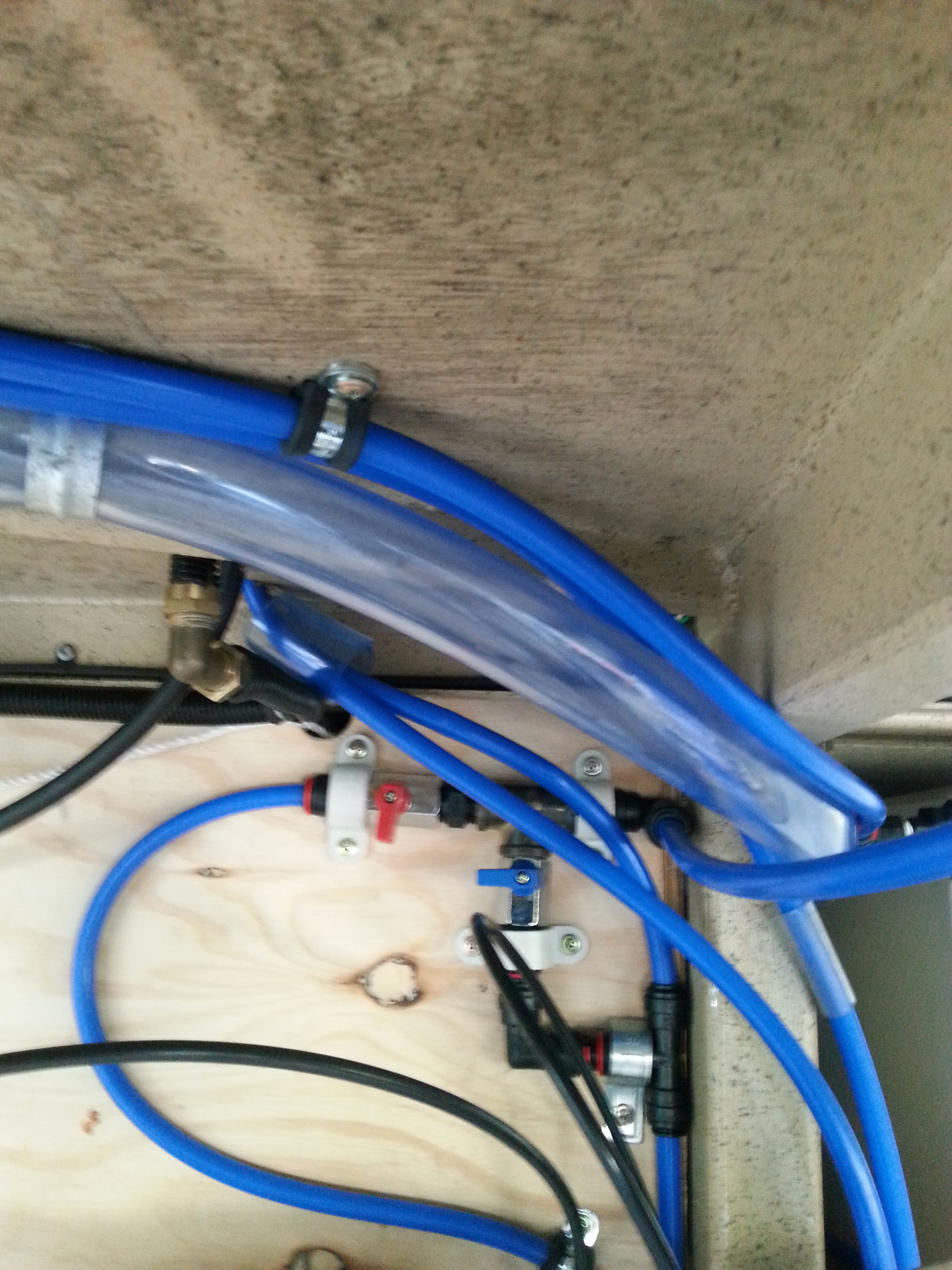
The 2 taps for isolating the tanks from the mains connection if required can be seen on the timber panel. the clear hose is for filling the Non-potable tank from can or pumped from a creek.

The 2 taps for isolating the tanks from the mains connection if required can be seen on the timber panel. the clear hose is for filling the Non-potable tank from can or pumped from a creek.

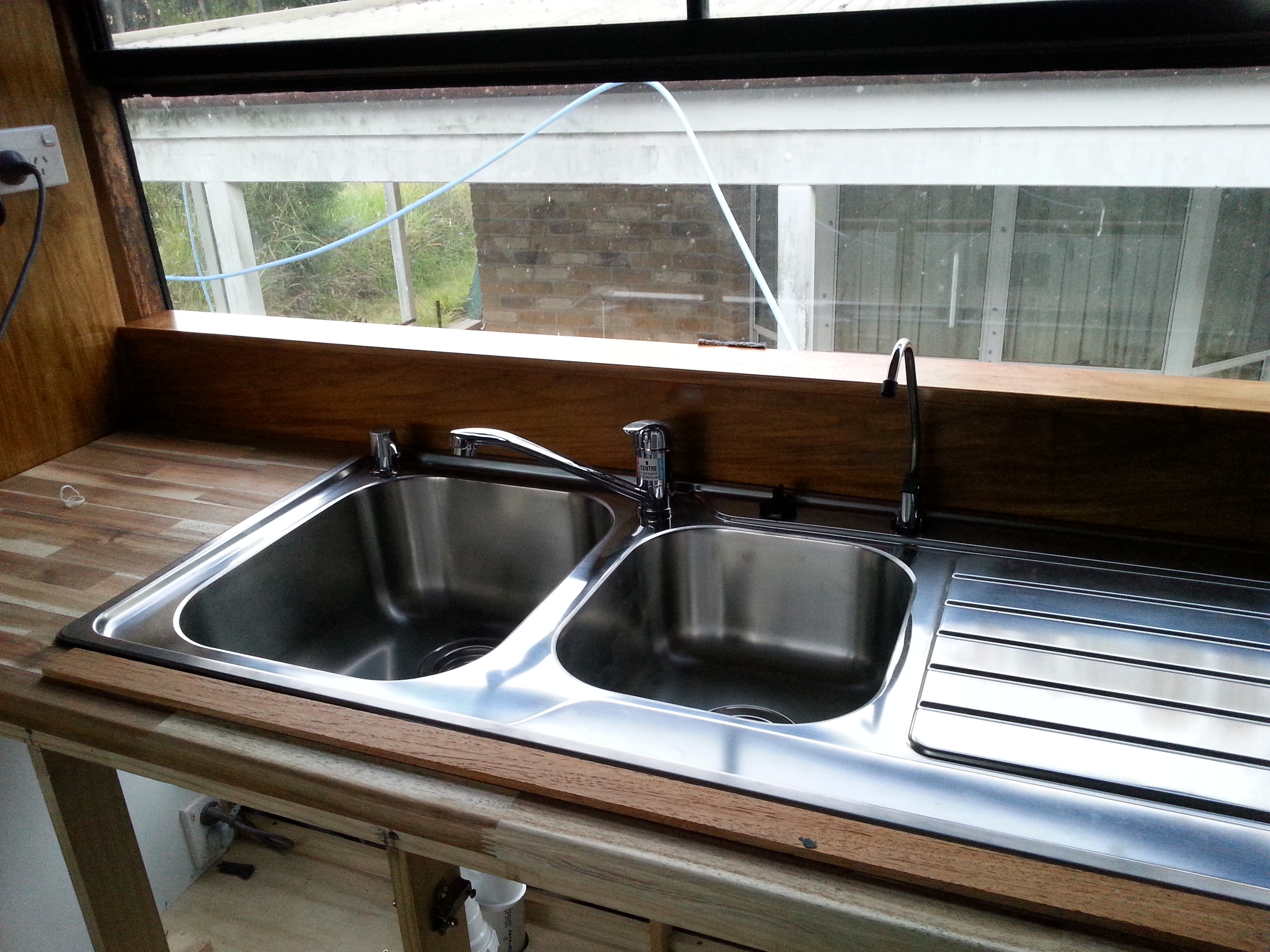
The small black tap on the sink between the flick mixer & the filtered water outlet is for selecting Potable or Non-potable water for the flick mixer. The fitting on the very left is a soap dispenser pump.
The small black tap on the sink between the flick mixer & the filtered water outlet is for selecting Potable or Non-potable water for the flick mixer. The fitting on the very left is a soap dispenser pump.


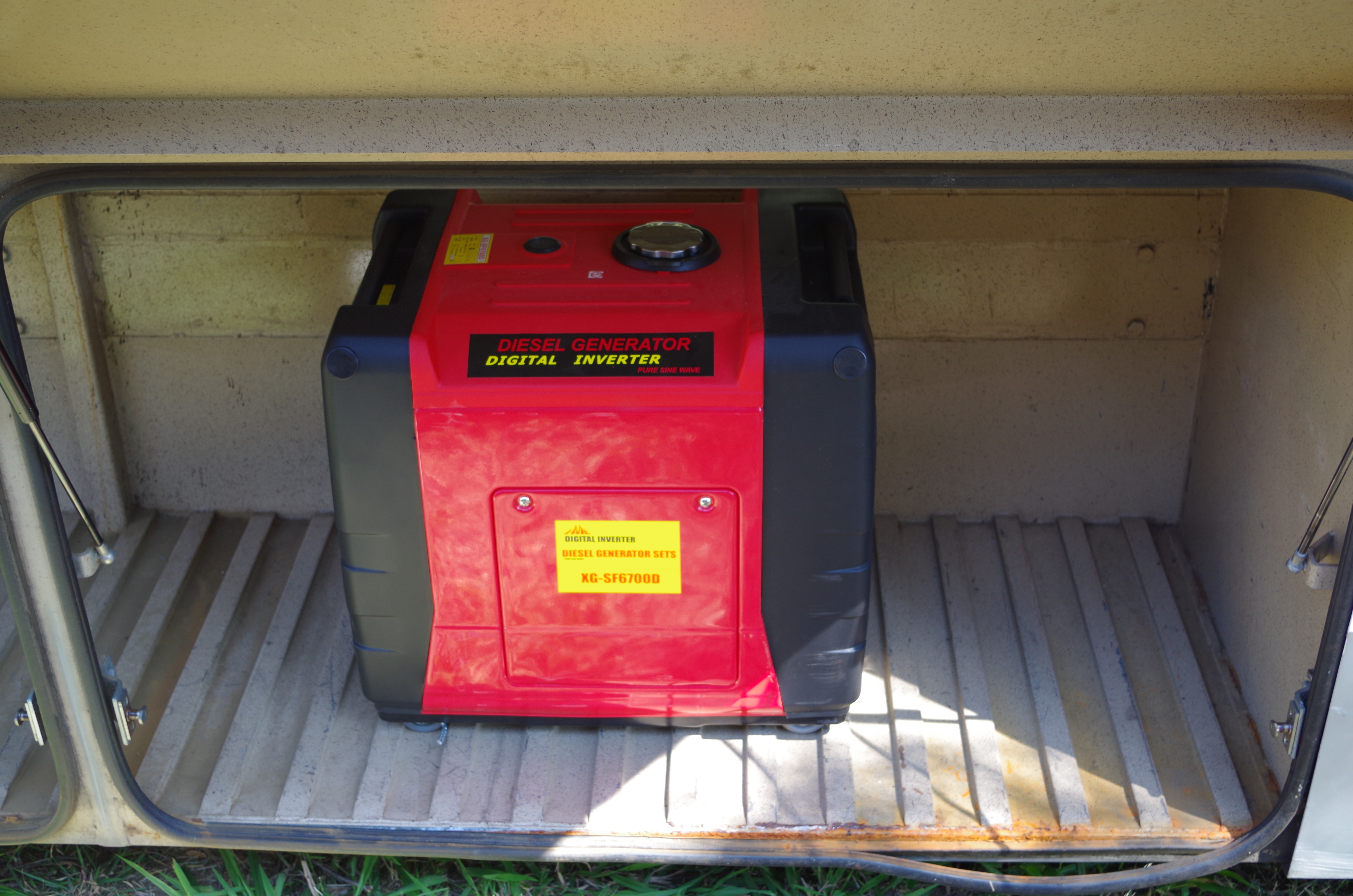
Generator placement & start of Fitting.

The Generator fits very nicely into the Drivers side front Bin, there is sufficient room to fit extra sound proofing & vibration dampeners. This area is directly under the power in-feed socket & slightly to the rear of the area where the Mains Power control cabinet will be situated. There is also enough room in this Bin to fit all of the House batteries. ( The batteries are now to be fitted above & between the Chassis rails behind the washing machine Bin, ) more on this later.