Electrical cabinet progress 19th aug 2014

Cabinet frame has been completed & sheeting has been applied.

The Solar Controllers have been fitted but yet to be wired, the storage area for the first aid kit & the HID torch is under the bench but this is yet to be sheeted & the door made.

The bench forms a coffee table for the front end of the lounge & the wall of the cupboard behind the drivers seat will be used to mount one of the 2 fire extinguishers for the inside of the RV.
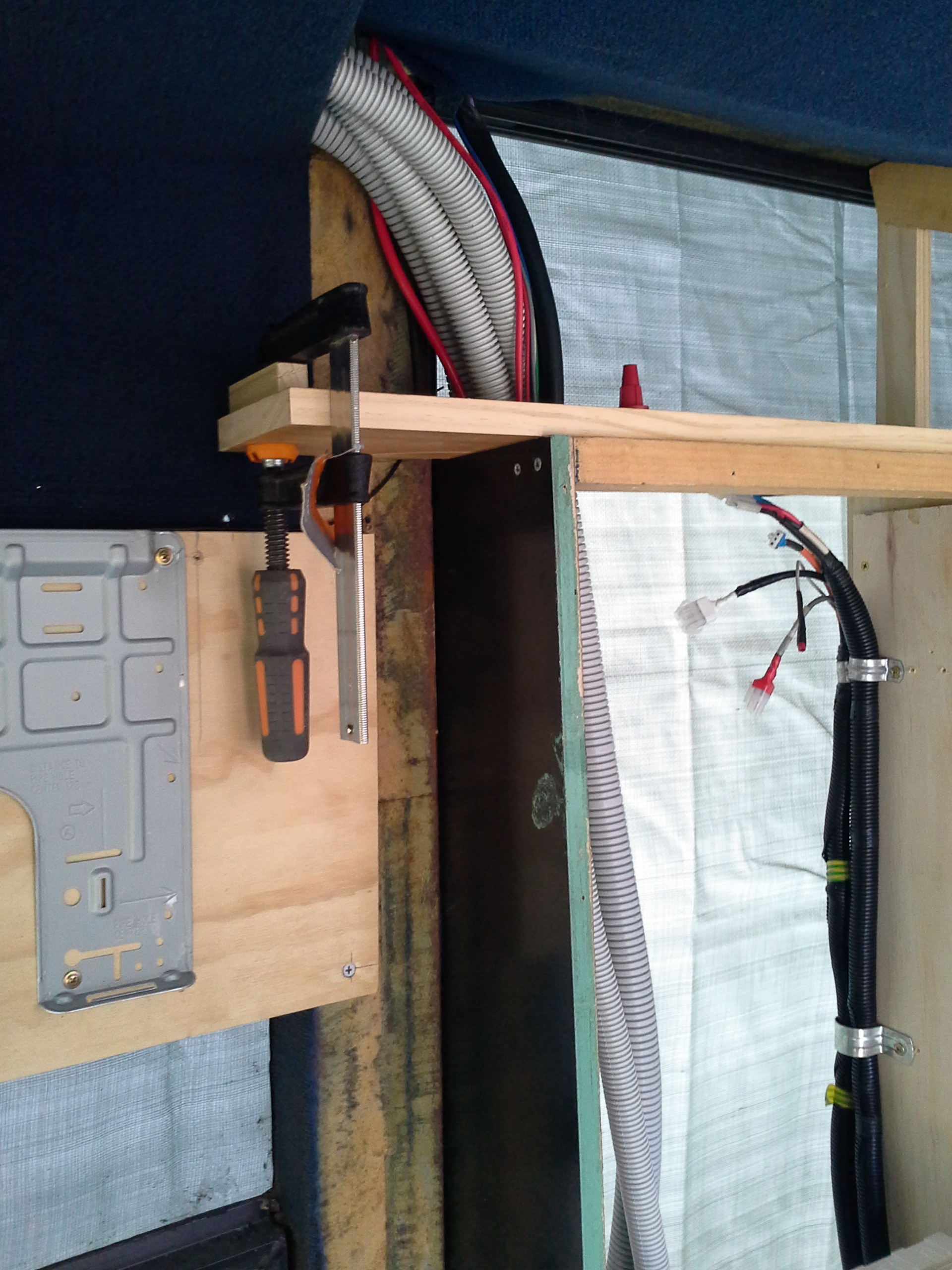
Start of the cabinet construction.

Start of the cabinet construction.

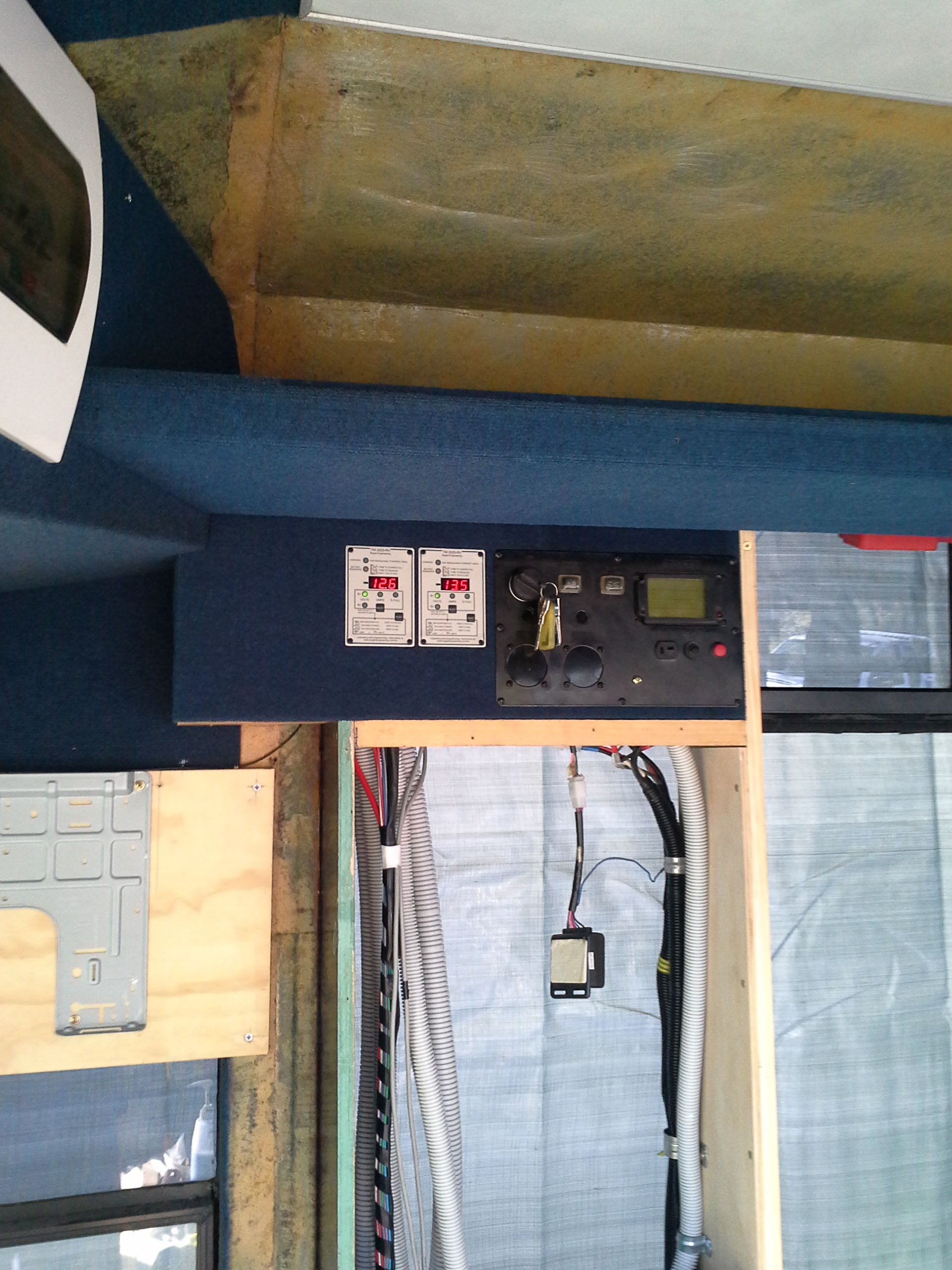
All of the grey conduit running through the back of the Electrical control cabinet are either 240v AC power into or returning from the Mains Safety box mounted over the Driver.
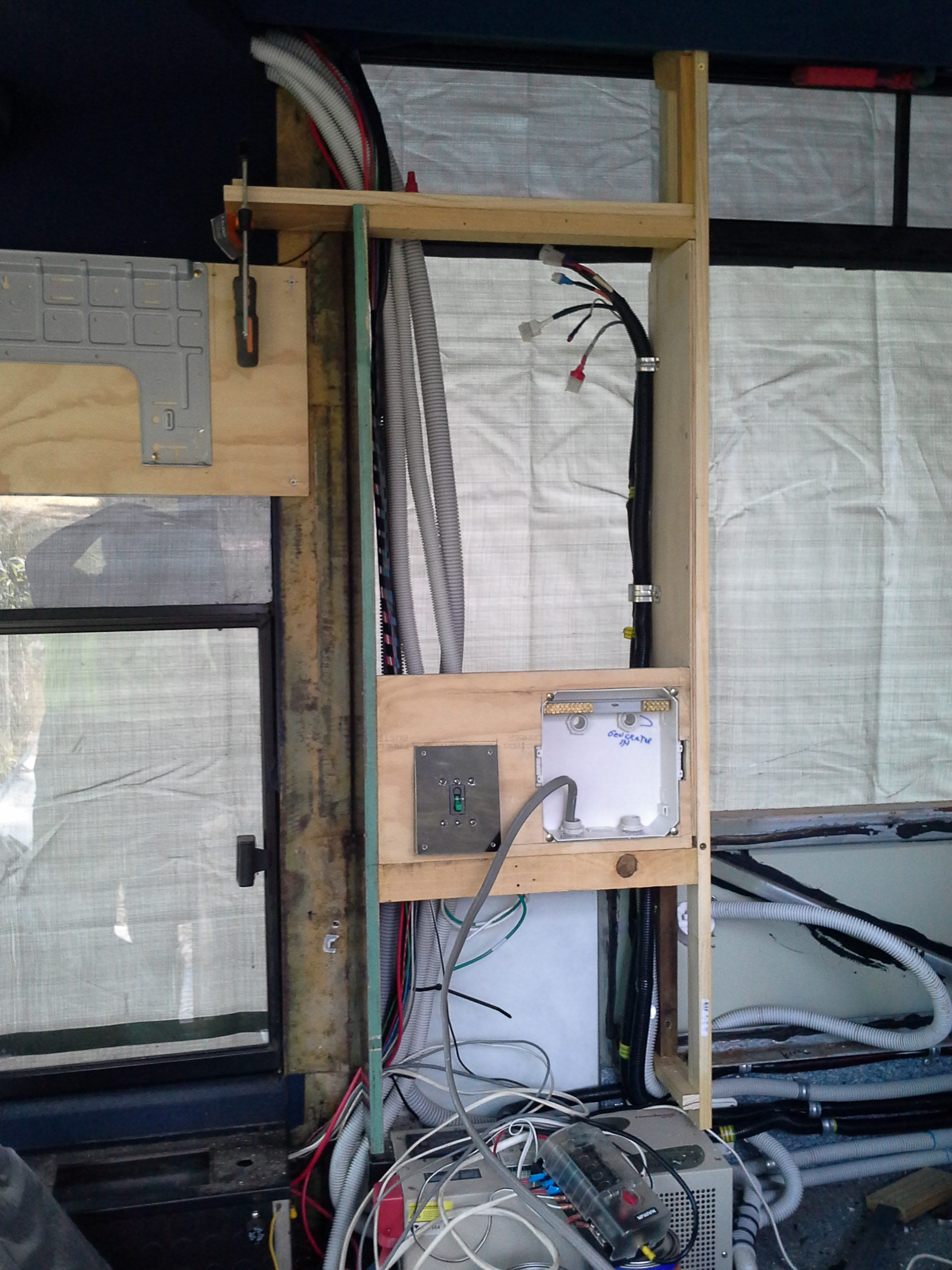
All of the grey conduit running through the back of the Electrical control cabinet are either 240v AC power into or returning from the Mains Safety box mounted over the Driver.

The Black conduits running up the R/H side are the remote control cabling for the Generator mounted in the Forward most R/Hand storage Bin.

The Black conduits running up the R/H side are the remote control cabling for the Generator mounted in the Forward most R/Hand storage Bin.

The Power box on the right will house the Selector switch to allow the power source to be chosen from the Mains or on-board generator, It also will contain a safety switch for the 15amp circuit for welding directly from the Generator.
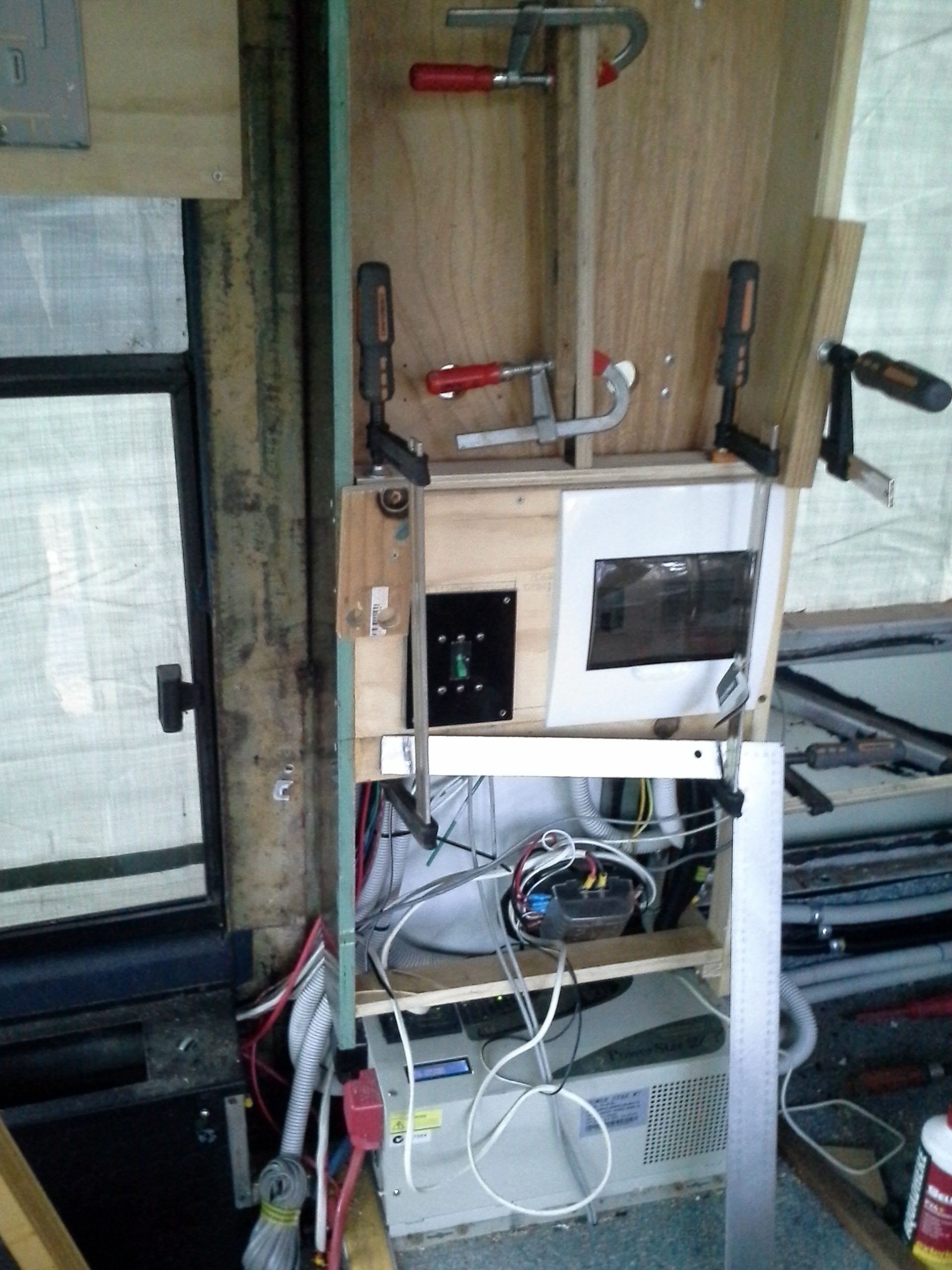
The Power box on the right will house the Selector switch to allow the power source to be chosen from the Mains or on-board generator, It also will contain a safety switch for the 15amp circuit for welding directly from the Generator.

The large white unit below the Cabinet is the 7000w Inverter / Charger.
The large white unit below the Cabinet is the 7000w Inverter / Charger.

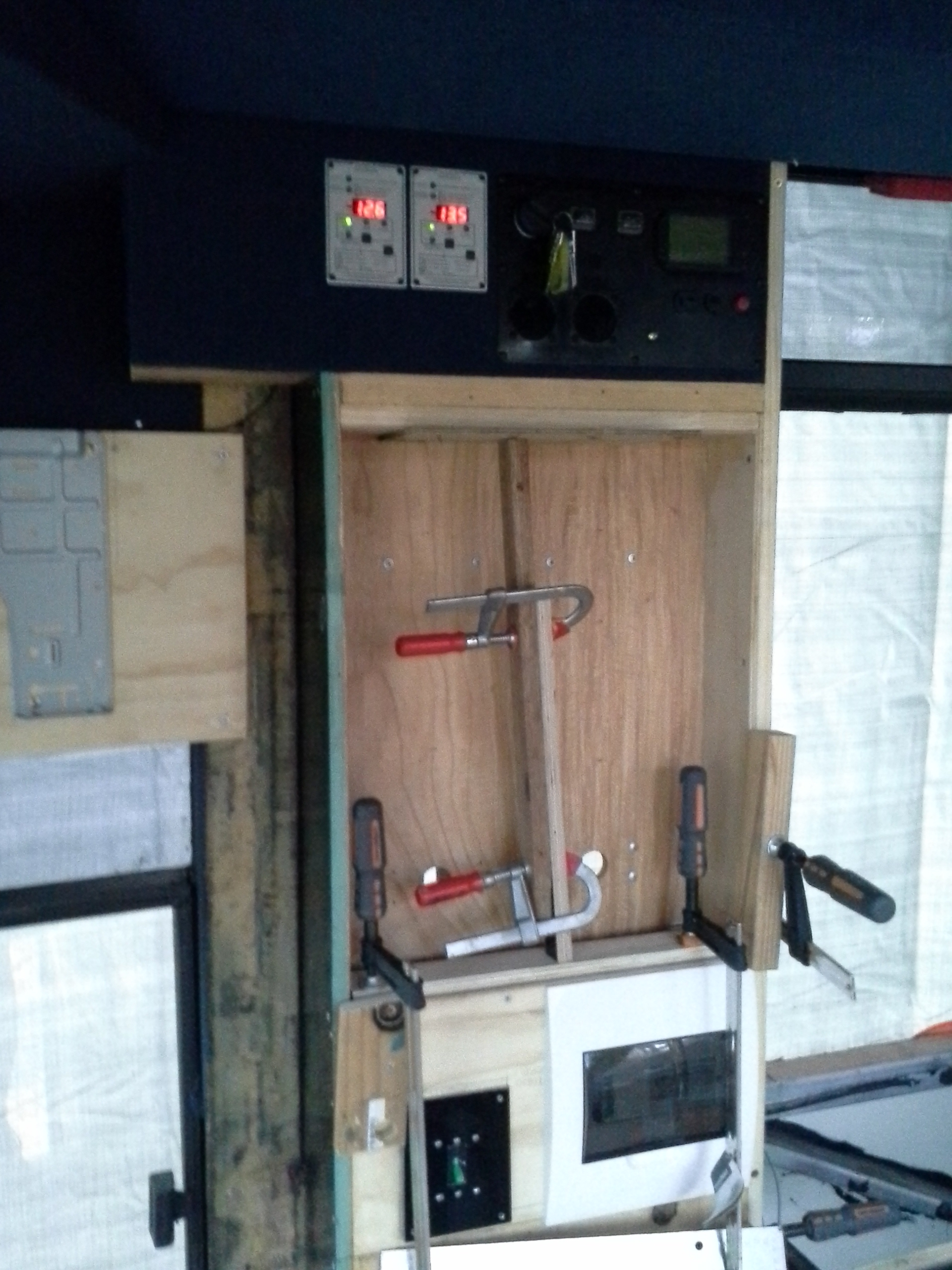
The recessed center compartment is to house the 2 Solar controllers, the NG rosewood ply is in the process of being applied.
The recessed center compartment is to house the 2 Solar controllers, the NG rosewood ply is in the process of being applied.

Generator Controls & the Battery monitors in the same panel of the Cabinet, the box hanging from behind the generator controls is for the wireless control of the generator.
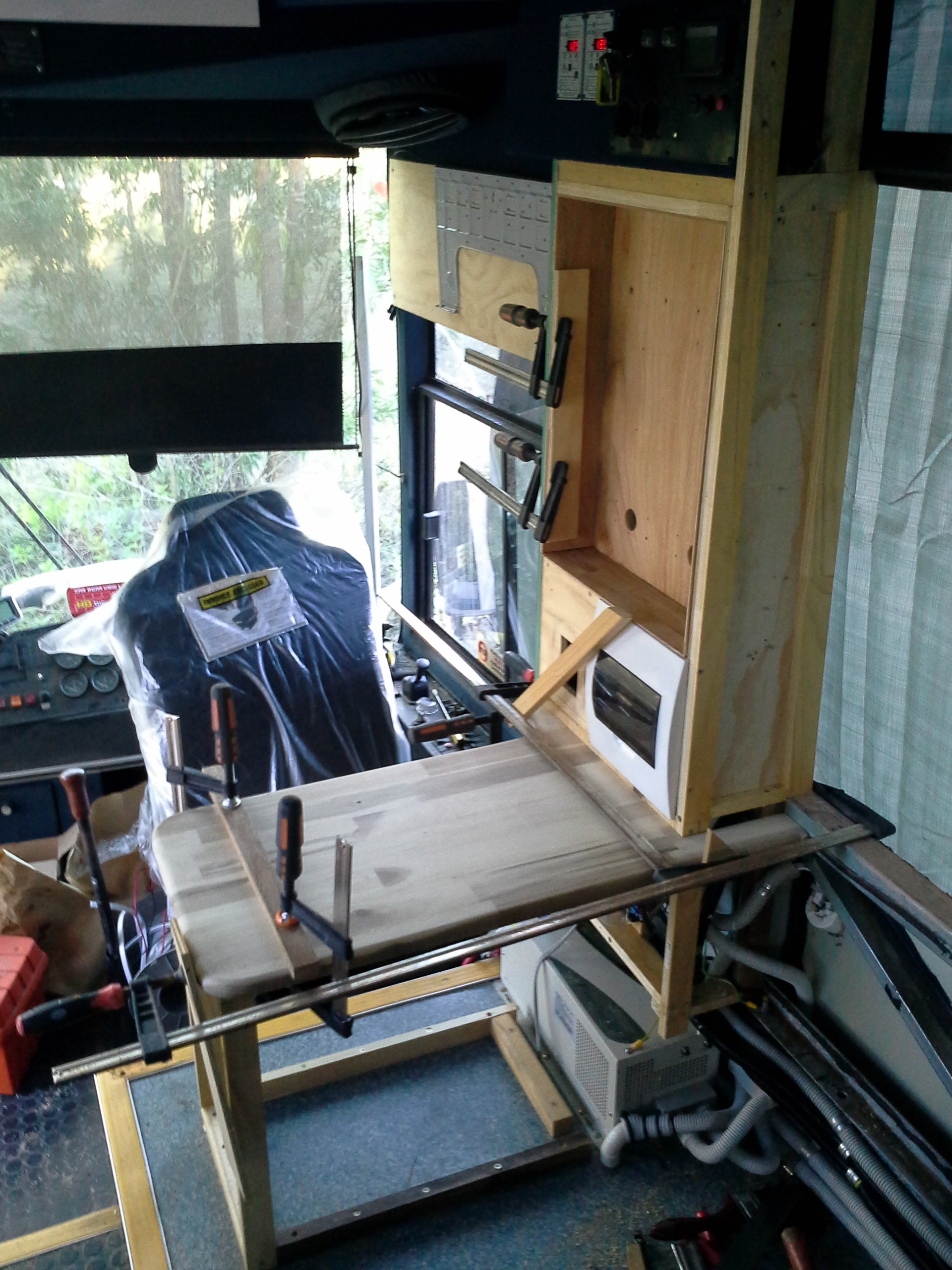
Generator Controls & the Battery monitors in the same panel of the Cabinet, the box hanging from behind the generator controls is for the wireless control of the generator.

Start of the facings & trims, bench top being fixed to frame.
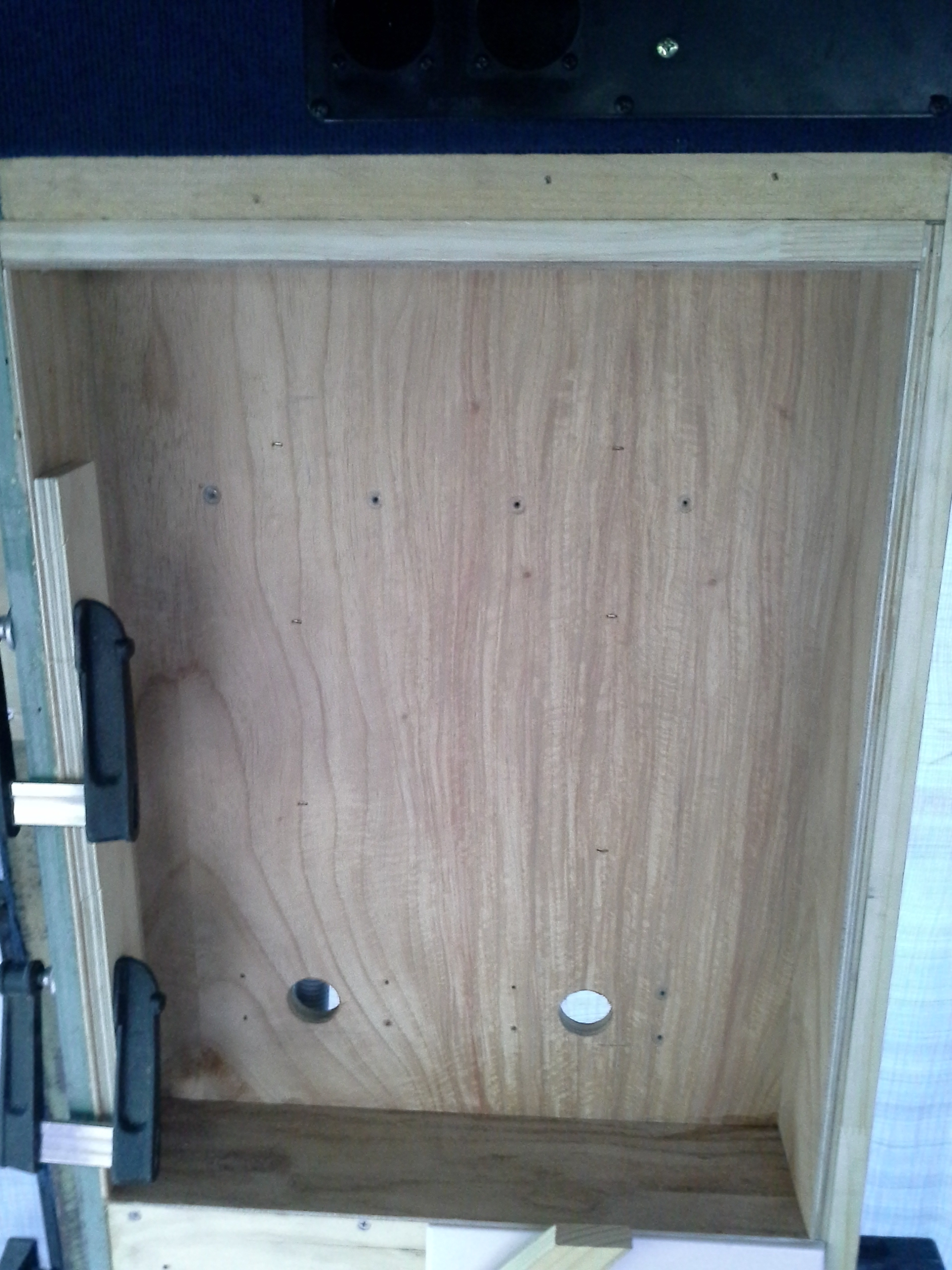
Start of the facings & trims, bench top being fixed to frame.

Solar controller enclosure ready for trimming & painting.
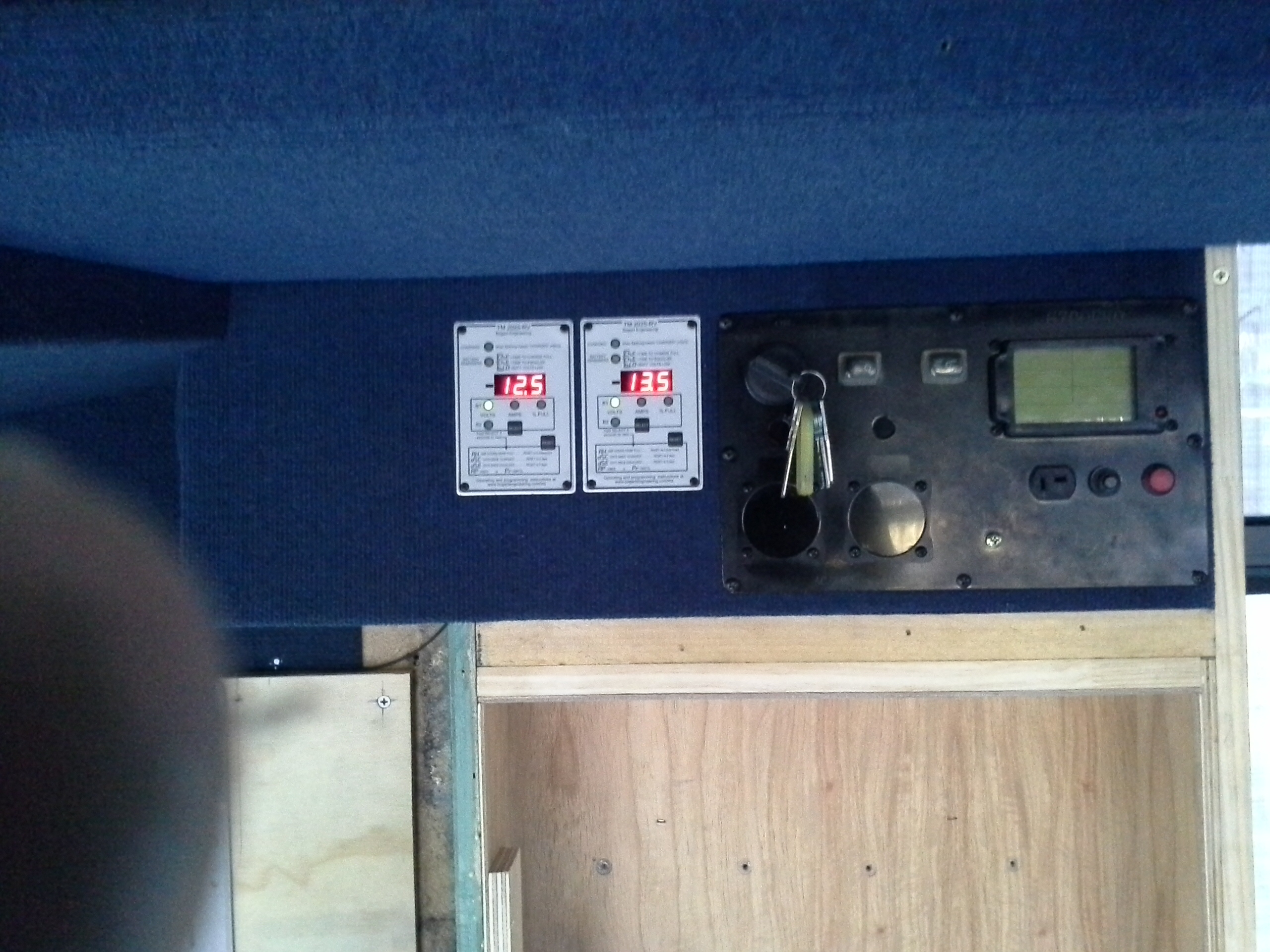
Solar controller enclosure ready for trimming & painting.

Generator controls & Battery monitors are now operational,  the front monitor has an issue with the accuracy of the reading. Will try again to adjust it but may need to replace it.

Generator controls & Battery monitors are now operational, the front monitor has an issue with the accuracy of the reading. Will try again to adjust it but may need to replace it.

Both Circuit breaker safety switches are in the same panel on the Cabinet.

Both Circuit breaker safety switches are in the same panel on the Cabinet.

The Black switch panel to the left of the white switch box is a fault safety switch for the twin 80amp Solar controllers, A requirement when linking 2 Solar controllers to 1 charging circuit?

The Black switch panel to the left of the white switch box is a fault safety switch for the twin 80amp Solar controllers, A requirement when linking 2 Solar controllers to 1 charging circuit?

Upper cabinet finished just waiting for the Solar fault breaker & the AC source switch box to have the facia fitted.
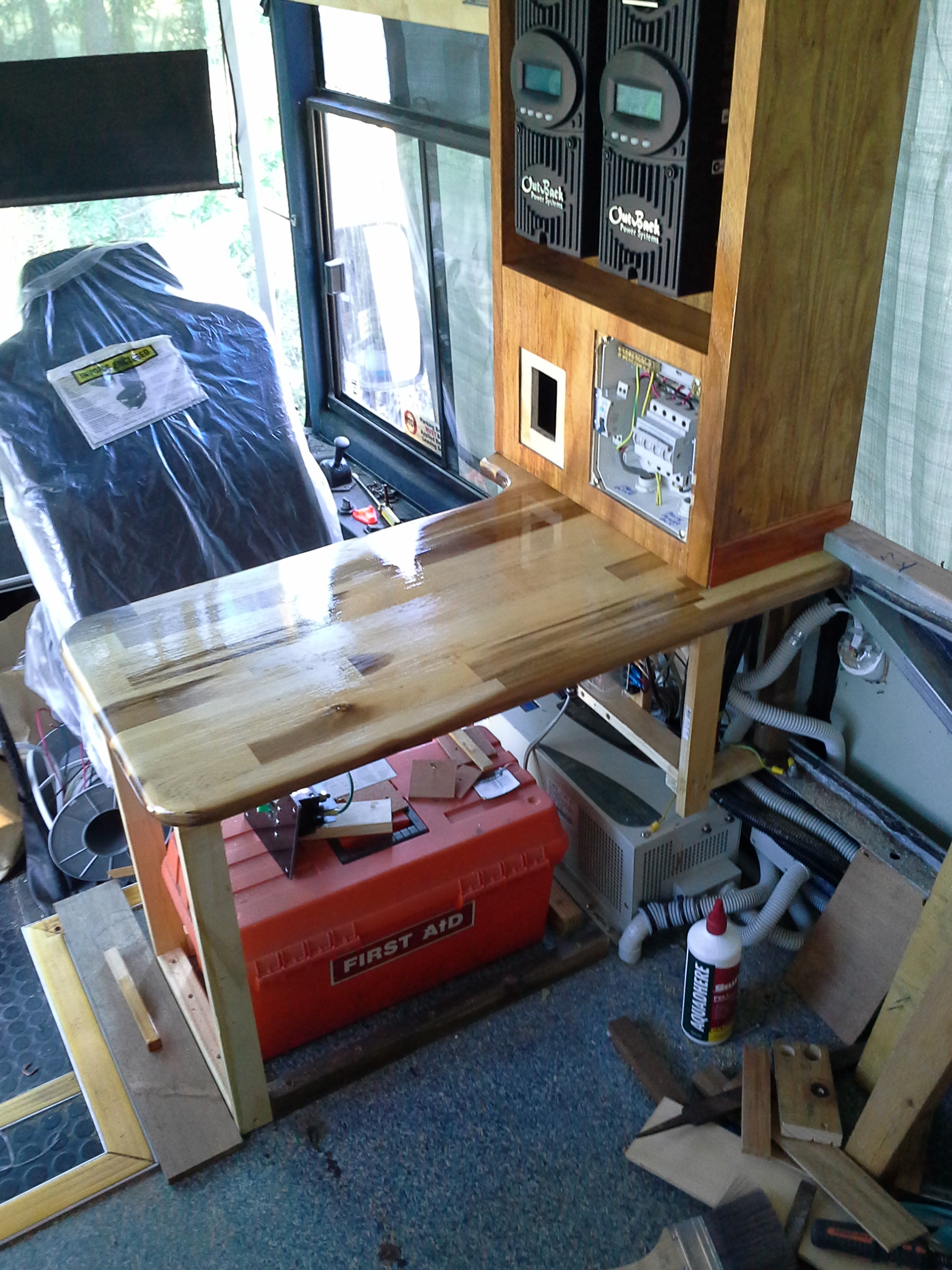
Upper cabinet finished just waiting for the Solar fault breaker & the AC source switch box to have the facia fitted.

A coat of paint make all things look good.
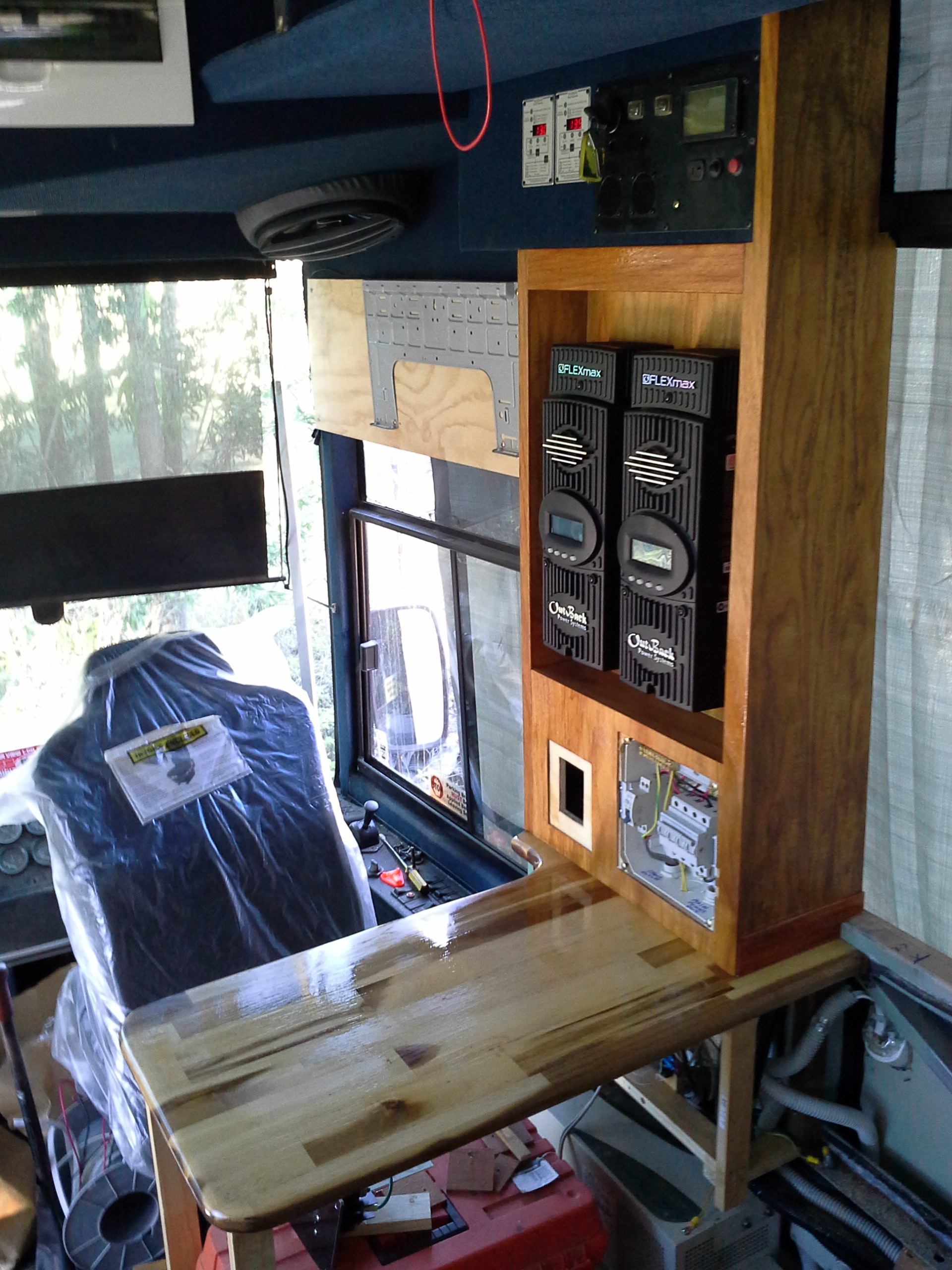
A coat of paint make all things look good.

The sides for the 1st aid enclosure will be covered in the same blue front runner/carpet as the ceiling of the bus.
The sides for the 1st aid enclosure will be covered in the same blue front runner/carpet as the ceiling of the bus.

Electrical control cabinet is under construction.

The Electrical control cabinet is now in construction, this cabinet houses both of the Solar Controllers, Generator control panel, Battery Meters & switching systems for the RV’s power requirements. (This unit does not however contain the Safety circuits for the 240v AC power supply, This is in a separate control box mounted above the Driving position.)
The Electrical control cabinet is being constructed immediately behind the driver against the Drivers side wall & over the Main power inverter, This is the point at which the Mains power can be connected to the RV.

The only 240v AC power systems in the Cabinet are the Selection / Isolator switch which allows the power supply to be switched from the Mains to Generator power or back again, which ever is not in use is isolated from the Power. The other 240v AC circuit in this unit is a 16 amp Residual current/Circuit breaker device which supplies a single Power point & can only be run  from the Generator  for using an ARC Welder if needed. Both the Circuit breaker & Selector switch are housed in a small mains circuit box in the lower front of the cabinet.

By placing this cabinet in this area of the RV  it allows all of the electrical controls & metering of both the AC & DC  systems to be monitored & adjusted easily as they can be observed from the Entrance of the RV &  the dual purpose Passenger/Lounge & computer desk seat. The Battery selector switches are within easy reach of this cabinet allowing the Battery charging & usage to be controlled from the same point in the RV.

Start of the cabinet construction.

Start of the cabinet construction.

The Black conduits running up the R/H side are the remote control cabling for the Generator mounted in the Forward most R/Hand storage Bin.

The Black conduits running up the R/H side are the remote control cabling for the Generator mounted in the Forward most R/Hand storage Bin.

The Power box on the right will house the Selector switch to allow the power source to be chosen from the Mains or on-board generator, It also will contain a safety switch for the 15amp circuit for welding directly from the Generator.

The Power box on the right will house the Selector switch to allow the power source to be chosen from the Mains or on-board generator, It also will contain a safety switch for the 15amp circuit for welding directly from the Generator.

The large white unit below the Cabinet is the 7000w Inverter / Charger.

The large white unit below the Cabinet is the 7000w Inverter / Charger.

The Black switch panel to the left of the white switch box is a fault safety switch for the twin 80amp Solar controllers, A requirement when linking 2 Solar controllers to 1 charging circuit?

The Black switch panel to the left of the white switch box is a fault safety switch for the twin 80amp Solar controllers, A requirement when linking 2 Solar controllers to 1 charging circuit?

Both Circuit breaker safety switches are in the same panel on the Cabinet.

Both Circuit breaker safety switches are in the same panel on the Cabinet.

Generator Controls & the Battery monitors in the same panel of the Cabinet, the box hanging from behind the generator controls is for the wireless control of the generator.

Generator Controls & the Battery monitors in the same panel of the Cabinet, the box hanging from behind the generator controls is for the wireless control of the generator.

The recessed center compartment is to house the 2 Solar controllers, the NG rosewood ply is in the process of being applied.

The recessed center compartment is to house the 2 Solar controllers, the NG rosewood ply is in the process of being applied.


Low voltage power system.

The low voltage house power system consists of 4 x 280 Ah Glass mat batteries, these are set up to supply 12v via 2 banks allowing 1 bank to supply power for all the items in use whilst the 2nd bank is being charged from the Solar array. this allows complete charging of the separate banks to ensure a long battery life.

By using 3 separate battery switches this allows greater flexibility of charging & use of the batteries, When the Inverter has AC power whether from the mains or Generator the battery bank currently in supply mode is charged from the Inverter at up to 70amps. When traveling the Vehicle power system will charge this bank at up to 40amps via the Redarc unit.

The battery bank not in use would normally be charged via the 2Kw solar array, when there is plenty of solar power both banks can be coupled for charging & supply power to the inverter for running of the Air Conditioners.

Due to the high power capacity of the Inverter system all main battery leads have been up rated to carry a constant 600amps if needed, this also reduces any voltage drop through the supply system due to the distance the 12v system is required to supply from. Both banks have 500amp shunts on the earth side & battery monitors to allow control over the depth of discharge to ensure good life expectancy.

All lighting, the 3 Fridges, Toilet, Diesel hot water control, Water pumps, Radio, TVs & Vast Satellite system are run from the 12v system. When the Solar system is not available due to weather I can use the Diesel generator to power the Inverter for recharging the system.

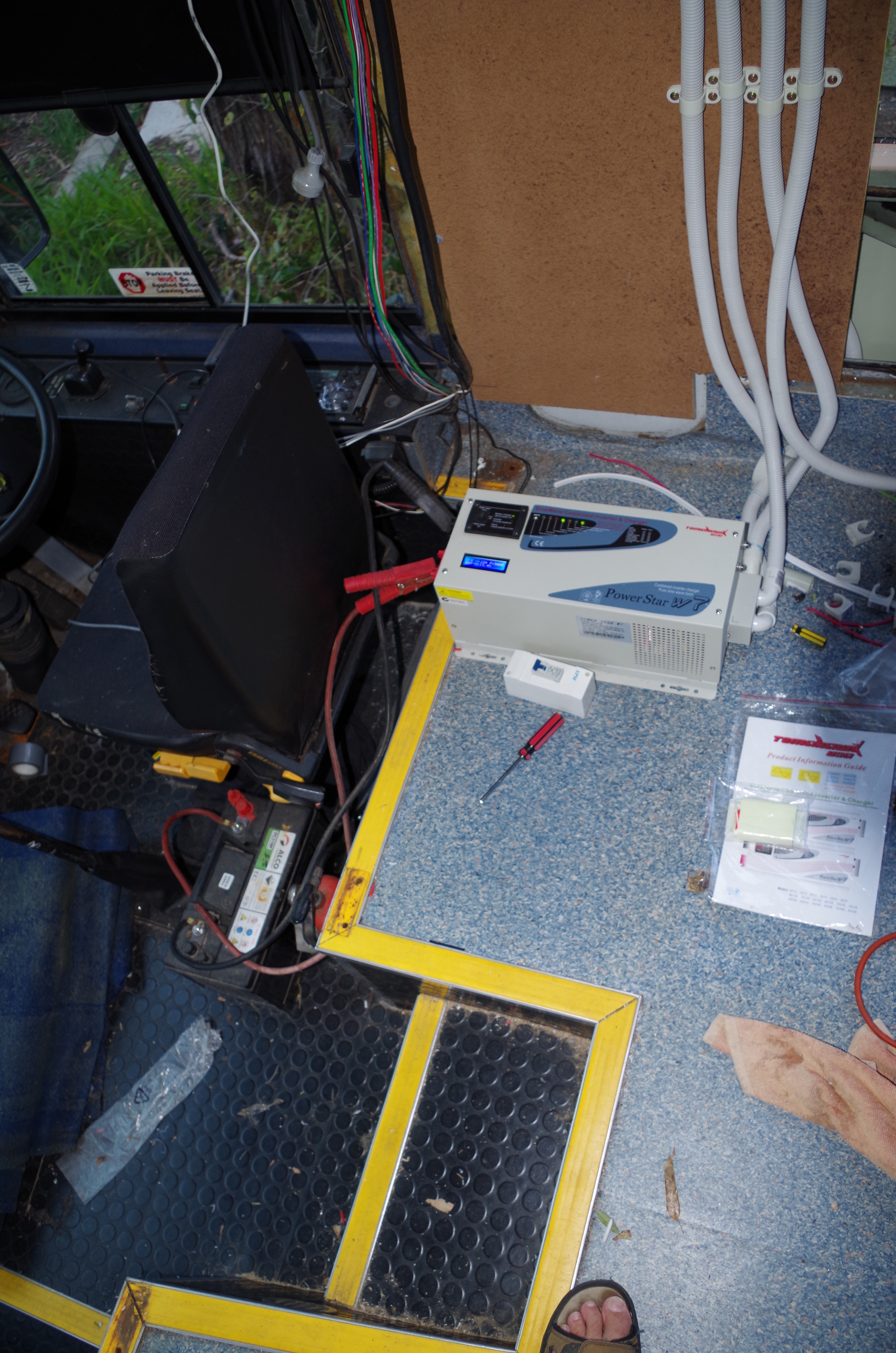
The Inverter in its temporary  position prior to the low voltage system installation, the battery switches are mounted immediately behind the driving position on the low wall to the left on the approach to the steps.

The Inverter in its temporary position prior to the low voltage system installation, the battery switches are mounted immediately behind the driving position on the low wall to the left on the approach to the steps.

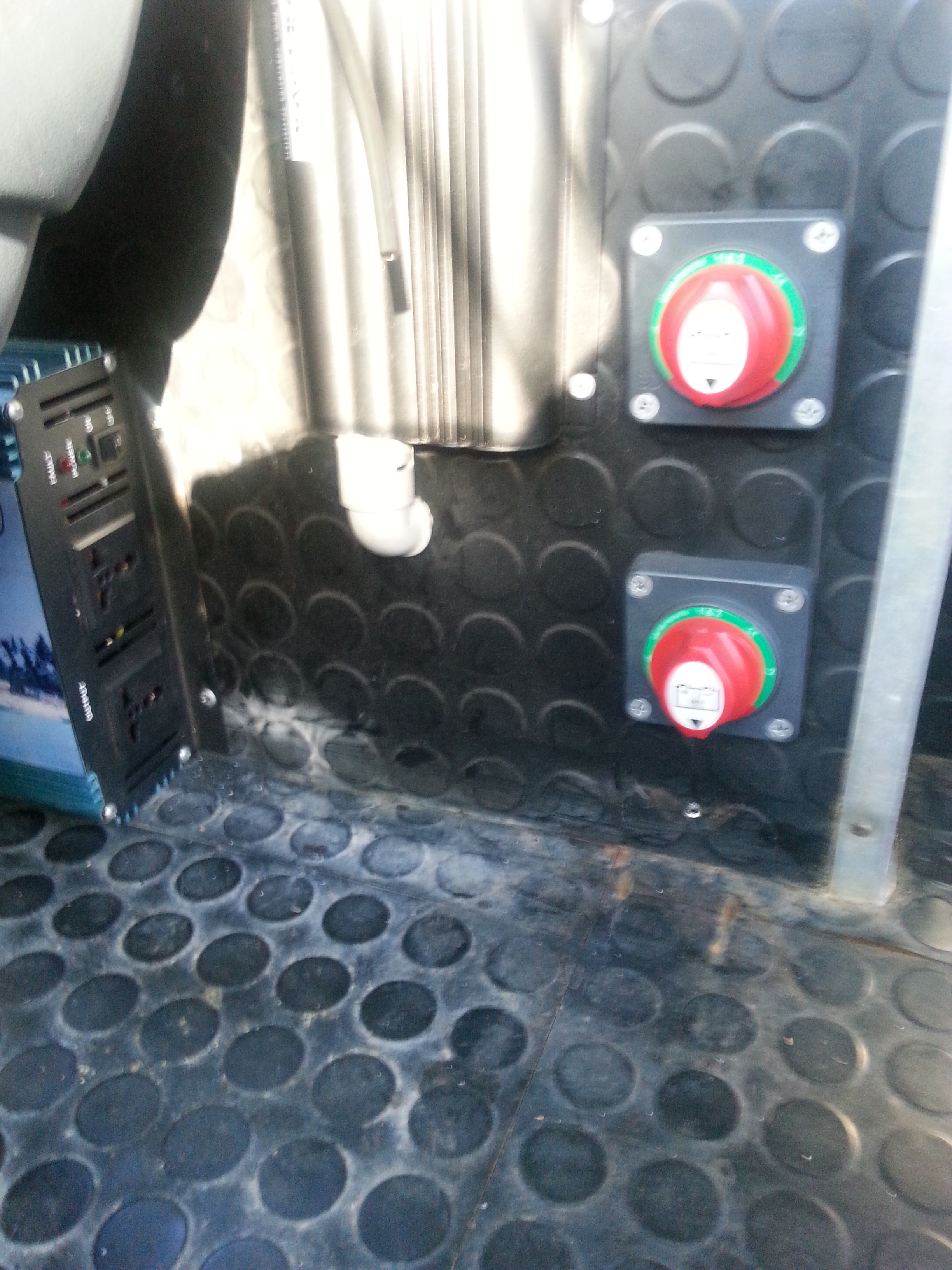
The selection switches for the Battery banks, (front & rear) these switches allow for selection of battery banks to individually supply power, receive charge from the Solar array or be coupled together as 1 bank. the item to the left of the upper switch is a Redarc 1240dc-dc charge controller which will supply charge to the bank currently in use when the Vehicle engine is running.

The selection switches for the Battery banks, (front & rear) these switches allow for selection of battery banks to individually supply power, receive charge from the Solar array or be coupled together as 1 bank. the item to the left of the upper switch is a Redarc 1240dc-dc charge controller which will supply charge to the bank currently in use when the Vehicle engine is running.

The Inverter/Charger unit, this unit has a peak power output of 7000w & 70 amp charging mode.

The Inverter/Charger unit, this unit has a peak power output of 7000w & 70 amp charging mode.


Installation of the House Batteries.

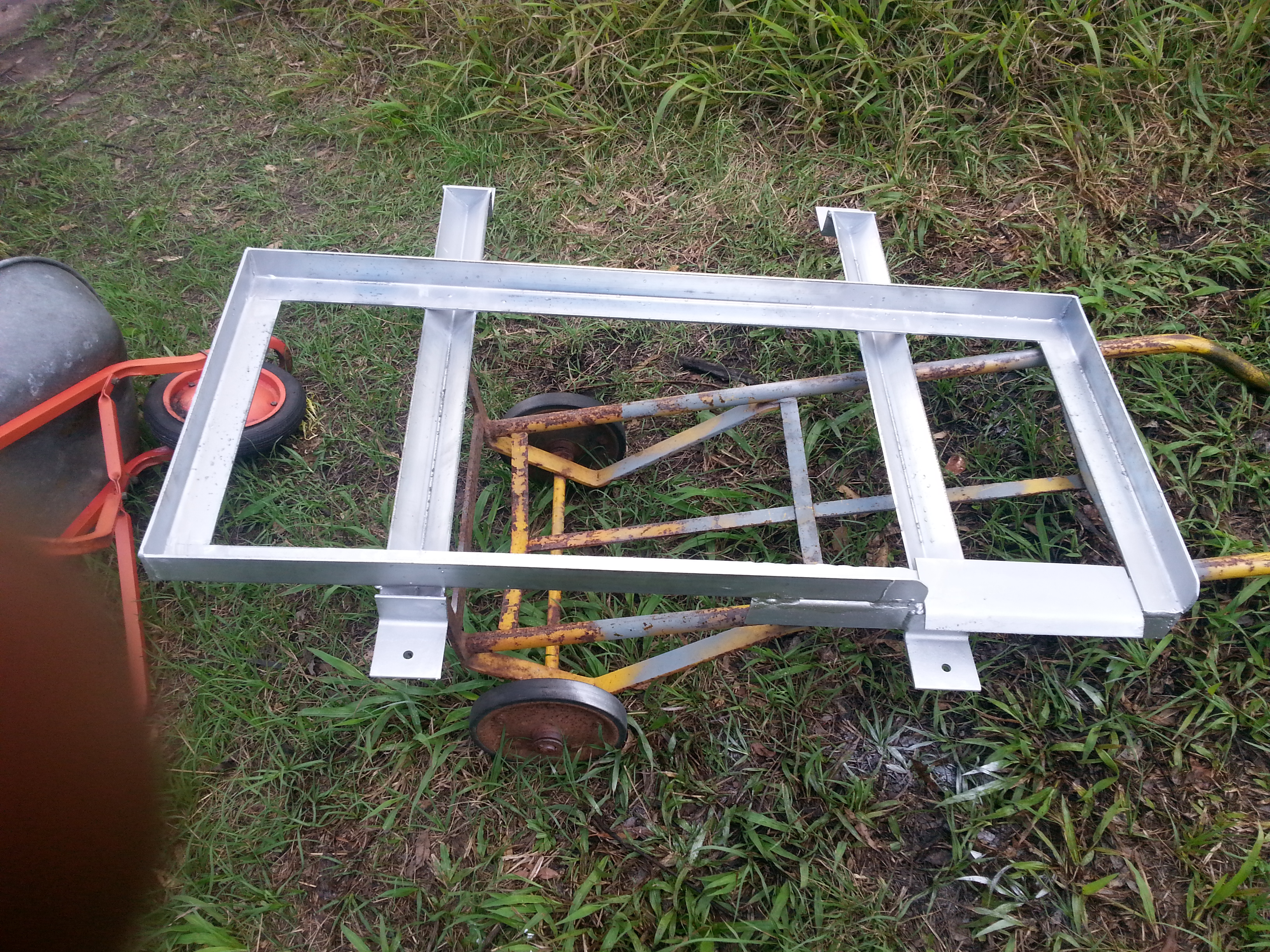
The low voltage side of the power system has been started, the position for the battery storage has been selected & a rack mount over the 2 Chassis rails behind the forward most storage Bin on the passenger side has been constructed. Although this area is assessable from the drivers side at present the main Air Conditioner units will occupy the vacant space on the drivers side of the chassis rails after the Air condition installations.

I therefore decided to make access to the Battery system for installation & removal of the batteries through a removable panel behind the Washing Machine in this Forward left hand side Bin. the racks have been constructed out of  50mm x 3mm angle iron.

The House battery banks consist of 4 x 280Ah Glass mat batteries, these are wired as 2 separate banks of 560Ah which can be selected individually or coupled together as 1 unit of 1120Ah.

The Battery rack constructed to carry the 4 Deep cycle house batteries, this unit was mounted over the Chassis rails immediately behind the front axle.

The Battery rack constructed to carry the 4 Deep cycle house batteries, this unit was mounted over the Chassis rails immediately behind the front axle.

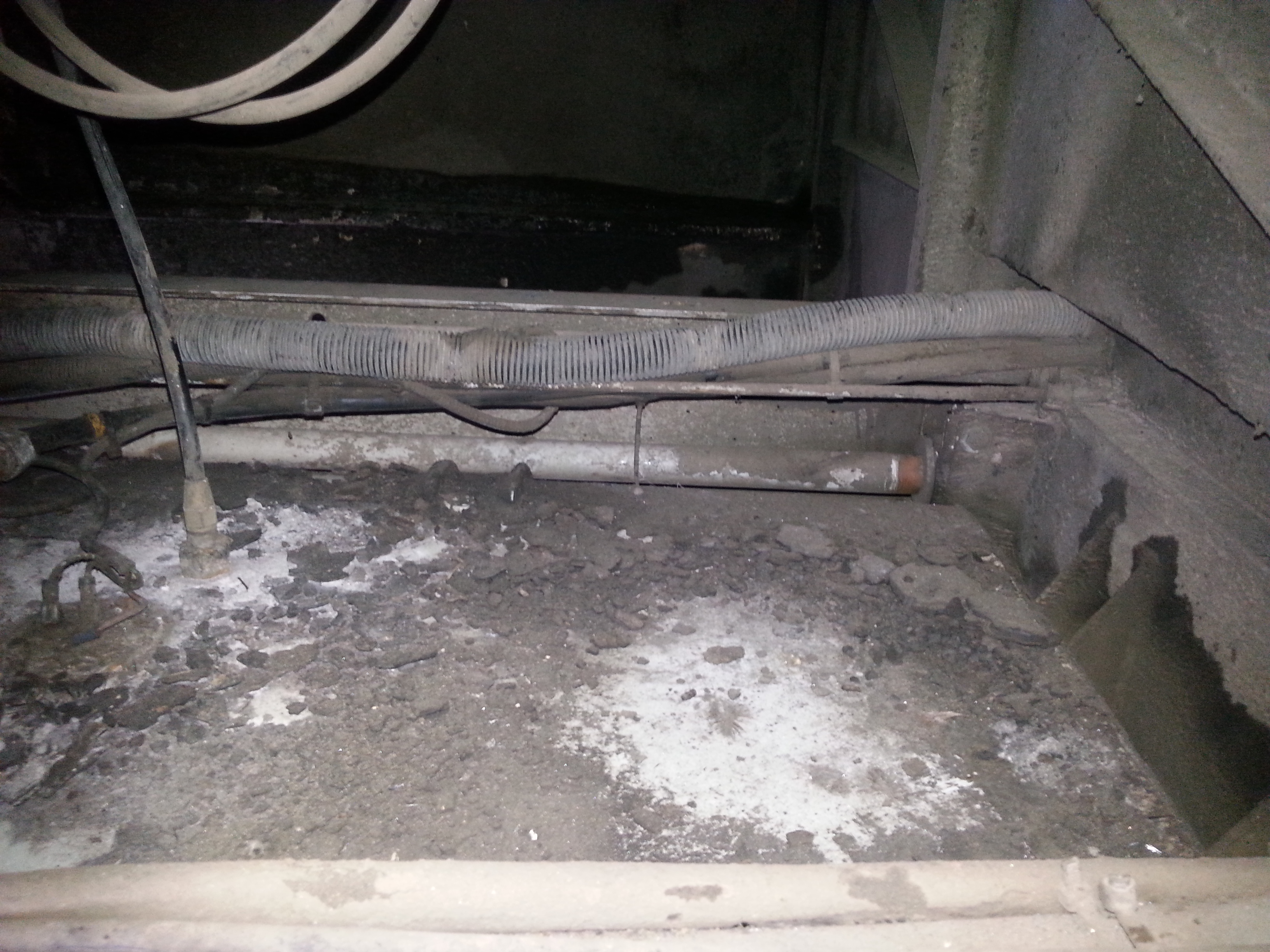
The position over the Chassis where the Rack is mounted for the Batteries. This photo is taken from the Hatch side.

The position over the Chassis where the Rack is mounted for the Batteries. This photo is taken from the Hatch side.

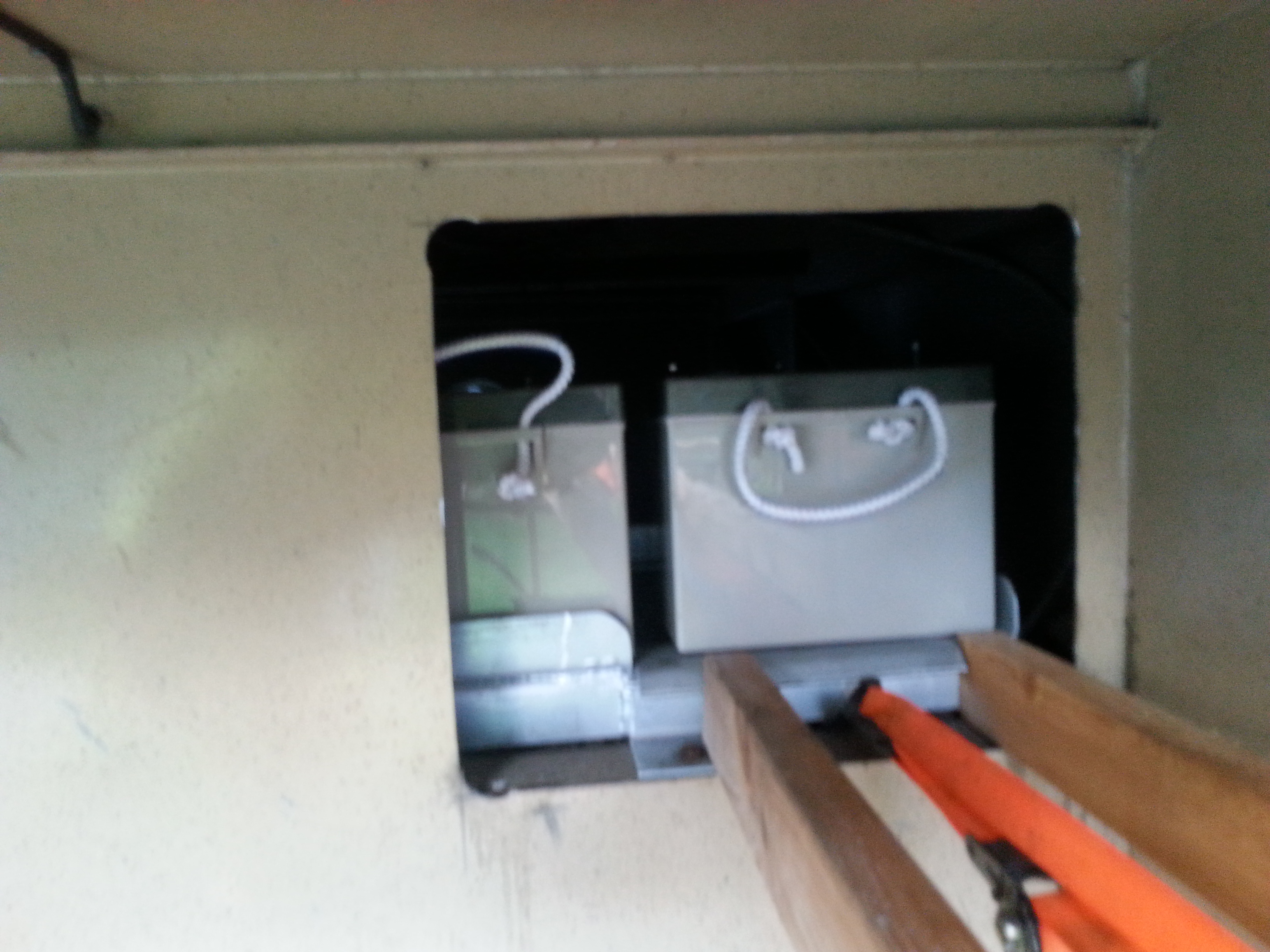
the access hatch hes been cut in the rear of the forward most Bin on the passenger side behind where the Washing machine is normally mounted.

the access hatch hes been cut in the rear of the forward most Bin on the passenger side behind where the Washing machine is normally mounted.

Washing machine on the ground during the installation of the Battery system, once completed the hatch cover can be re-installed & the washing machine refitted.

Washing machine on the ground during the installation of the Battery system, once completed the hatch cover can be re-installed & the washing machine refitted.

The last battery is in place & loading ramps ready for removal.

The last battery is in place & loading ramps ready for removal.

Photo of the Batteries in place after loading via temporary ramp system.

Photo of the Batteries in place after loading via temporary ramp system.

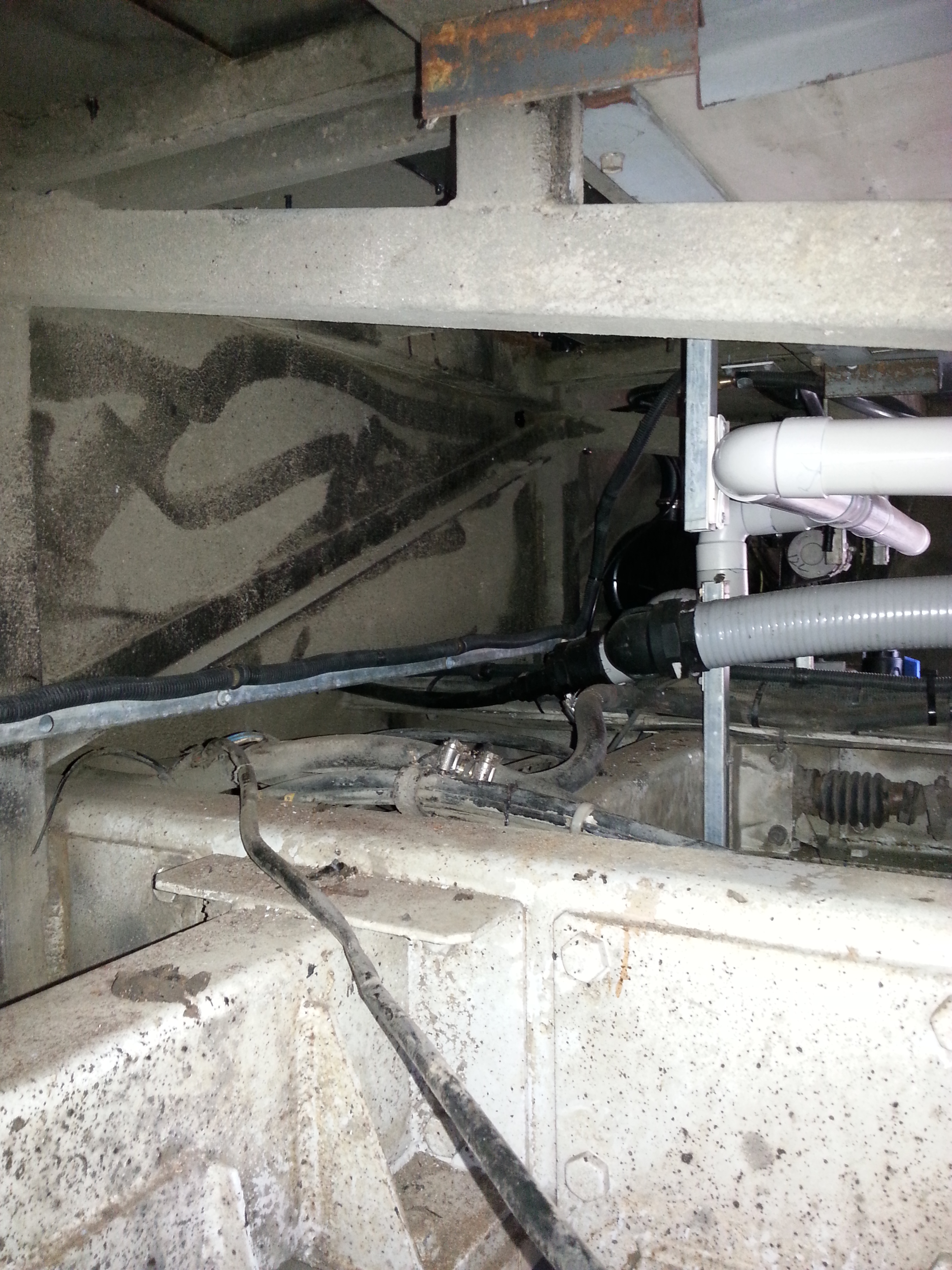
View of the batteries in place after loading through the access hatch, the clamps are yet to be fitted & Electrical cables & shunts for meters waiting for connection. This shot is from the drivers side before installation of the Air Conditioner units.

View of the batteries in place after loading through the access hatch, the clamps are yet to be fitted & Electrical cables & shunts for meters waiting for connection. This shot is from the drivers side before installation of the Air Conditioner units.


The Plumbing has been started.

The plumbing is well into the fitting stage with only the Hot Water storage system to be completed, The Grey water Tank & plumbing is finished & in use, the tank is a bladder type unit of 270 litres which sits on the Chassis over the rear axle system, there is a dump point inside the right rear mud guard.

The water supply system consists of 1 bladder of 380 litres for non-potable water & 1 poly tank of 420 litres for Potable water, these systems can be bypassed if town supply is in use to supply all taps without mixing or filling either tanks. A 2nd hose fitting is available to allow filling of either of these tanks individually when needed, there is also a filling point for the Non-potable tank to allow filling from a can.

The system runs 2 separate pumps, the hot water is supplied from the Non-potable tank only. All of the Main outlets are supplied by the Non-potable system the only exception being the Main Kitchen Flick mixer which has a selection tap for the Cold side which allows the use of  Potable or Non-potable water from this unit.

There is also a Filtered water system which is supplied from the potable water tank, this system has 1 outlet at the Kitchen sink & 1 at the Vanity unit in the bathroom. All hot water for the Vanity unit & the shower runs through a Temperature control unit mounted on the Vanity unit.

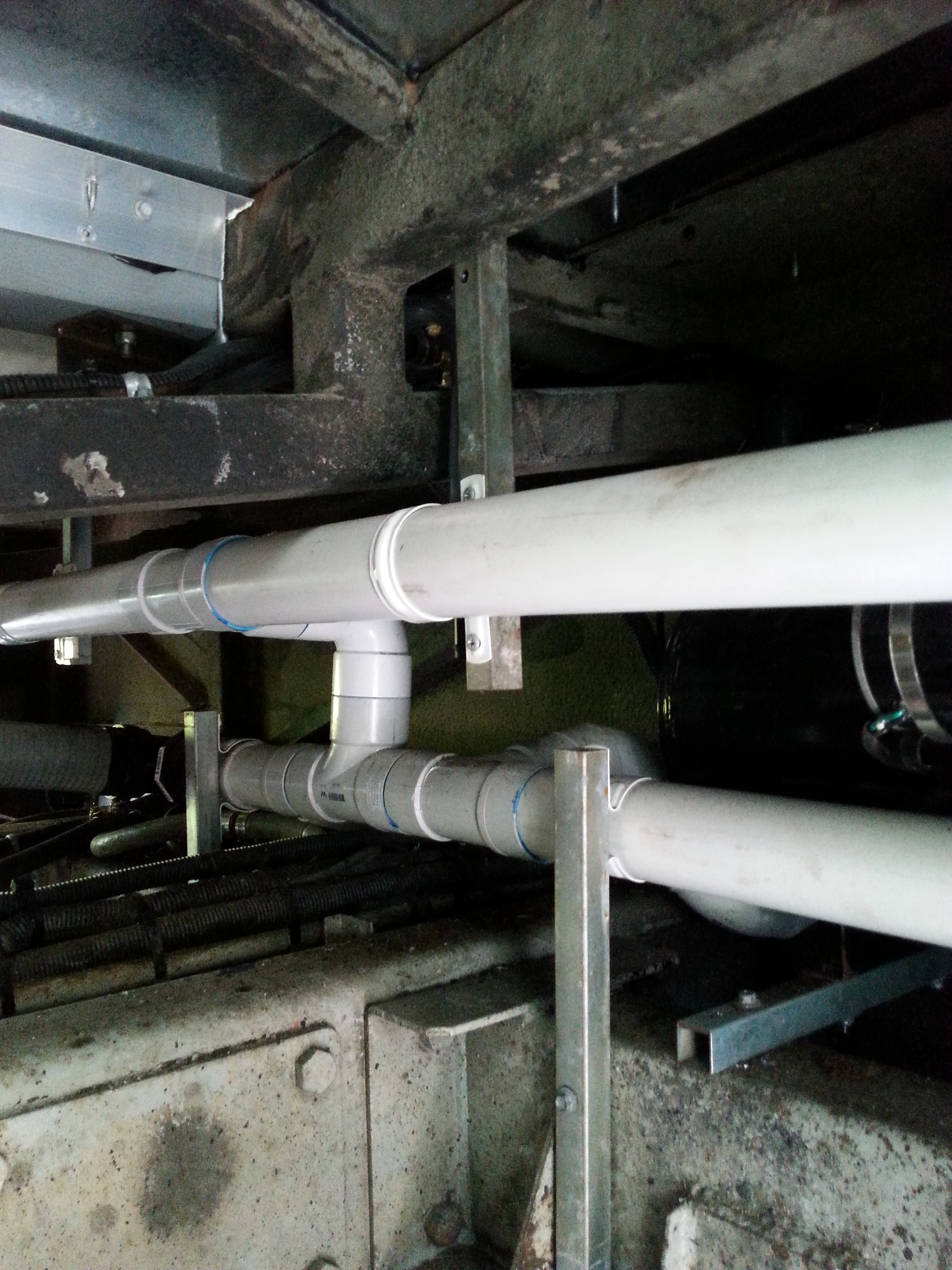
View from left hand wheel arch at Plumbing for Gray water.

View from left hand wheel arch at Plumbing for Gray water.

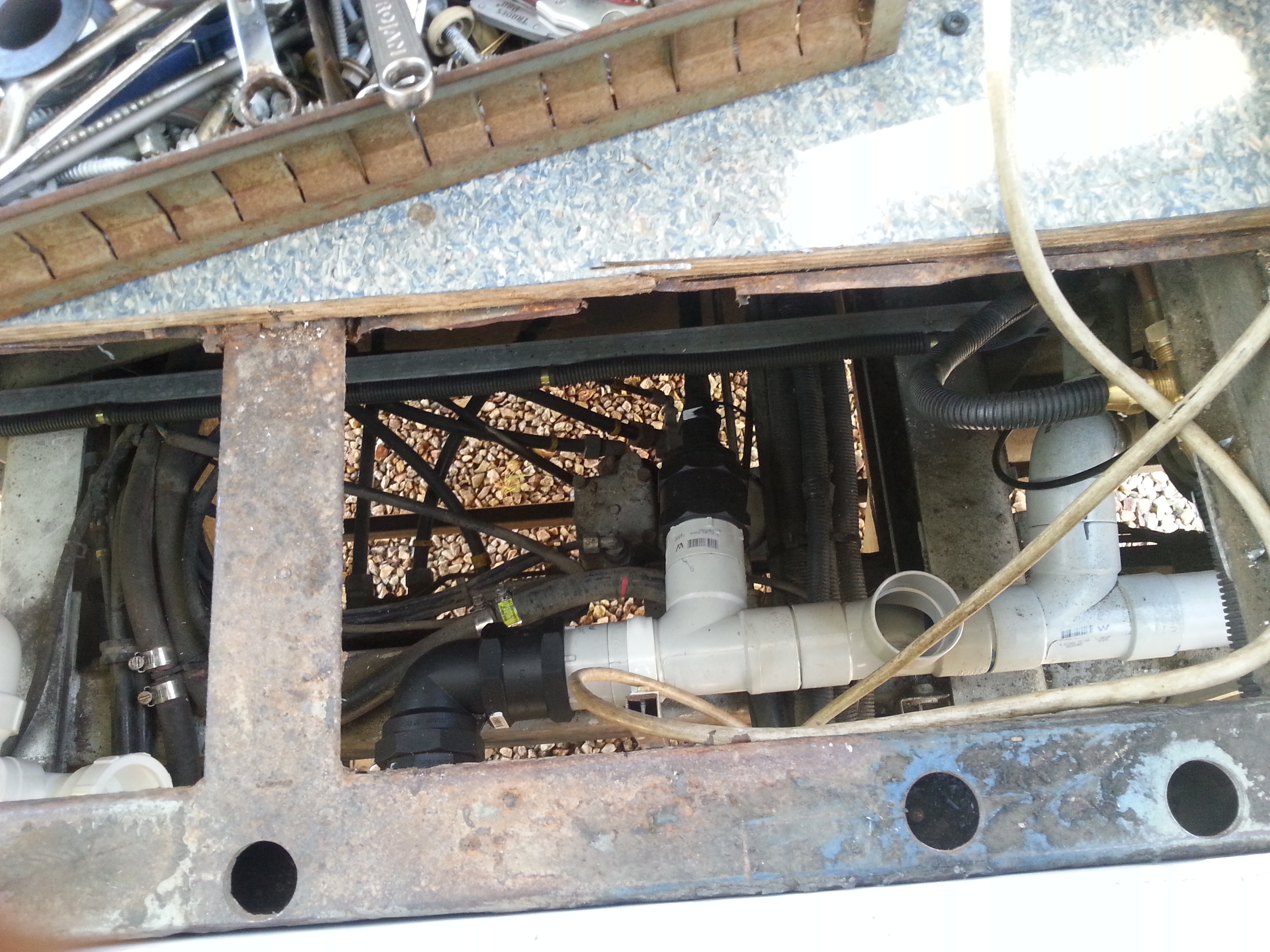
Don't want to have to do anymore work under here, needed to be an octopus after the floor went back in!

Don’t want to have to do anymore work under here, needed to be an octopus after the floor went back in!

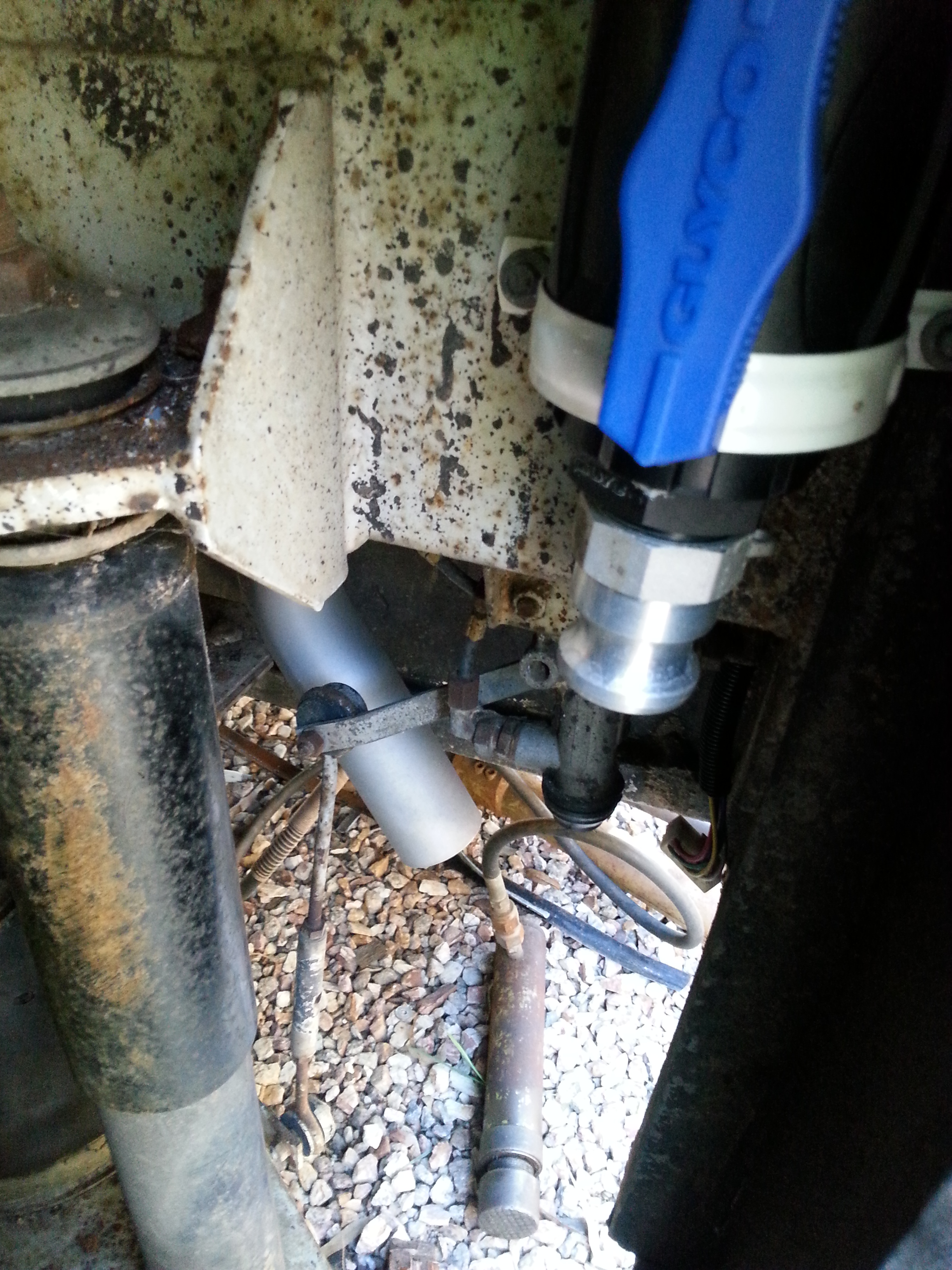
Drain point for the Gray water system, the silver pipe behind is the exhaust pipe for the diesel hot water system.

Drain point for the Gray water system, the silver pipe behind is the exhaust pipe for the diesel hot water system.

View of Gray water system prior to installation of Shower base & new floor over rear suspension.

View of Gray water system prior to installation of Shower base & new floor over rear suspension.

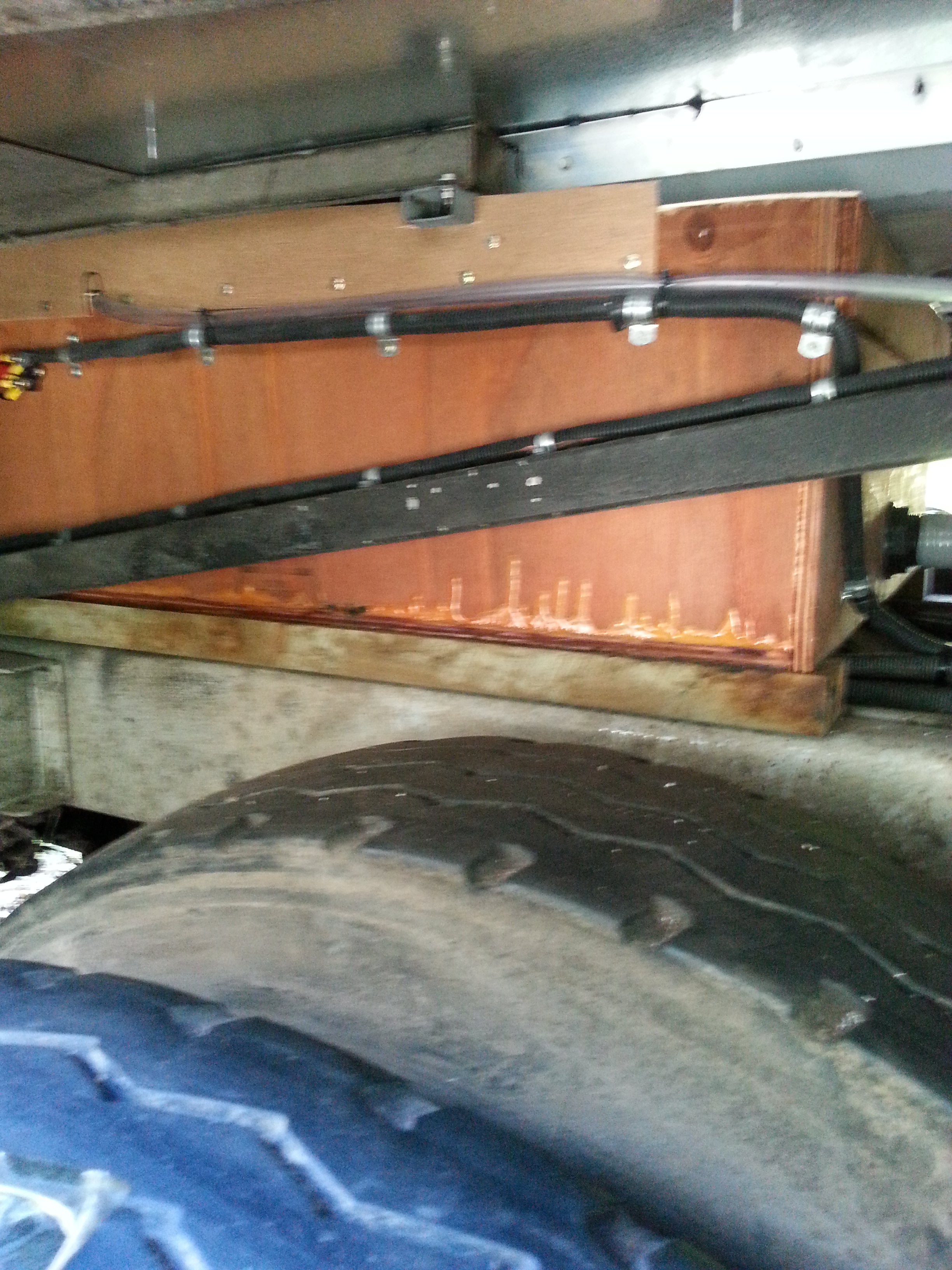
Marine ply container for the Gray water bladder, this unit was all treated with Funga-shield & sealed.

Marine ply container for the Gray water bladder, this unit was all treated with Funga-shield & sealed.

The flexible hose from 270 litre Bladder to main plumbing pipe.

The flexible hose from 270 litre Bladder to main plumbing pipe.

Drainage plumbing prior to installation of the Vanity unit.

Drainage plumbing prior to installation of the Vanity unit.

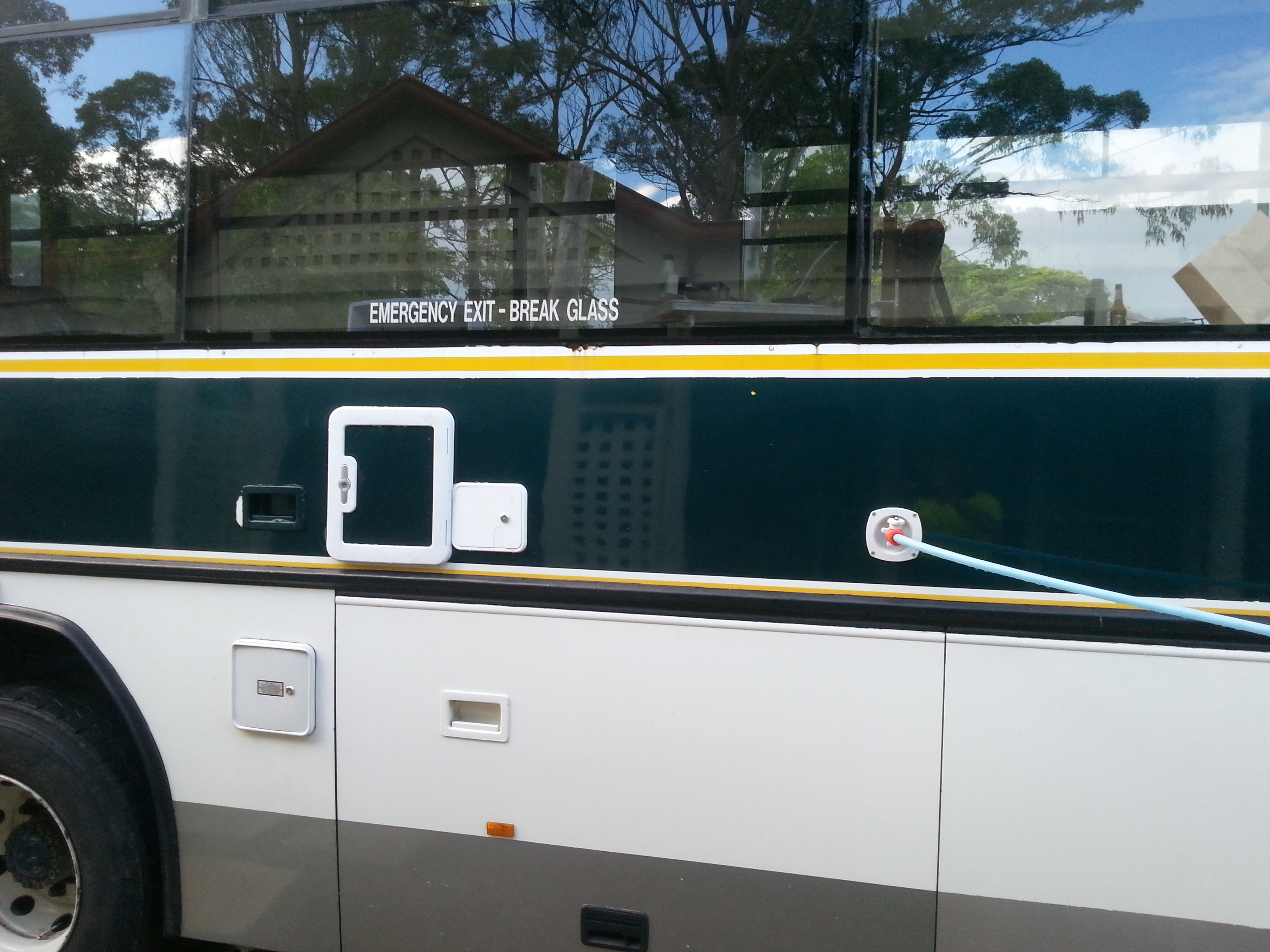
The 2 water inlets, the town water is currently connected the small white door on the left has the Hose & Can filler access. The larger hatch is for access to the Toilet Cassette, the large white door lower in the mud guard is for servicing the Air Filter on the Diesel Hot water unit.

The 2 water inlets, the town water is currently connected the small white door on the left has the Hose & Can filler access. The larger hatch is for access to the Toilet Cassette, the large white door lower in the mud guard is for servicing the Air Filter on the Diesel Hot water unit.

Water supply system, the filtration system directly above the 2 pumps & the timber containment walls for the Non-potable water bladder above & left. The rear end of the Poly tank for the potable water is visible to the right, both of these tanks sit over the chassis rails between the RH & LH Bins.

Water supply system, the filtration system directly above the 2 pumps & the timber containment walls for the Non-potable water bladder above & left. The rear end of the Poly tank for the potable water is visible to the right, both of these tanks sit over the chassis rails between the RH & LH Bins.

3 way tap for selecting tank for filling.

3 way tap for selecting tank for filling.

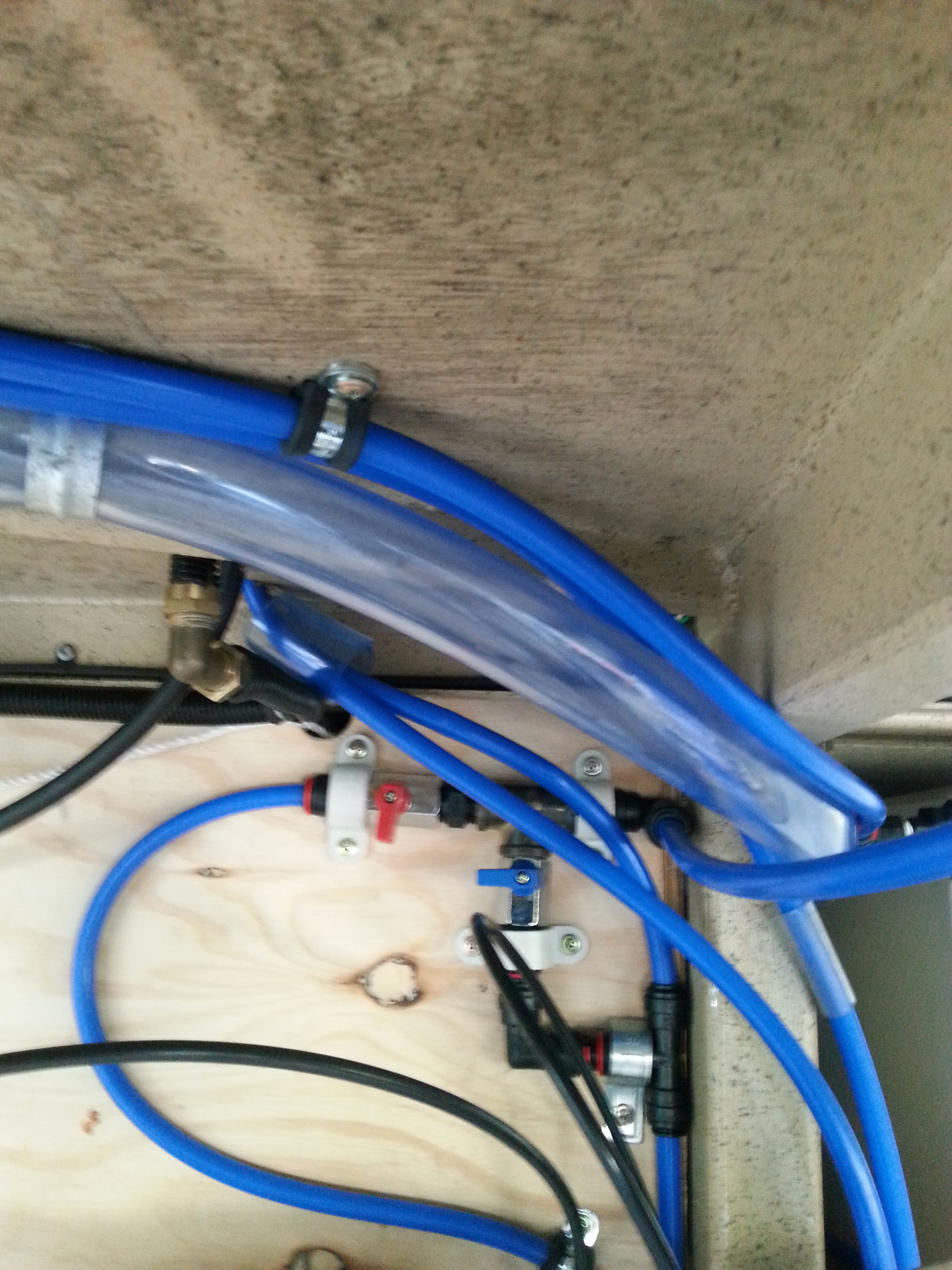
The 2 taps for isolating the tanks from the mains connection if required can be seen on the timber panel. the clear hose is for filling the Non-potable tank from can or pumped from a creek.

The 2 taps for isolating the tanks from the mains connection if required can be seen on the timber panel. the clear hose is for filling the Non-potable tank from can or pumped from a creek.

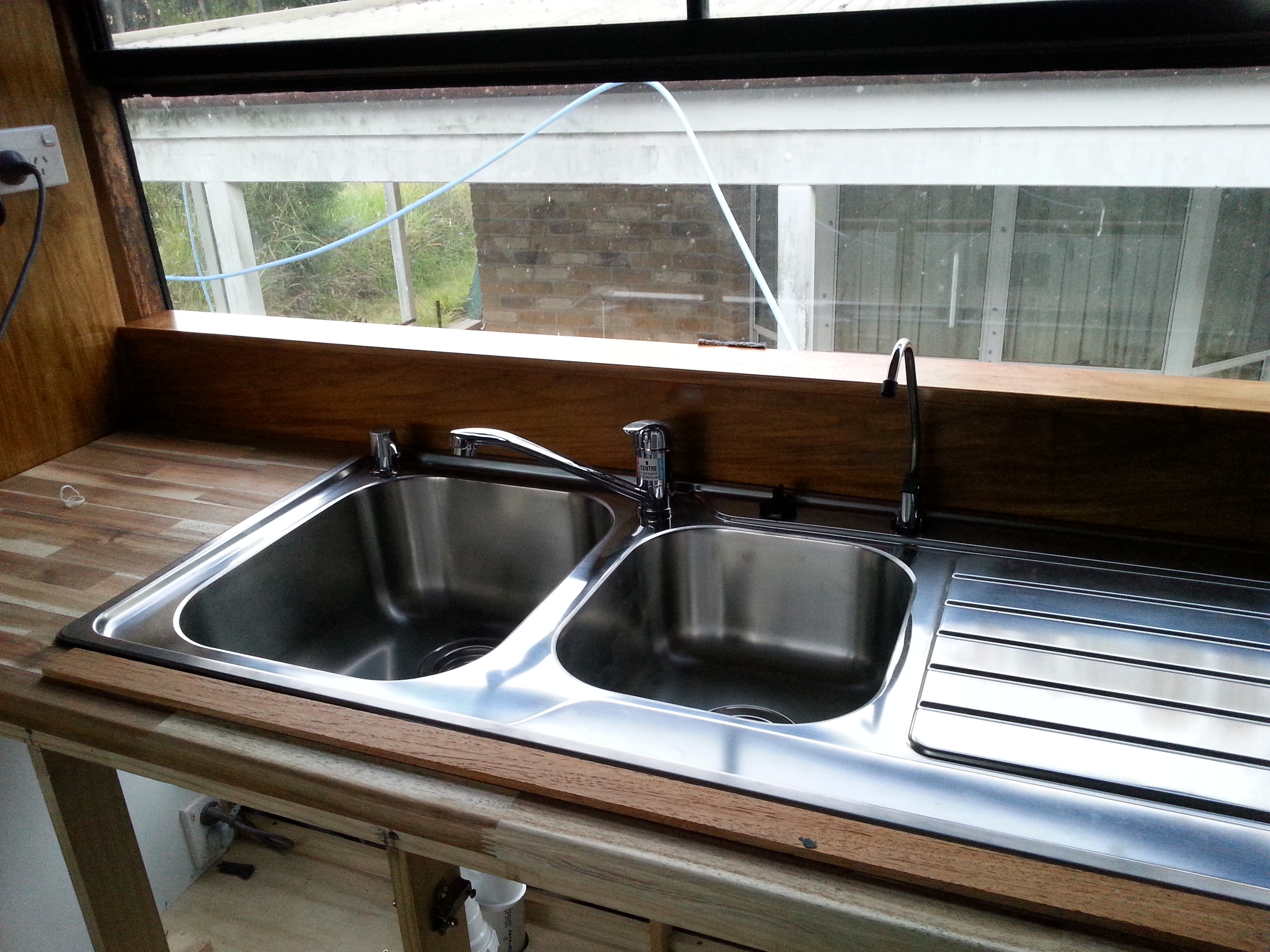
The small black tap on the sink between the flick mixer & the filtered water outlet is for selecting Potable or Non-potable water for the flick mixer. The fitting on the very left is a soap dispenser pump.

The small black tap on the sink between the flick mixer & the filtered water outlet is for selecting Potable or Non-potable water for the flick mixer. The fitting on the very left is a soap dispenser pump.


Repositioning & Completion of the Dinette.

The Dinette has now found its final resting place, as the build progresses I have found that most of my original layout plans have required some modifications & adjustments due to the changes in some of the equipment & items we have selected for our Mobile Home.

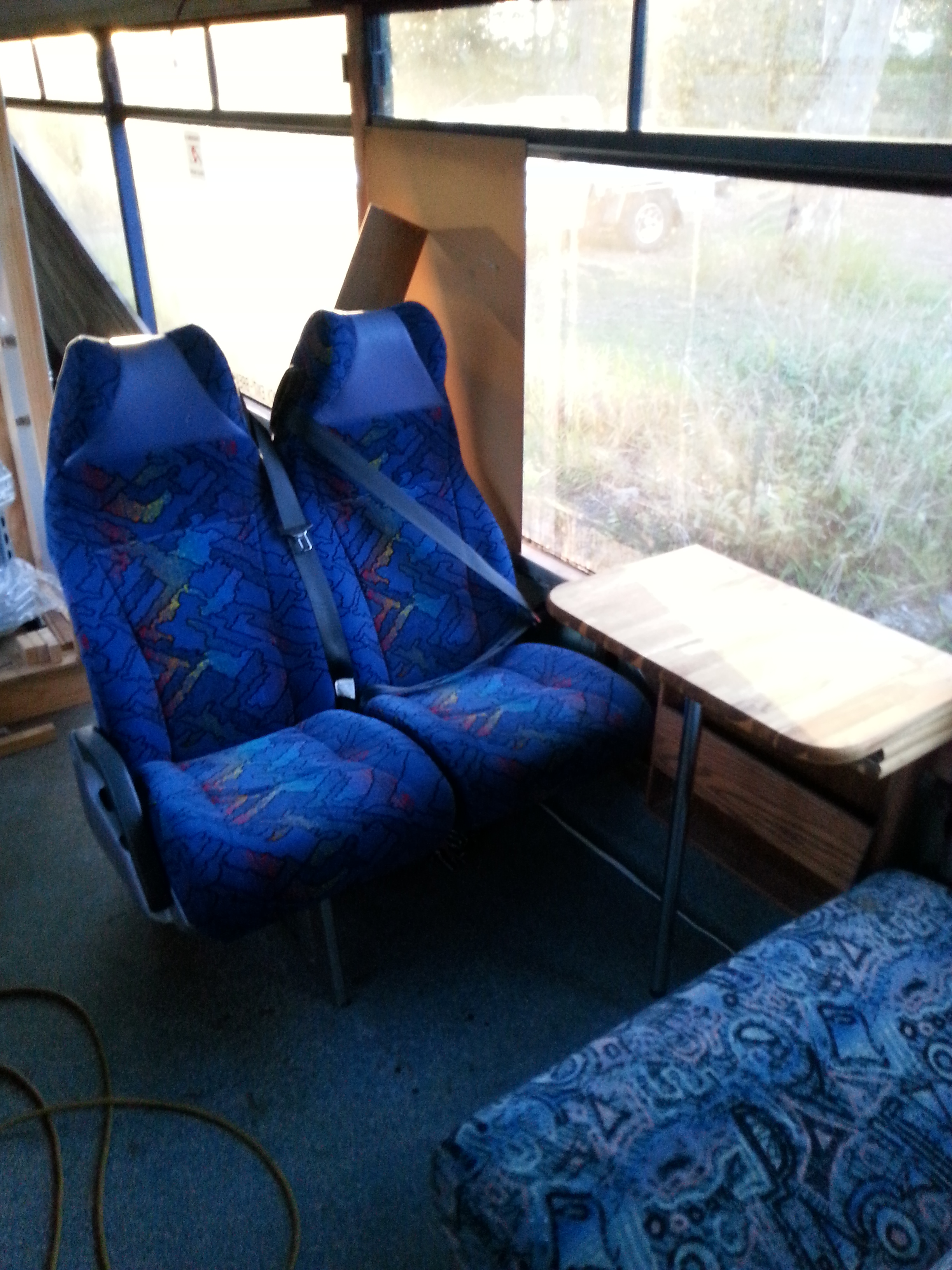
As the vehicle was to be registered with seating for 4 the original position for the Dinette required it have the forward facing seats placed adjacent to a window frame to allow fitting of the Sash section of the seat belt, at this point I was going to use one of the original Transit seat that were in the Bus when it was purchased. These seats were not designed for seat belts & this restricted the selection of the fitting position.

Once I had completed the Kitchen Cabinetry I found I could move the Dinette further towards the rear which gave more space in the Lounge area, by purchasing a Coach seat with built in seat belts I no longer have a problem with the placement of this unit as the belt system is integral with the seat. the only modifications required was to the mounting system in the floor.

The Dinette table has been constructed to fold back to the window as used in a lot of the latest Caravans, this gave more space & comfort when not dinning. the laminated Acacia wood panel used has an oiled finish which is the same as will be used throughout the remainder of the RV.

The doors have been fitted, view from front of Vehicle.

The doors have been fitted, view from front of Vehicle.

The Dinette table extended, i have used this timber for all bench & table tops throughout the RV.

The Dinette table extended, i have used this timber for all bench & table tops throughout the RV.

Both sets of seats are to be recovered with a change of Material to better suit the colors in the Vehicle.

Both sets of seats are to be recovered with a change of Material to better suit the colors in the Vehicle.

I have replaced the forward facing seats with a Coach seat, these incorporate Seat belts which meets the transit seating requirements.

I have replaced the forward facing seats with a Coach seat, these incorporate Seat belts which meets the transit seating requirements.

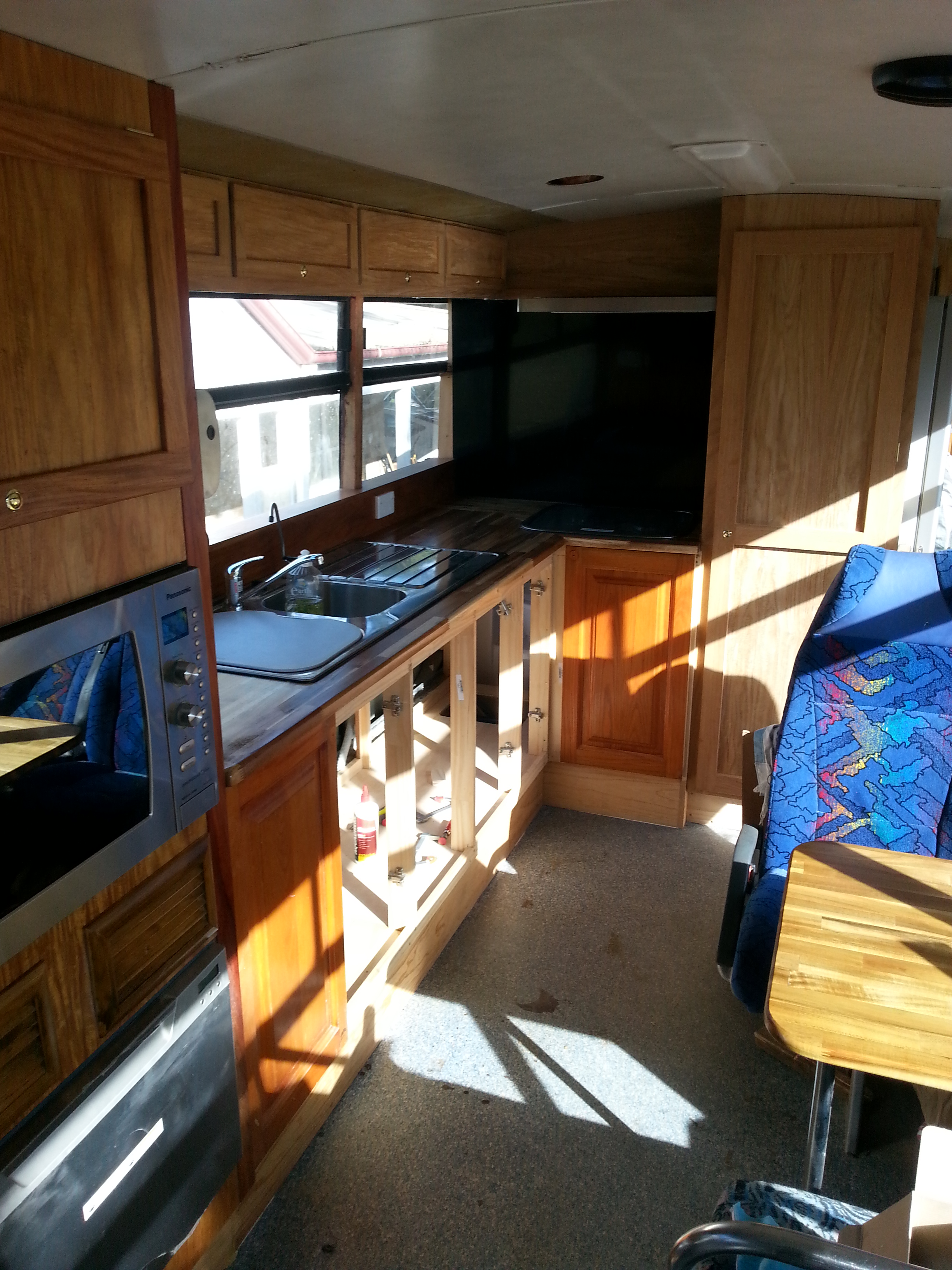
The modified position for the Dinette opposite the  Kitchen Bench & Sink.

The modified position for the Dinette opposite the Kitchen Bench & Sink.


The only work remaining on the Dinette is to recover both seats in the fabric We have selected.

Generator placement & start of Fitting.

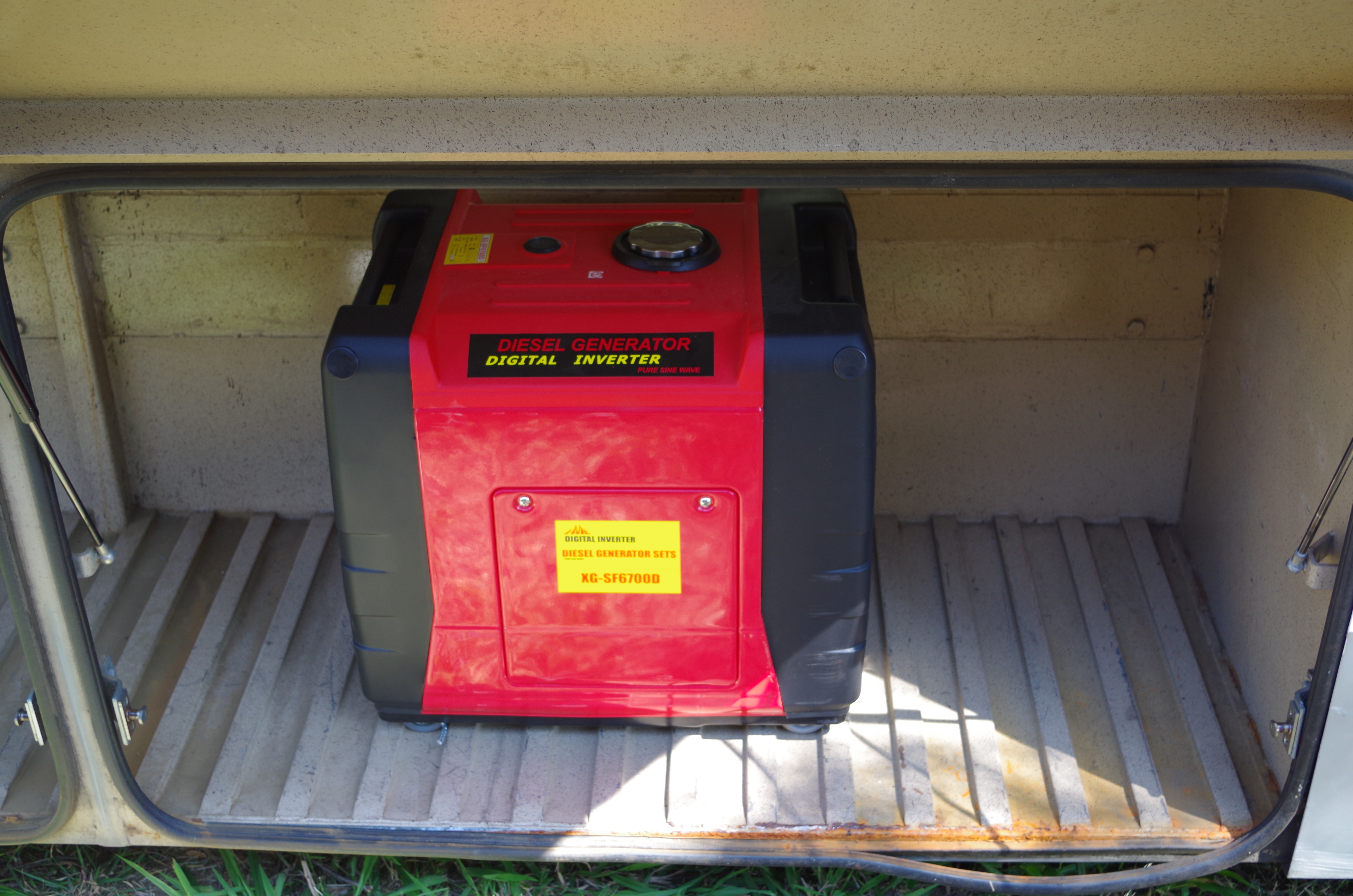
The Generator fits very nicely into the Drivers side front Bin, there is sufficient room to fit extra sound proofing & vibration dampeners. This area is directly under the power in-feed socket & slightly to the rear of the area where the Mains Power control cabinet will be situated. There is also enough room in this Bin to fit all of the House batteries. ( The batteries are now to be fitted above & between the Chassis rails behind the washing machine Bin, ) more on this later.

Fitment of the Cook-Top & completion of LPG system.

The Cook-Top has now been fitted to the Kitchen Bench, all of the wiring & plumbing for the LPG has been completed, inspected & the Gas Compliance certificate has been issued ready for vehicle registration.

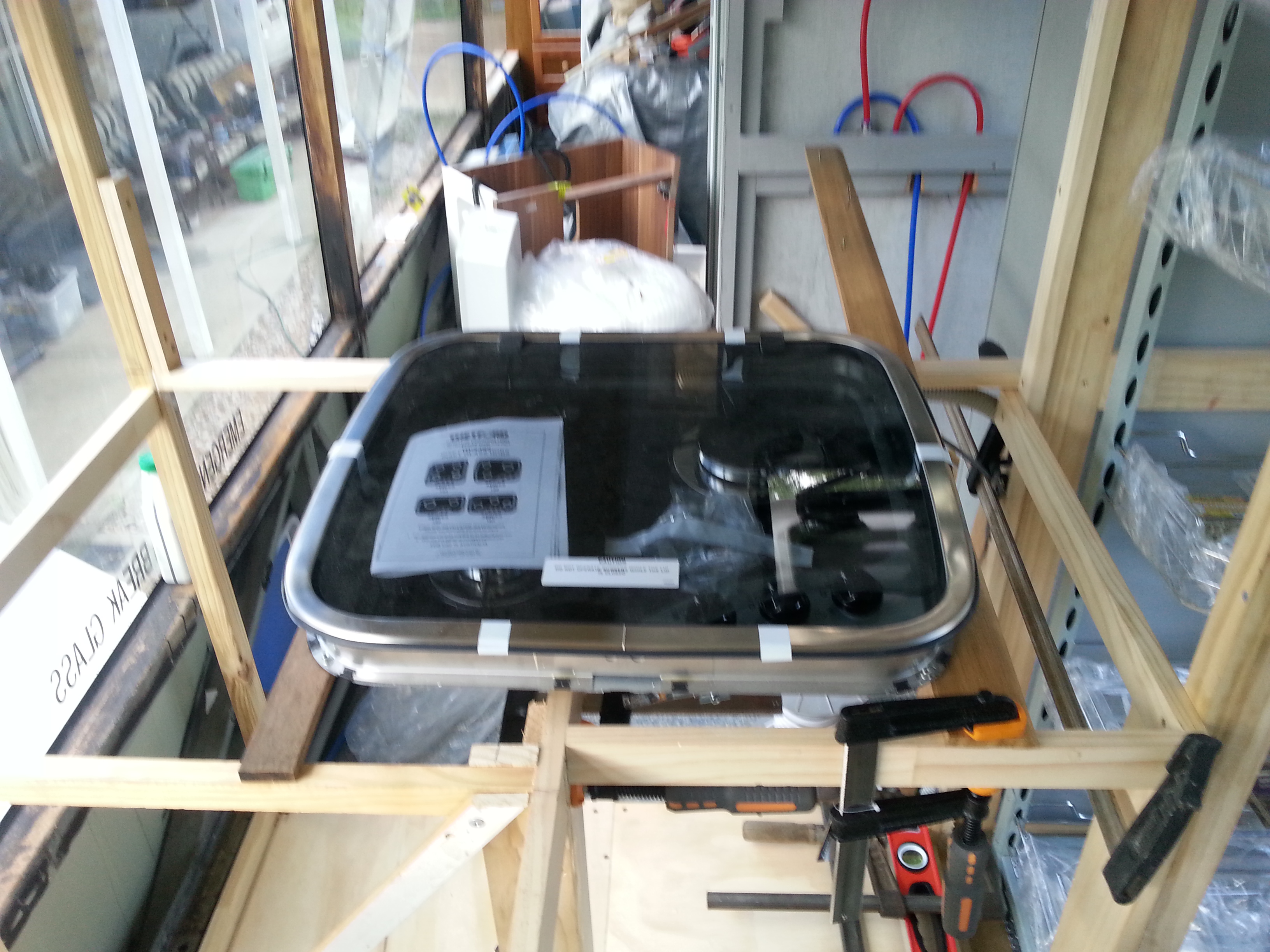
Thetford 3 burner Cook-Top to be fitted.

Thetford 3 burner Cook-Top to be fitted.

This unit is more user friendly than the original House-Hold unit i purchased?

This unit is more user friendly than the original House-Hold unit i purchased?

Position for final fitment on the short end of the bench beside the Pantry.

Position for final fitment on the short end of the bench beside the Pantry.

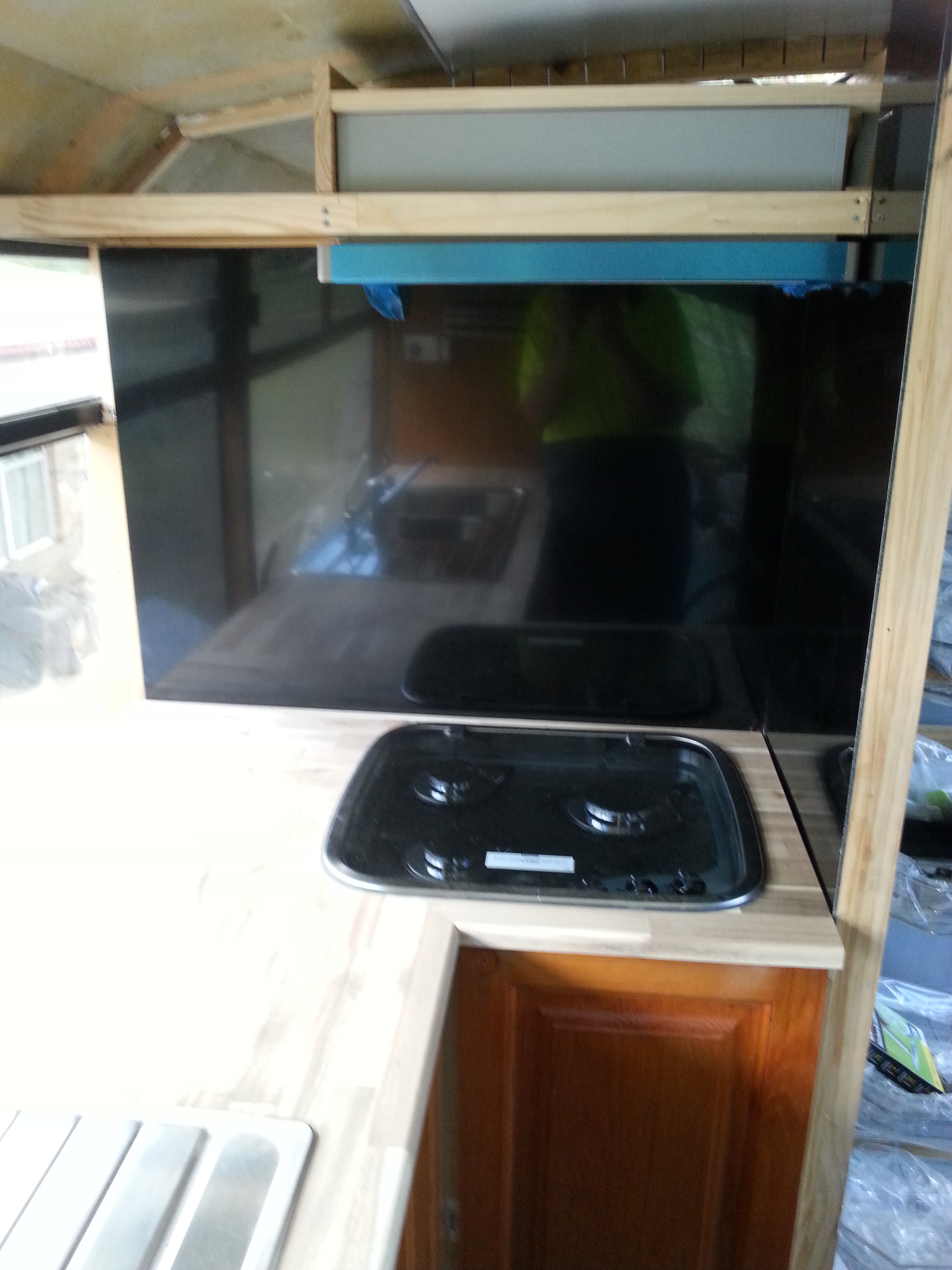
Aluminum composite splash backs work well with the Laminated bench top & Cook-Top.

Aluminum composite splash backs work well with the Laminated bench top & Cook-Top.

Cook-Top fitted into the Bench & Range hood fitted above.

Cook-Top fitted into the Bench & Range hood fitted above.

The LPG system start of installation..

The LPG system on the RV will only be required for the Cook-top & Barbeque units as no other Equipment requires LPG, this should allow a reasonable life out of the Gas available.

I have found a convenient place for the 2 LPG cylinders directly in front of the current Radiator Air inlet, this area can be accessed through the door for the Radiator access & will allow the use of a slide out Rack for the cylinders. This also places the LPG supply no more than 4 metres from the connection point for the Hot plates & directly opposite the Bayonet fitting in the rear most Bin on the other side of the Vehicle.

The most suitable area for the Gas storage required the modification to the Air Reservoir height for the vehicles Air Suspension.  The adjustment of the Air reservoir height has bee made & a slide system for the LPG bottles has been made & fitted.

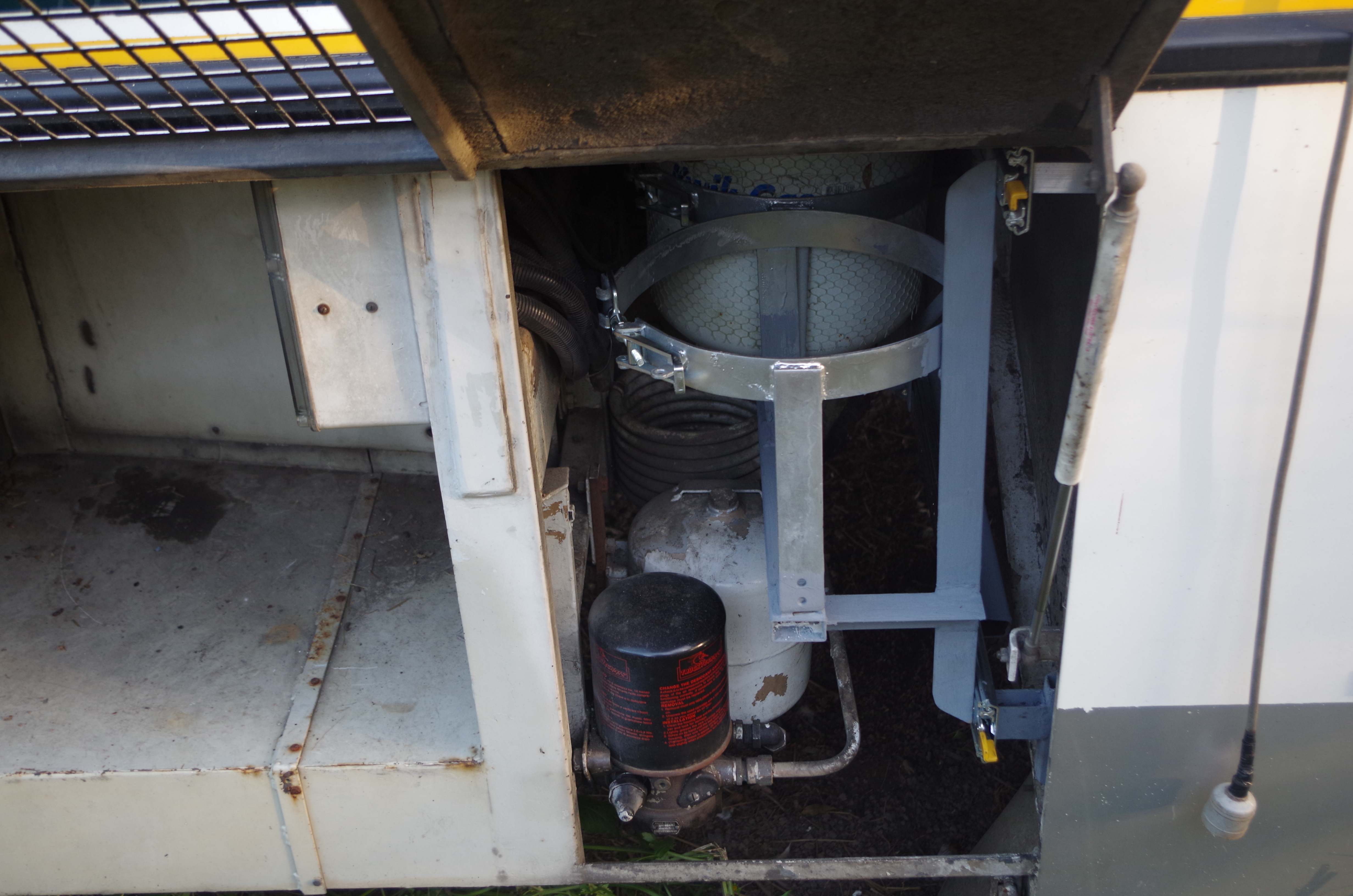
The Position for the LPG storage selected as the most suitable. This is the Area for the Dryer & 1 of the Air tanks for the Vehicle Suspension.

The Position for the LPG storage selected as the most suitable. This is the Area for the Dryer & 1 of the Air tanks for the Vehicle Suspension.

Once the Tank was lowered the rack fitted nicely over the top!

Once the Tank was lowered the rack fitted nicely over the top!

The rack slides out easily for bottle replacement.

The rack slides out easily for bottle replacement.


Lockers over the Sink & Bench.

The overhead cupboards above the Sink have been completed, these went in reasonably quickly the only problems being the lac k of a straight roof line to work with as described in one of the photos. the double paneling in the cabinet bottoms did help the fitting of the Led down lights used over the Benches.

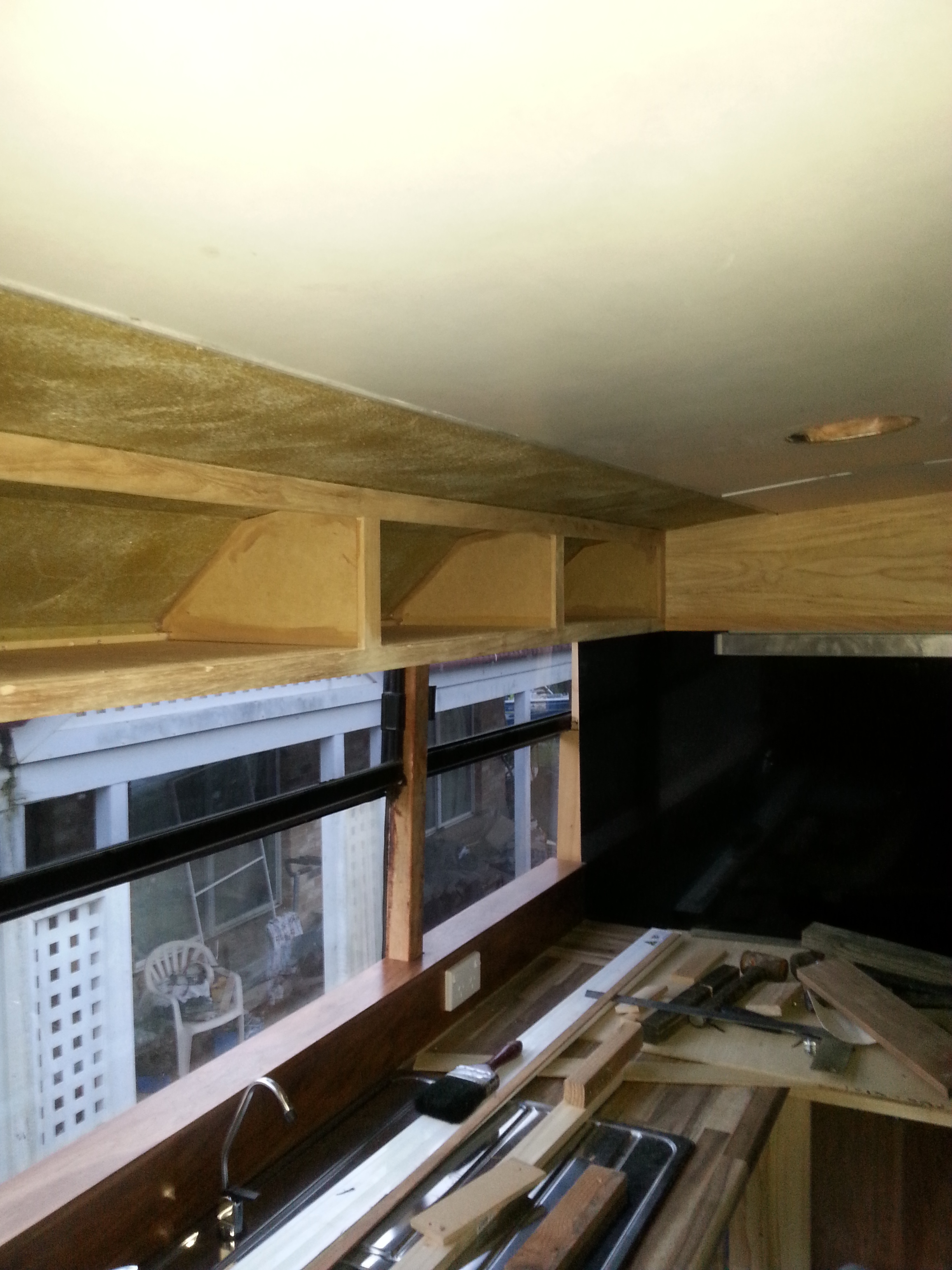
Due to the irregular shape of the unsupported ceiling over these cabinets the small beams above & below that create the cabinet frames have been built to hold the ceiling straight. the lower unit is double paneled to add strength, the upper shelf panel is heavy MDF & the under panel is a Aluminum composite which is reflective underneath. this also helps with the lighting over the Sink as there are Led lights in this panel.

Due to the irregular shape of the unsupported ceiling over these cabinets the small beams above & below that create the cabinet frames have been built to hold the ceiling straight.
the lower unit is double paneled to add strength, the upper shelf panel is heavy MDF & the under panel is a Aluminum composite which is reflective underneath. this also helps with the lighting over the Sink as there are Led lights in this panel.

The Lockers over the Sink unit prior to the Doors being fitted.

The Lockers over the Sink unit prior to the Doors being fitted.

The doors have been fitted, view from front of Vehicle.

The doors have been fitted, view from front of Vehicle.

View from Pantry area.

View from Pantry area.

There are 4 separate lockers in this group.

There are 4 separate lockers in this group.